A new national heritage initiative has been launched at the Liverpool School of Architecture to document the UK’s cultural heritage. GLAM-Art, a partnership between the University of Liverpool and Historic England, aims to look at the architecture of galleries, libraries, archives, museums and art schools. The first phase will focus on the traditional art school in England – a category of cultural space that has faced a ‘perfect storm’ of neglect, demolition, and funding cuts since 1979.
This initial project marks the first comprehensive attempt to survey the architecture of art schools across the six regions of England, as well as to better understand their architectural and historical significance. Despite their role as the ‘engine rooms’ of the British creative economy, these distinct buildings – which blend the features of galleries, museums, libraries, industrial buildings and studios – are being lost to town centre redevelopment and university campus restructuring.
The primary output of the first phase of the project will be a research paper on twentieth-century examples with a gazetteer of art schools in England, followed by an Introduction to Heritage Assets (IHA) guide published by Historic England. IHA publications are useful guides that summarise existing literature, as well as providing insights into less well-known topics that might not have been widely studied or written about – to provide planners, conservation officers, advisors, historians and lay people with information about the history and development of different kinds of buildings, landscapes, sites or monuments in England. A future phase hopes to look at art schools in Wales, Scotland and Northern Ireland, as well as galleries, libraries and museums across the UK.
Led by Dr Ranald Lawrence, author of The Victorian Art School, and Lisa Rigg FRSA, the national study will firstly categorise art school architecture into four defining eras:
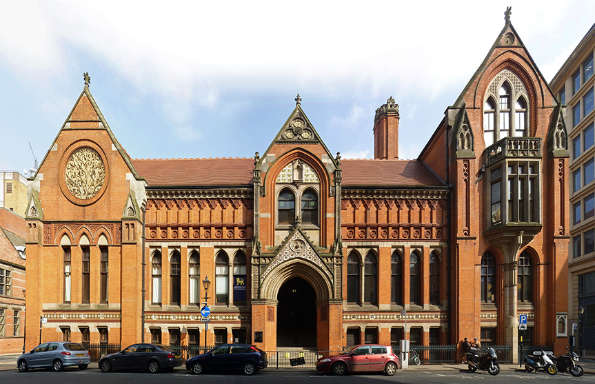
- Victorian (1837-1901): ‘Secular cathedrals of light’ built to educate the industrial working class in art and design.
- Edwardian (1901-1914): Masterpieces of the Arts and Crafts movement, such as the Glasgow School of Art, and leading institutions, like the Central School of Arts and Crafts (London). Other examples were built at a local level in towns and villages, like Keswick and Stoke-on-Trent.
- Inter-war (1918-1939): Characterised by a shift toward regional industrial design and adaptive reuse.
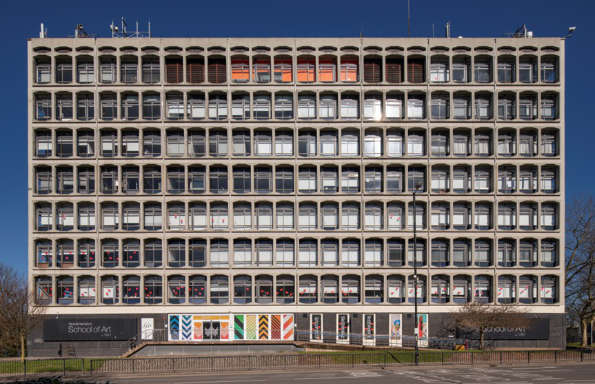
- Post-war (1945-1979): Modernist landmarks and campuses focused on spatial interconnection and vocational equality.
The project arrives at a critical moment for art and design education. With a 31% decline in the study of A-Level art subjects since 2010 and a significant reduction in the teaching of art in state schools, the physical loss of local art schools and colleges further marginalises vulnerable communities. “Protecting these buildings isn't just about nostalgia; it’s about social equity,” says Dr Lawrence. “Research shows a direct link between arts participation and positive health and educational outcomes. When we demolish an art school in a socio-economically deprived area, we aren’t just removing bricks and concrete; we are removing opportunity.”
Lisa Rigg, Research Assistant at the Liverpool School of Architecture and Heritage at Risk Project Officer at Historic Englandsaid: “Post-war art schools were designed as flexible, democratic spaces to empower and educate primarily working-class people so that they could participate in the modernisation of Britain.”
Please contact Dr Ranald Lawrence (ranald.lawrence@liverpool.ac.uk) or Lisa Rigg (lisa.rigg@liverpool.ac.uk) for more details.
Image credits
Top/Right: Exterior view of Birmingham Art School on Margaret Street. Designed by John Henry Chamberlain and William Martin in 1884 (© Ranald Lawrence, 2026).
Bottom: Exterior view of the George Wallis Building at Wolverhampton School of Art. Designed by Diamond, Redfern and Partners with borough architect A Chapman in 1967-9 (© Historic England Archive, 2026).