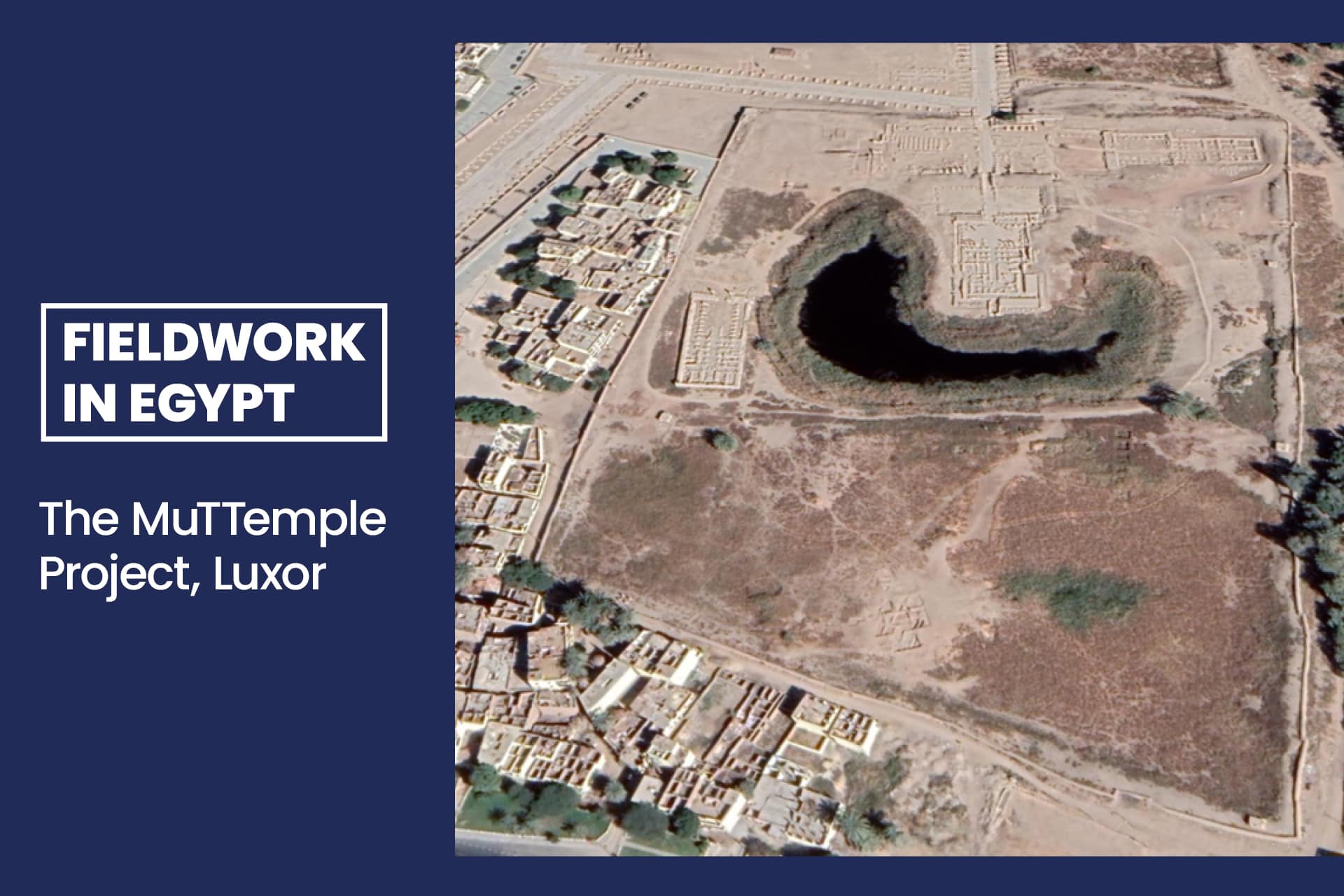
Since 2018, the University of Liverpool, in collaboration with Johns Hopkins University, has been working in the southern part of the precinct of the Temple of Mut in Luxor, Egypt. PhD student Matthew Exley had the opportunity this year to join the Mut Temple Project for a study season in February 2026.
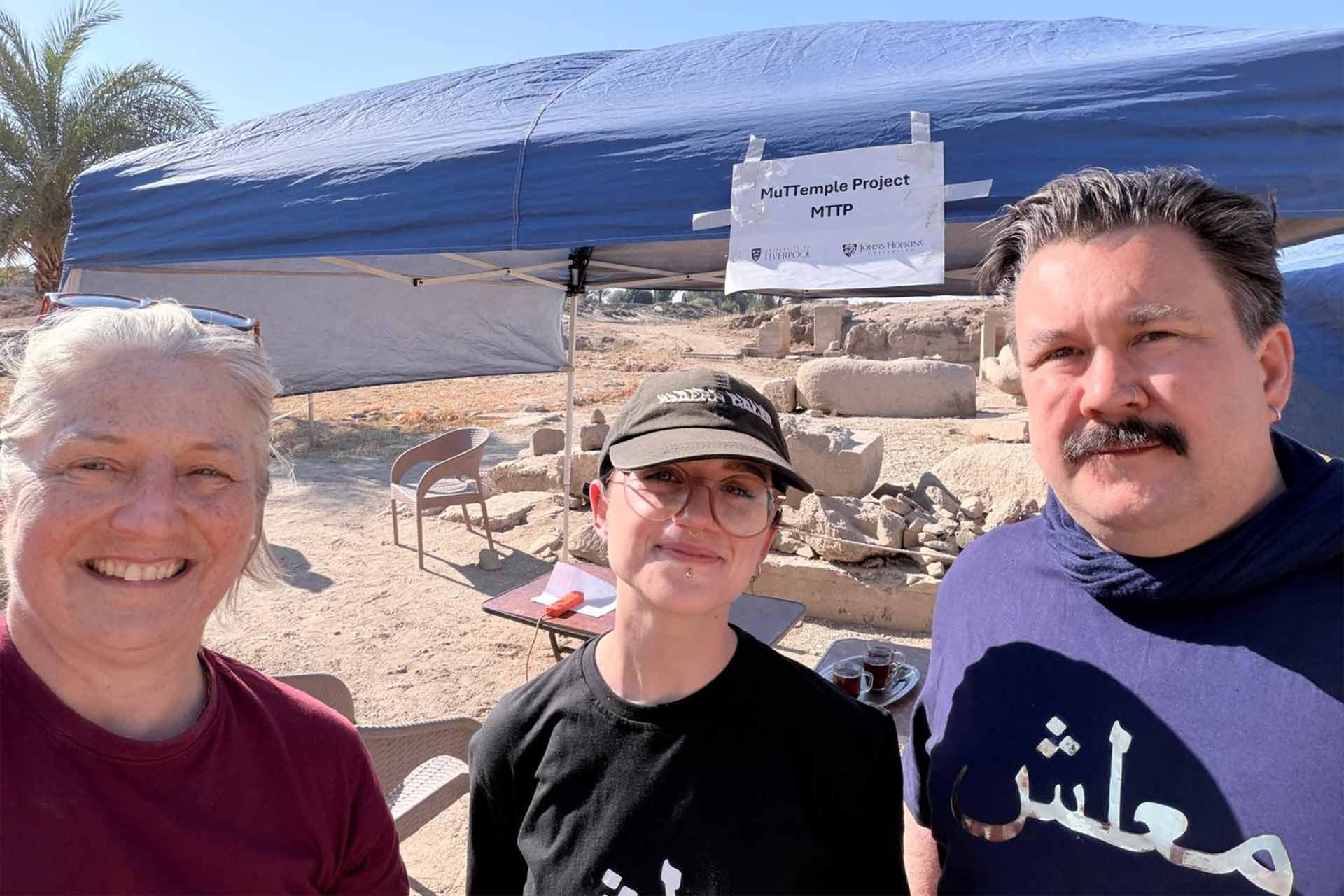
I have been fortunate enough to travel to Egypt many times, exploring tombs in the Valley of the Kings, standing in awe before the Pyramids of Giza, and wandering through the towering columns of Karnak’s Hypostyle Hall, as well as visiting many other, less famous, but equally fascinating places. I had travelled to Egypt as a visitor and tourist, an informed one admittedly, but a visitor and tourist without doubt.
This year marked a milestone in my academic journey and my relationship with visiting Egypt as I was invited to join a study-season with The Mut Temple Project by my academic supervisor, Dr Violaine Chauvet, who is its director. Although I had experienced Ancient Egyptian sites many times before, this time was entirely different. Being part of this incredible work shifted the perspective entirely from that of a visitor to that of an active participant.
I arrived in Luxor in the early evening, after dinner, we had an early night to be prepared for the next morning. After a 5.30am (and, admittedly, a 5.31am and 5.32am) alarm, we had a quick black coffee and were ready to head to the site. After a practical training session, I was put to work, taking a photographic record of finds from the previous excavation season.
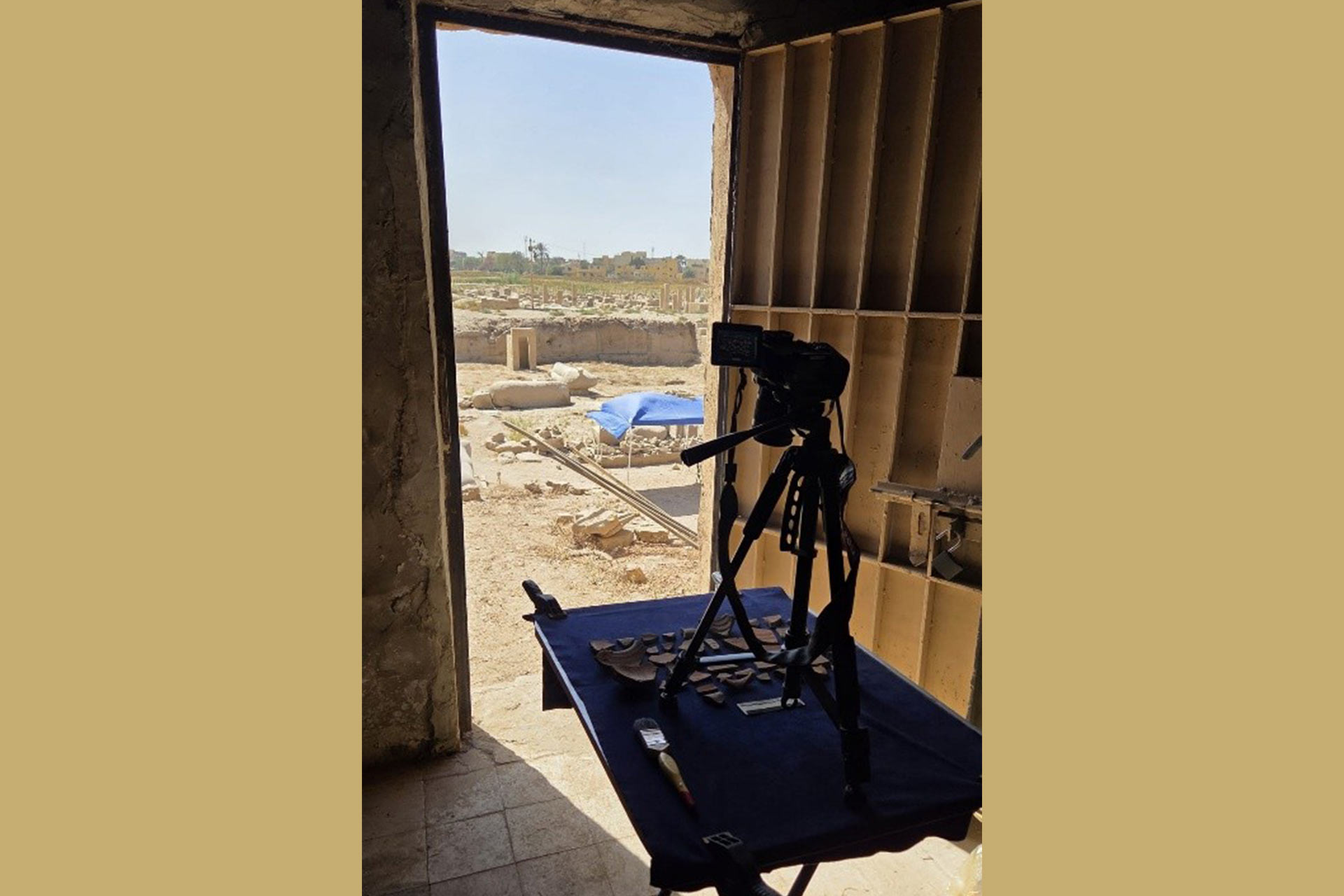
Recording hundreds of small pieces of pottery may not seem like the most exciting of activities when surrounded by the monumental complexes of Karnak. As a tourist visiting Egypt, it is easy to concentrate on the big things: the pyramids, the colossi, the temples. I can’t deny that, initially, I was not as excited by the prospect of this task as perhaps I should have been. We all have our failings!
Matthew at work:
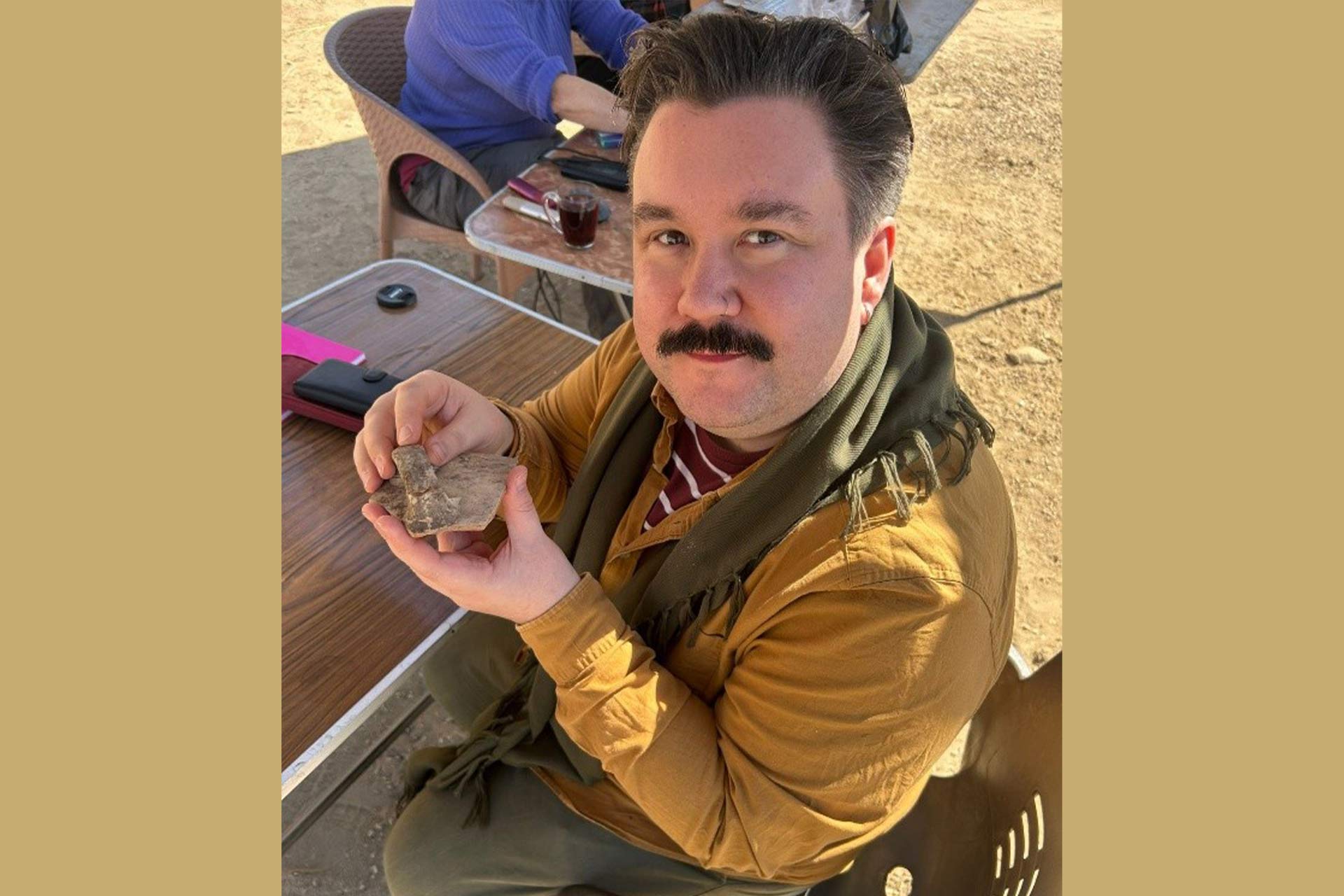
Whilst recording these small pottery sherds, I began focusing on the minutiae, looking at each individual piece as part of a wider puzzle of understanding the site better. On one small fragment of New Kingdom pottery, I noticed distinct finger marks embedded in the clay. This was a piece I would not have even looked at as a visitor to an Ancient Egyptian site, passing thousands of broken pottery pieces to get to the ‘impressive’ bits. At this moment, however, I paused for a moment and placed my own fingers over the marks and felt an instant human connection to that unknown Egyptian who had left their mark when the clay was still wet over 3000 years ago. Continuing my task, I began to better focus on the individual pieces, to look at them in a new way, not as dull and grimy waste products to be left underfoot in the shadow of impressive ruins, but as unique objects linking us directly to a very distant past.
Noticing the small, New Kingdom fingerprints from the Precinct of Mut:
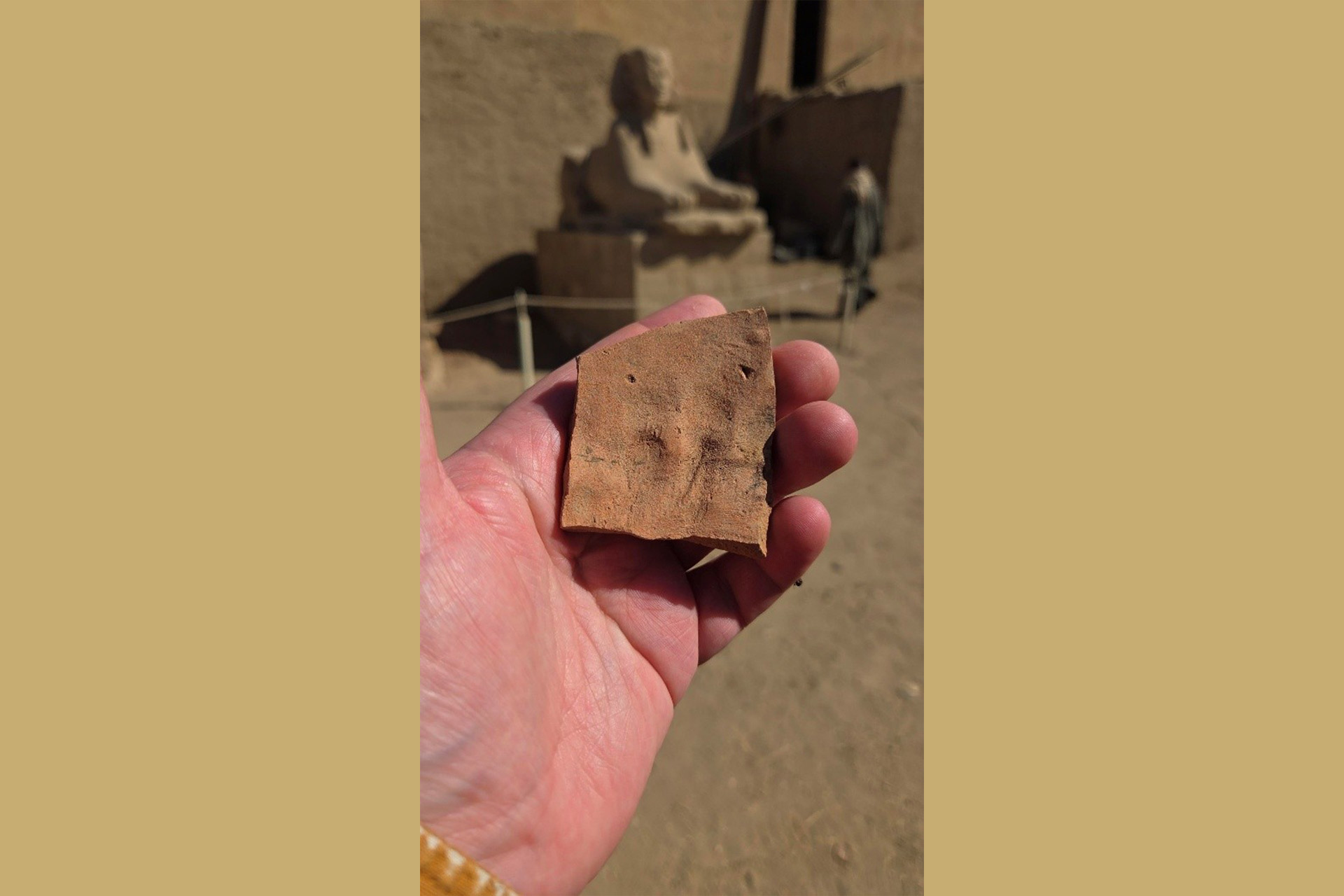
The focus I had begun to develop as an active participant in fieldwork and not just as an informed visitor caused me to notice new things in familiar places. With fresh eyes, I noticed small, human features such as a crude, scratched drawing on an otherwise bare chapel wall or a hacked-out hieroglyph from a royal inscription. These small details, details I had previously missed, provided human connections to the Ancient Egyptians as people and showed that the tiniest of details can create a perspective into how they occupied and used these spaces through time. The monuments remained impressive, but these small features indicated how the Ancient Egyptians inhabited, developed, and interacted with these spaces.
Before heading to the Mut Temple, I had been asked how doing fieldwork at a New Kingdom settlement site would help my research into a totally unrelated Old Kingdom cemetery. To be honest, I did not always have a satisfactory answer, but now I do. That first day, spending time focusing on the smallest sherds of pottery taught me the valuable lesson of moving beyond passive reception of a site and to actively observe the smallest of details and consider what they might tell us about a place and its use. This is a perspective I am excited to bring to my research on Qubbet el-Hawa, a site first developed a thousand years before the settlement at the Mut Precinct. I am excited for the small, important, new details and to consider what they each tell us about the site’s use and development, and the human intentions behind it.