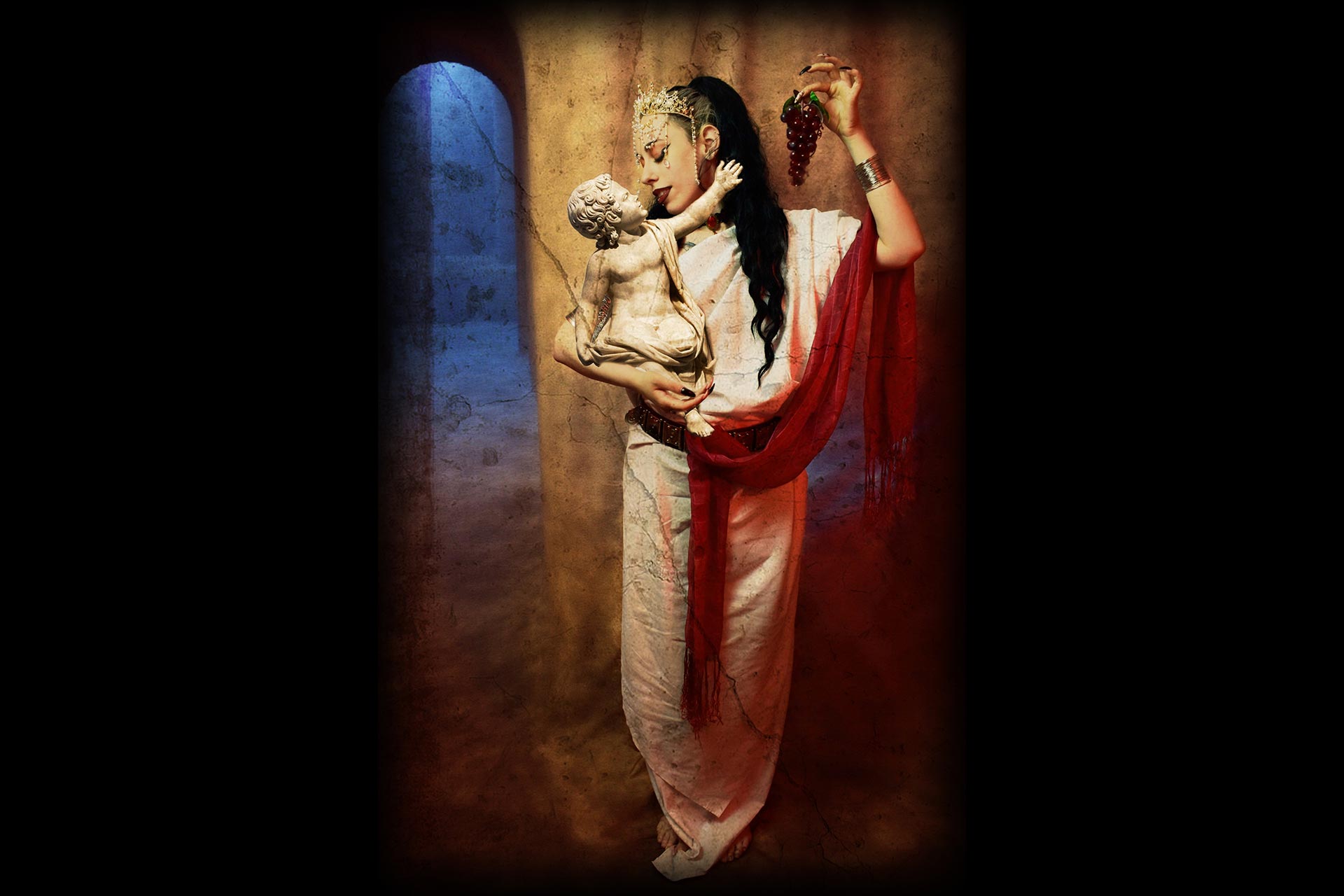
Valeria Messalina (c. 17/20-48) was perhaps one of Rome’s most hated queens. At least, that’s what historical posterity would have us believe at first glance.
She was no second-rate aristocrat or power-grabber, though. Cousin of emperor Nero; second cousin to emperor Caligula; the grandniece of emperor Octavian Augustus, as well as the third wife of emperor Claudius, Valeria Messalina had as illustrious a lineage as any woman ever to don the purple.
And that was exactly what made her crime all the more heinous in the eyes of Roman society, finally earning her a damnatio memoriae: she was a libertine. A monster of sexual promiscuity and a lethal power-monger who would stop at nothing to achieve her desires.
And though no contemporary sources survive, ancient authors— such as Tacitus, Suetonius, Cassius Dio, Juvenal, and Pliny the Elder—paint the infamous portrait of her explosive seven-year-reign as a descent of all good Roman values into the mire of debauchery.
Of course, modern scholars caution that these accounts were written decades later by authors hostile to the Julio-Claudian dynasty, yet the sheer volume and consistency of the stories still make her the poster girl for imperial decadence. We cannot entirely dismiss what was said of her, yet it should always be taken with a hefty grain of salt.
In truth, Messalina was no more ruthless in systematically destroying anyone who threatened her or her children’s position than any other Roman potentate of the time. The fact that she often used her beguiling looks to do so and, presumably, even more often, the favours of her body to entice friends and frame enemies, made male Roman authors considerably anxious about unbridled female power.
She is said to have engineered the execution of Appius Silanus, her own mother’s husband, and falsely accused the owner of the magnificent Gardens of Lucullus in order to lay hands on his property.
But, perhaps, this could have been forgiven by the likes of Suetonius and Tacitus. Juvenal’s Satires (6.114–132), we read that Messalina would slip out of the palace at night, wearing a blonde wig and using the name “Lycisca” (“She-Wolf”), for no other reason but to work in a lowly brothel near the Subura area. The fact that a woman would crave sexual intercourse was equally deplorable as the fact that she would desire to copulate with men from the lower classes.
According to Pliny the Elder (Natural History 10.172), she once challenged Rome’s most famous prostitute to a 24-hour sex marathon and won—satisfying 25 men in a single night and day. Actually, by modern standards, this body count for a day’s work is rather modest, and either the Romans of that period had exceptionally high endurance during coitus, or the account is heavily exaggerated by a person who knows very little of what they are talking about. It is also interesting to note that Pliny interjects this anecdote while talking about the mating habits of birds. He claims that birds are monogamous by nature, taking only one partner in their life, “as opposed to the wife of Claudius…”
She even had an open affair with an actor, in a period where actors and prostitutes were considered to be on the same social level: much like today, that is, but with less pretences and lower wages for those who manage to earn fame.
In the end, she orchestrated a “fake wedding” that doomed her. In October 48 CE, while Claudius was away at Ostia inspecting the new harbour, Messalina held a full public wedding to the handsome young consul-designate Gaius Silius—complete with dowry, witnesses, and a lavish banquet. Tacitus (Annals 11.26–38) says she did it because she had grown bored with mere adultery and “coveted the name of wife”. Silius, madly in love, agreed to adopt Britannicus and planned (or so the sources claim) to murder Claudius and seize the throne. When the news reached Claudius, he was so stunned he kept asking, “Am I still emperor?”
It is still unclear to this day why Messalina did this when she had gotten away with everything else… Was the wedding truly fake, a whim to spice up her sex life? Or was it part of some sinister plot to overthrow her feeble-bodied cousin, the emperor?
Narcissus, the powerful freedman who had long hated Messalina while in her service, prevented her from seeing Claudius to explain herself. Instead, he offered a dagger to do the “honourable” thing, but Messalina hesitated. A tribune finally ran her through. She was either in her early or her late twenties when she passed away. The Senate immediately voted damnatio memoriae—her name and statues were to be erased everywhere.
Claudius, when told she was dead, simply asked for more wine and carried on with dinner. Tacitus, his pen ever subtly venomous, ends her story with the bleak line: “She had lived with a shamelessness that beggared description, and now she died in a manner not unworthy of her life”.
And so ended the woman the Romans would never forget—the empress who turned the Palatine into her personal playground of sex and murder, until the very system she manipulated finally turned on her because she had committed the worst crime of all – she openly dared to be a libertine.
In my photobook The Kiss of Glory, I have attempted a literary retelling of Messalina’s story in first-person narrative, creating a “forbidden and highly erotic diary” of sorts. The title, when translated into Latin (Osculum Gloriae), is a play on words on the medieval term Osculum Infame (The Kiss of Infamy), a witch’s supposed ritual of greeting the devil by placing a kiss on his derriere during the Sabbat rituals. Just like the witches of the Middle Ages formed a pact with the devil by debasing themselves in order to gain heinous powers and commit all sorts of atrocities, so did Messalina kiss the posterior of secular power to get free rein. And, much like those witches many centuries later, society did not forgive her boldness.
Collaborating with the highly talented alternative model and fetish show performer Anna Samcro, I created a series of artistic nude photographs to accompany this literary narrative of Messalina. Anna’s effortless boldness in risqué poses perfectly portrayed the spirit of Messalina that I wanted to capture: a woman not afraid to indulge in her desires, frightfully aware of how the world works on a psychological level and determined not to live in the shadows of pious pretence.
Just like in all my previous photobook projects, in The Kiss of Glory, I have also employed a mixture of digital photography and Photoshop edits, utilising only the minimum amount of AI to “tinge” the backgrounds of certain photos in order to achieve a more theatrical and dramatic effect in the overall composition. The model, lighting and overall props used in this shoot have not been edited in themselves, with a view to creating a highly realistic final product that is, at the same time, reminiscent of erotic Roman-era frescoes.
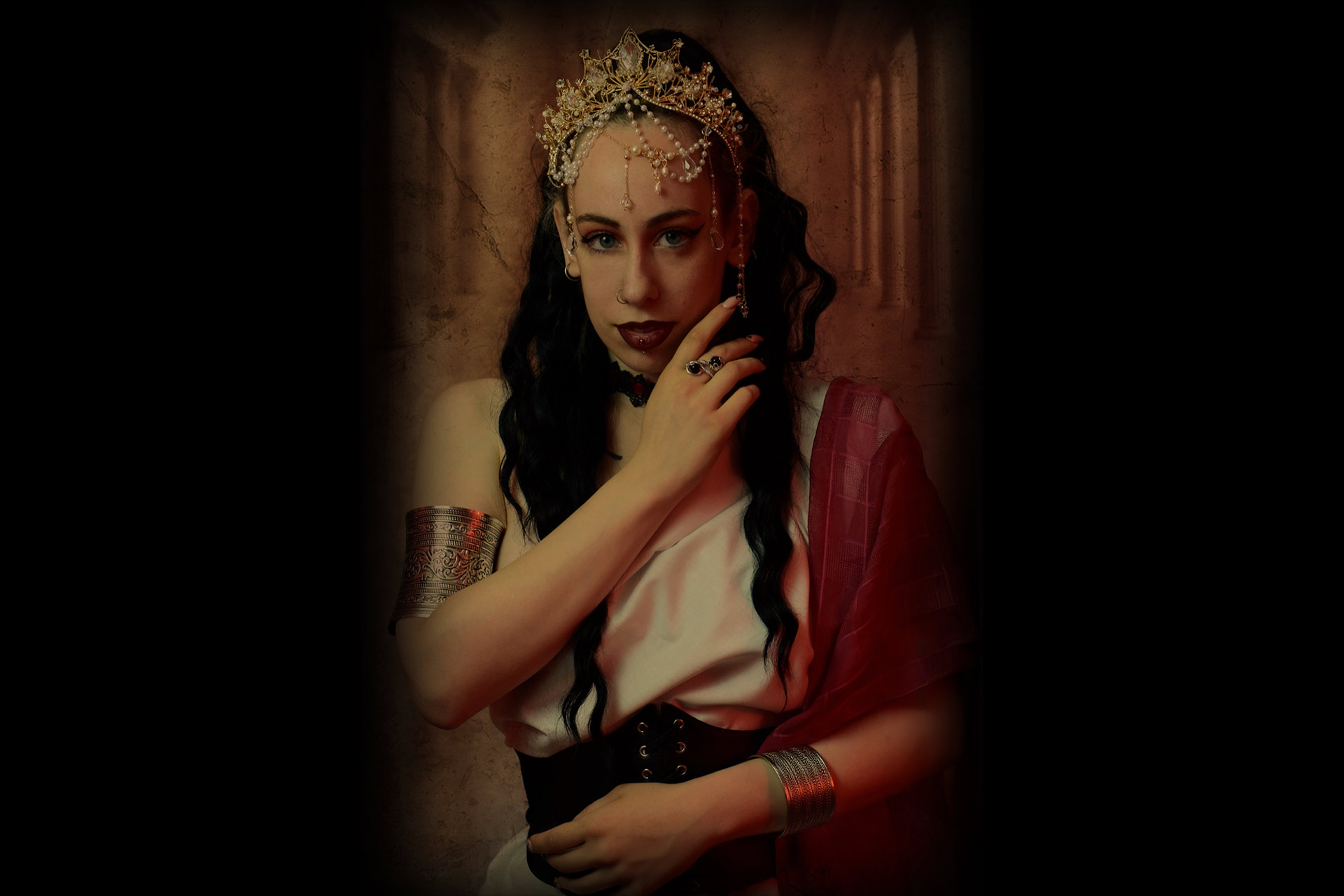
Both the story and the art medium in which it is narrated, in my opinion, is a very current critique of the silent moral oppression that often characterises certain circles. Yes, technically and by law, you are free to do as you will with your own body, but the well-to-do, “serious” people next door would heavily frown upon anything that transgresses their paradigm of modesty.
In essence, The Kiss of Glory is an illustrated tale of liberation, daring, violence and raw sexual energy in the early days of Imperial Rome, and I can honestly say that I could have found no better collaborator than Anna Samcro to bring this project to the full extent of its fruition.
Particularly in the early modern period, the figure of Messalina has inspired numerous works of erotic art in painting, sculpture, theatre and literature. If I may be as presumptuous, I consider this photobook to be my small offering to an already heavy-with-offerings altar dedicated to the memory of Rome’s crowned libertine. It is a solemn reminder that although the absolute “Powers That Were” of Messalina’s time consigned her memory to oblivion, her allure never died.
The ones who were utterly forgotten and truly erased from the annals of history were those who shook their disapproval and took pride in their own assumed dignity.
And that, dear reader, is something worth ruminating over.