In addition to undertaking key teaching activities and research, we also offer a range of high-quality diagnostic services through our veterinary pathology and microbiology diagnostic laboratories.
We study the morphological and functional structure of normal and pathologically altered organs and systems and their morbid conditions and causative agents. We support the delivery of veterinary care with state-of-the-art diagnostics and infection control.
In addition to undertaking key teaching activities and research, we also offer a range of high-quality diagnostic services through our veterinary pathology and microbiology diagnostic laboratories.
We are investigating tumour markers in different animal cancers with the aim of refining prognostic and predictive assessment, or involving immunolocalisation of infectious agents in order to better understand the mechanisms of morbid conditions. These projects are in collaboration with veterinary school hospitals and external partners, and are integrated into our pathology residency programme.
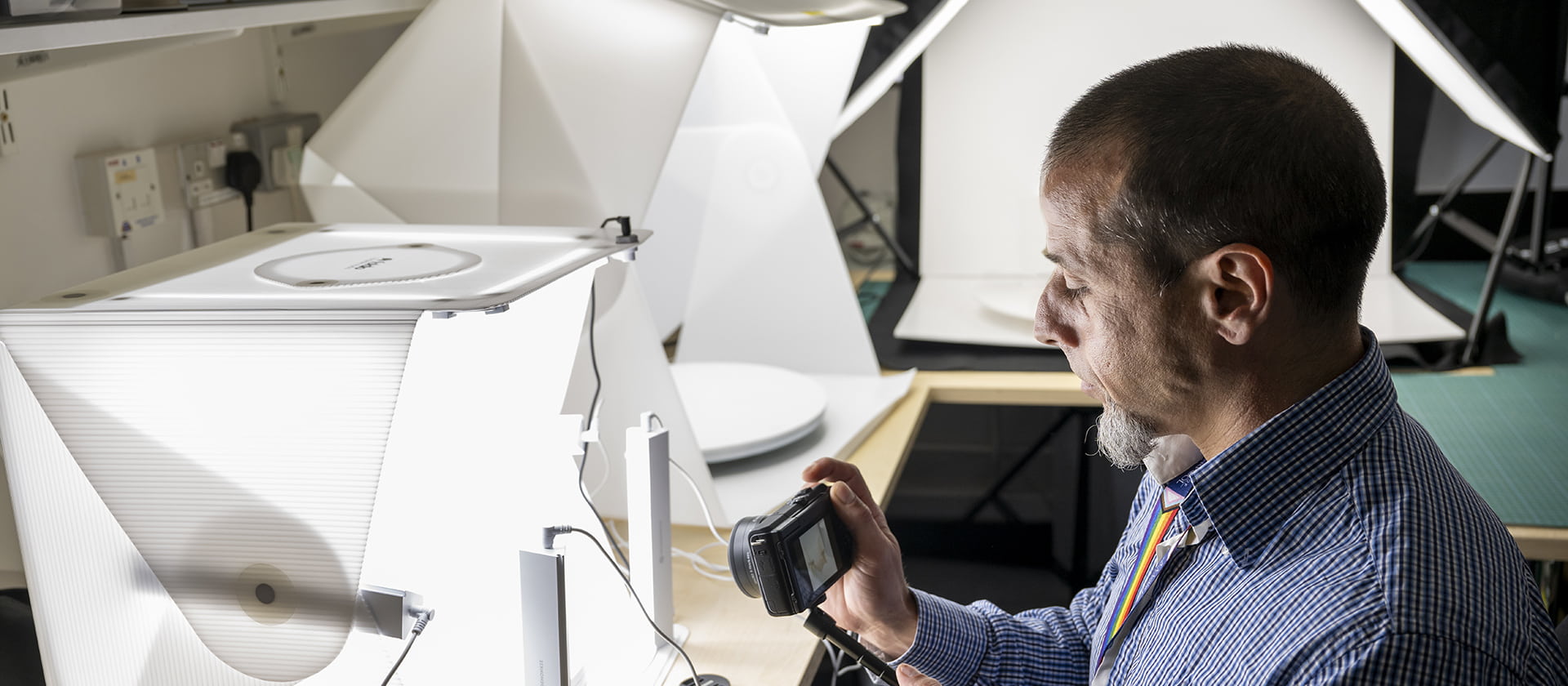
Our anatomists and pathologists are actively involved in applying modern capturing, rendering and printing techniques to medical data and gross images, in order to obtain models to be used in teaching and research.
The Liverpool Veterinary Education Research Group (LiVERG) works on pedagogic research projects. Key areas of focus are clinical reasoning, student retention and progression, mental health and wellbeing, and assessment practices. The undergraduate and master's projects are supervised by LiVERG, and collaborations are ongoing with several other departments and institutions.
Our veterinary pathology group is at the forefront of veterinary forensic pathology in the UK and worldwide with a large caseload of forensic cases and extensive expertise in acting as an expert witness in court. This activity generates KE with prosecuting bodies and with a number of research projects aimed at increasing the accuracy of forensic veterinary pathological examinations.
Collaborative research is constantly active thanks to the expertise of Board Certified Pathologists in supporting projects involving the morphological analysis of animal tissues as part of experimental procedures. This benefits also from the application of quantification techniques thanks to our DiMo lab capabilities.
We Investigate new and established endemic diseases in collaboration with the Chester Zoo veterinary team to diagnose novel infectious agents and improve animal welfare by suggesting management changes. These zoo animal cases are also used for both undergraduate and postgraduate exotic animal pathology teaching by RVS-certified specialist pathologists.
Our fully equipped post-mortem rooms allow full post-mortem examinations (Including veterinary forensic cases) on all species of animals up to 2 Tonnes. Our rooms are equipped with electronic devices for real-time reporting and video streaming devices for distance learning.
The Veterinary Teaching Suite (VTS) has two rooms where practical sessions can be taught, each has space for 85 students. These can also be combined into one large room with capacity for 170 students. The VTS is equipped with state of the art audio-visual equipment, high-resolution cameras and displays. It has a fully-equipped clinical skills laboratory, where students can hone their skills in diverse areas such as bandaging, auscultation, and physical examination of their simulated patients.
We host a large histology and automated immunohistochemistry facility that serves as a diagnostic hub for veterinary hospitals and external clients, we also provide support to research facilities across the University of Liverpool.
The veterinary diagnostic microbiology laboratory covers specialist services including bacteriology, mycology, molecular diagnostics and infection control. Our mission is to support the clinical management of infections for our veterinary patients by providing state-of-the art diagnostics and infection control including the use of matrix-assisted laser desorption/ionisation time-of-flight (MALDI-TOF) mass spectrometry.
The DiMo laboratory is a fully equipped end-to-end facility to handle acquisition and processing of gross and histological images, including scanning, image analysis, deep learning and 3D printing of models. Image analysis of specimens with integration of artificial intelligence dramatically increases reproducibility of data and automation applied to research and diagnostics.
Watch our video to find out more about the DiMo Lab, a fully equipped state-of-the-art facility for teaching and research.
