What types of page to search?

Alternatively use our A-Z index.

Our space research is out of this world

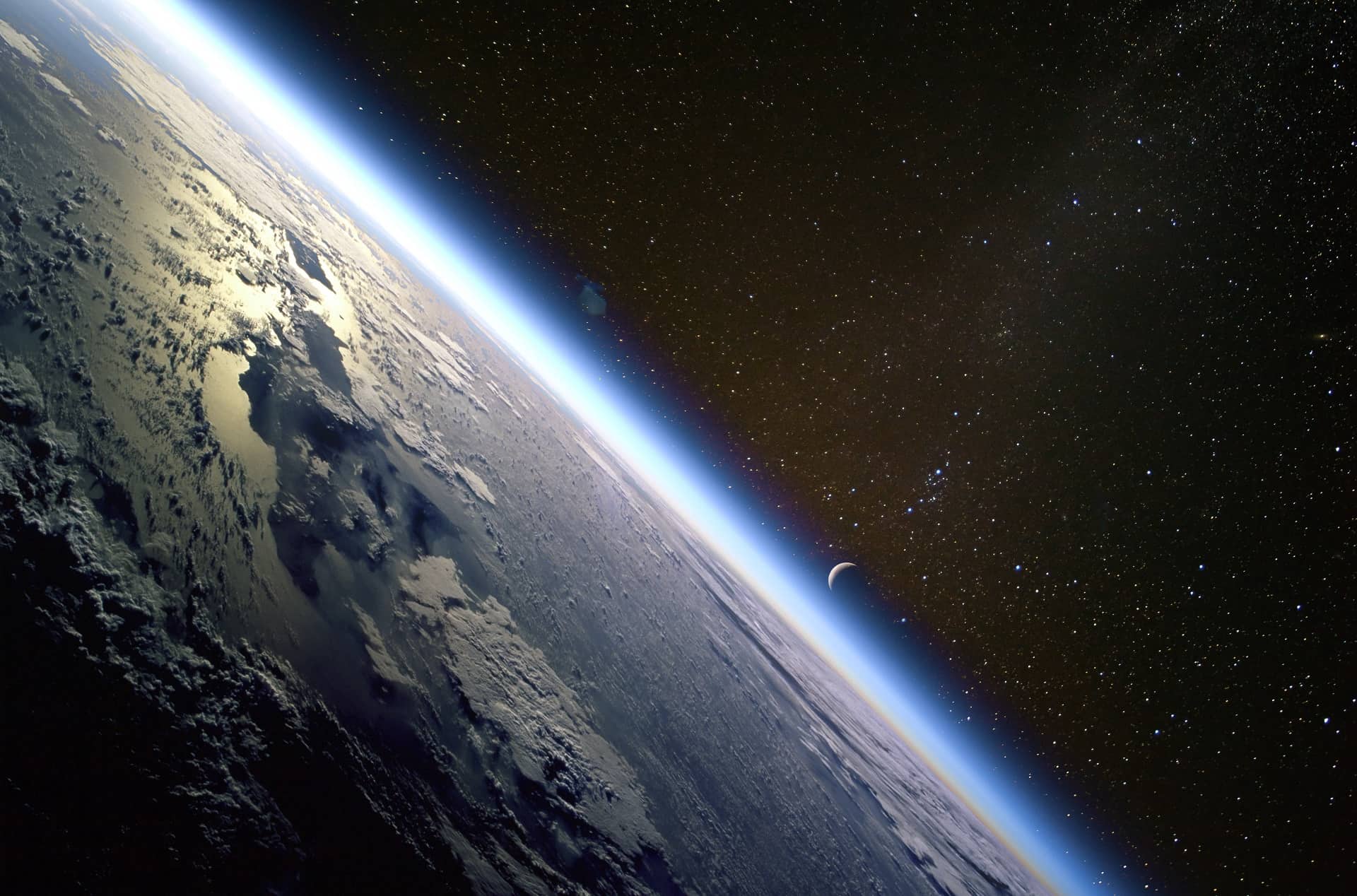
Earth as seen from space

The University of Liverpool is home to a broad and ambitious programme of space research spanning engineering, physics, life sciences and data science.

In collaboration with partners including CERN, the UK Space Agency, the European Space Agency (ESA) and the UK Ministry of Defence, we lead and contribute to national and international efforts in planetary defence, space surveillance, microgravity research, satellite intelligence, space energy and sustainable space engineering.

Our researchers play key roles in major missions such as NASA’s DART asteroid deflection experiment and ESA’s Hera and Ramses missions, while also using the International Space Station as a laboratory to study muscle ageing and human health in microgravity. From autonomous spacecraft and orbital debris tracking to dark matter research, quantum sensors and artificial intelligence, we bring together disciplines to tackle some of the most important scientific and technological challenges of our time.

Through multidisciplinary research and global partnerships, the University of Liverpool is harnessing space to protect Earth, improve lives and help create a healthier, more secure and more sustainable future.

Watch on YouTube:

Space engineering

In this video, Professor Simon Maskell, Dr Stefania Soldini and Dr Kai Hoettges explain how their space engineering research is creating pioneering solutions for a better world.

Discover our researchers

Learn more about our experts within the field of space engineering.

Discover our work

European Space Agency astronaut Matthias Maurer

Muscles, ageing and microgravity

Our experiments aboard the International Space Station are helping us understand what happens to human muscles as we age.

Infographic showing the effect of DART's impact on the orbit of Dimorphos.  Credit: NASA/Johns Hopkins APL

NASA’s DART experiment

A University engineer was part of the world’s first full-scale planetary defence test to protect Earth against deadly asteroids.

Earth featuring a series of connected points via satellite

Space surveillance

Supporting the UK Ministry of Defence and the European Space Agency in space surveillance to map debris orbiting earth.

Space safety and communication

Space safety and communication

Building the communication and detection systems that enable spacecraft navigation, monitoring, and next-generation space technologies.

Dark matter and fundamental physics

Dark matter and fundamental physics

We pursue dark matter with a growing emphasis on space-based platforms and satellite missions, while applying our expertise to space science challenges and satellite-based fundamental physics missions.

Astrochemistry and origins

Astrochemistry and origins

We recreate the extreme conditions of space in the laboratory to measure chemical reactions, providing critical data to interpret telescope observations and understand astrochemistry.

Earth observation and data

Earth observation and data

Transforming complex satellite imagery into accessible, research-ready data that helps policymakers tackle challenges in sustainability, health, and prosperity across communities.

Advanced semiconductor devices for space-based solar power

Advanced semiconductor devices for space-based solar power

We design and fabricate next-generation semiconductor devices that enable efficient space-based solar power, advancing nanoelectronics for clean energy, space systems and low-carbon infrastructure.

SIRE photovoltaic research

SIRE photovoltaic research

Our team develops lightweight, radiation-tolerant thin-film solar cells that enable high power-to-weight, durable and scalable energy systems for satellites, orbital manufacturing and future lunar infrastructure.

Latest news and updates

Recent news and updates from the University of Liverpool’s space engineering research community.