How you'll learn
The Accounting and Finance MRes is delivered in two stages: a taught component followed by a research phase which culminates with a dissertation.
As part of the taught component, modules will provide you with a thorough grounding in established research methods and you’ll also be introduced to innovative and experimental approaches used and created by the same faculty who teach them.
Subject knowledge is primarily delivered via lectures combined with practical activities, including case studies and seminars, to help demonstrate the empirical application of research methods and theories.
Cohorts are deliberately small, to foster individual guidance and fruitful relationships between faculty and students, as part of a rich ecosystem environment where you can learn from one another as peers with common research interests.
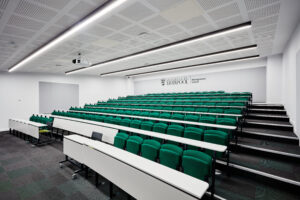
The main forms of teaching are lectures, including guest lectures delivered by international scholars, seminars and lab work where applicable, for example to work with statistical software.
Following semester two, you’ll complete a dissertation with the support of an academic supervisor. This final project will enable you to specialise in an area of management and business research which will deepen your knowledge, understanding and capabilities in your chosen area.
Teaching time accounts for an average of 10 hours per week (full-time), but you should anticipate an additional 24 hours of self-directed study and group work per week.
How you're assessed
The broad structure of the programme includes 180 credits:
- Taught component: 120 credits distributed across six modules during the first and second semester (for full-time students)
- Dissertation: 60 credits to be completed during the summer period.
You’ll be required to complete 180 credits to achieve a full Accounting and Finance MRes. You’ll graduate with a Pass, Merit or Distinction (subject to meeting specific criteria outlined by the University).
Assessment tasks are varied and some may be designed specifically to meet the learning outcomes of the programme, but you can expect to be assessed via individual or group:
- Presentations
- Research replication
- Mini research projects
- Written coursework
- Exams.
The weighting of individual components will vary from one module to another. All assessment information is included within the module specification.
Liverpool Learning Framework
At Liverpool, we take a distinctive approach to education through the Liverpool Learning Framework. This means teaching that is engaging, inclusive and designed to help you succeed during your studies and beyond.
You’ll develop specialist subject knowledge alongside the skills employers value most, including:
- Digital fluency
- Confidence
- Global citizenship
Our curriculum is characterised by the three Liverpool Hallmarks:
- Research-connected teaching - learning informed by the latest ideas and discoveries
- Active learning - taking part, applying knowledge and learning by doing
- Authentic assessment - assessments designed around real-world tasks and challenges
We also embed key priorities across our curriculum, including AI literacy, employability, and sustainability, helping you prepare for the future and make a positive impact in the world.
We’re committed to creating a supportive and inclusive learning environment where every student can thrive.