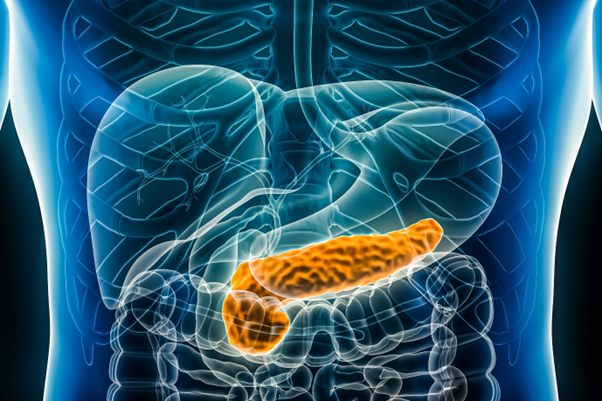
Acute pancreatitis is a serious condition in which the pancreas suddenly becomes inflamed. It is most often caused by gallstones, alcohol excess, or high blood fat levels. The disease affects around 30,000 persons each year in the UK, nearly 10 times that in the USA, and 4 million people worldwide.
Acute pancreatitis causes intense belly pain, an inability to eat, and, in 1 out of every 10 persons, very severe disease with critical failure of breathing and other organs in the body, leading to death in extreme cases. Recovery can be prolonged from fluid and dead, infected tissues in the belly, poor nutrition, general debility, the need for pancreatic enzyme supplements, and insulin injections for new sugar diabetes.
Accelerating drug development through industry collaboration
Despite many years of research, there is still no approved medicine that can change the course of acute pancreatitis or prevent its most severe complications, including organ failure and the death of pancreatic tissue. Researchers in the Liverpool Pancreatitis Research Group at the University of Liverpool, together with critical input from Professor Ole Petersen FRS now at the University of Cardiff, discovered that during acute pancreatitis excessive amounts of calcium enter pancreatic cells through a key pathway known as CRAC (calcium release-activated calcium) channels or store-operated calcium entry (SOCE). This abnormal calcium influx triggers pancreatic injury and activates immune cells, worsening inflammation.
At the same time, the U.S. biotechnology company CalciMedica Inc. developed zegocractin (also known as AuxoraTM), a drug designed to block this harmful calcium entry. Recognizing the scientific alignment, the Liverpool Pancreatitis Research Group partnered with CalciMedica to advance the drug as a potential treatment for acute pancreatitis. Further preclinical studies suggested that Auxora could be highly effective.
Early clinical studies showed that Auxora was safe and appeared to speed recovery in acute pancreatitis patients, allowing them to tolerate solid food sooner and leave the hospital earlier. To further evaluate its effects, a larger trial—called CARPO—was conducted. The CARPO trial was designed by CalciMedica together with the CARPO Trial Steering Committee, chaired by Professor Robert Sutton, the lead of the Liverpool Pancreatitis Research Group. It was funded and coordinated by CalciMedica and carried out across sites in the United States and India. The trial tested three different doses of Auxora compared with placebo in patients hospitalised with acute pancreatitis and evidence of systemic inflammation.
The trial met its primary objective, demonstrating a statistically significant dose response in the median time it took hyper-inflamed patients to tolerate solid food. Additionally, across all enrolled patients, higher doses of Auxora prevented severe breathing problems, reduced the incidence of pancreatic dead tissue, and led to better overall outcomes compared to placebo.
These results, published in the open access journal eClinicalMedicine - the online clinical publication of Lancet - support calcium-channel blockade as a promising way to treat acute pancreatitis, particularly in patients at high risk of serious complications. The findings also help inform the design of future studies, including patient selection and choice of clinical endpoints for a final, registrational-enabling trial.
Next steps
A pivotal phase 3 trial is required to establish definitively the safety and effectiveness of Auxora for regulatory approval. CalciMedica is currently in discussions with the U.S. Food and Drug Administration (FDA) regarding the design of this trial in acute pancreatitis.
Professor Robert Sutton said: “Acute pancreatitis is life-threatening, causing major illness with long-term impacts on health, yet even now we have no drug to treat the disease. It is greatly inspiring that years of painstaking research and exacting clinical trials attracting international investment are making decisive progress to crack this challenge.”
Dr Sudarshan Hebbar, Chief Medical Officer of CalciMedica, said: “We are encouraged by the CARPO results, which suggest that Auxora has the potential to reduce the most serious complications of acute pancreatitis. We are now finalising the design of our pivotal, registrational-enabling trial in close collaboration with the FDA.”
Read more
Read the article: DOI 10.1016/j.eclinm.2026.103757
Therapeutics Innovation
The Therapeutics Innovation frontier positions the University of Liverpool at the forefront of efforts to revolutionise the drug discovery and medicine development pathway. Our distinctive capabilities bridge the gap between industry, global charities, and academia, enabling us to work collaboratively to tackle major health challenges.
Watch our video to find out more.