How you'll learn
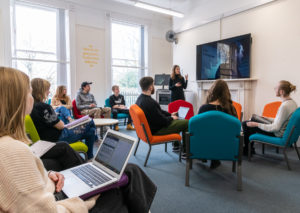
Teaching on the MA Global Media and Politics (MPEM) is delivered through weekly workshops held in person on the Liverpool main campus. These usually last for two to three hours per module and week. Class sizes for Master’s programmes in the Department of Communication and Media tend to be small, but numbers can vary from module to module and from year to year. A typical class in the MA Media and Politics usually includes between seven and 15 students.
The programme is centred on two 30-credit core modules, taught in semester one and semester two, respectively. Also mandatory is a 15-credit module on Research Methods in semester one. Students will select three optional 15-credit modules. We recommend choosing one optional module for semester one and two optional modules for semester two. Students can choose from all postgraduate-level modules offered by the Department of Communication and Media as well as a selection of modules run by the Department of Politics.
How you're assessed
You will be assessed mostly by coursework. This will take a number of different forms, including essays, academic posters, group reports, a research proposal, and a master’s dissertation. In addition, students will be assessed by presentations in certain modules. Other assessment formats, such as written or oral exams, may also apply depending on the optional modules selected by the student.
Liverpool Hallmarks
We have a distinctive approach to education, the Liverpool Curriculum Framework, which focuses on research-connected teaching, active learning, and authentic assessment to ensure our students graduate as digitally fluent and confident global citizens.
The Liverpool Curriculum framework sets out our distinctive approach to education. Our teaching staff support our students to develop academic knowledge, skills, and understanding alongside our graduate attributes:
- Digital fluency
- Confidence
- Global citizenship
Our curriculum is characterised by the three Liverpool Hallmarks:
- Research-connected teaching
- Active learning
- Authentic assessment
All this is underpinned by our core value of inclusivity and commitment to providing a curriculum that is accessible to all students.