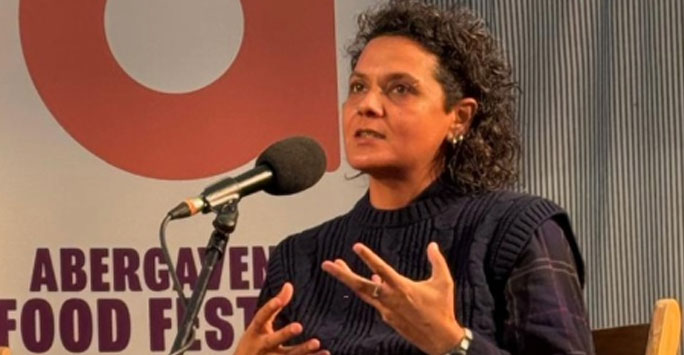
Dr Ceren Kabukcu, Research Fellow in Archaeology, Classics and Egyptology, and HSS ECR Network Chair, explores what it means to be an ECR in Higher Education today, and what some examples from the plant world could teach us about thriving in challenging environments.
You can learn more about the HSS Early Career Researchers' Network here.
What does it mean to be an ECR?
Uncertainty and precarity in employment is perhaps the one binding factor when it comes to defining what it means to be an (early career) researcher in higher education.
In many published reports by leading bodies conducting research on academic career pathways, a common thread is that a) there is a substantial body of scholars on fixed-term contracts ranging from a few months in duration to several years; and b) those on open-ended, tenure-track or permanent contracts have almost always formerly held fixed-term contracts of varying lengths. In many contexts, ECR often refers to a scholar at the beginning of their academic career: frequently defined in number of years since obtaining a PhD.
This is often reinforced in determining eligibility for specific schemes: the UK-wide well known early career fellowships by the British Academy (BA Postdoctoral Fellowship) and the Leverhulme Trust (Early Career Fellowship) have cut off points for eligibility within 3 and 4 years post-PhD respectively. The EU-funded MSCA fellowships define eligibility for the 2 year fellowship as within 8 years since the completion of the PhD. Schemes such as the Royal Society University Fellowship, providing funding for up to 8 years and the opportunity to lead a team, limit eligibility to 3 to 8 years of experience since PhD completion, with additional rules around having previously held an open-ended contract.
When it comes to defining membership for the Faculty ECR Network, we did not have such difficult equations in mind, but a desire to cultivate existing communities of researchers who might benefit from a more active support network, mentorship, and opportunities for development. Thus, as it currently stands, the broader group appeals to anyone who is close to completing their PhD (and thus, contemplating their first job/fellowship/grant applications in academia) to those of us with more than a decade of research experience and several contracts under our belts (you can meet the ECR Network Steering Group here).
The needs and aspirations of ECRs: opportunity and habitat
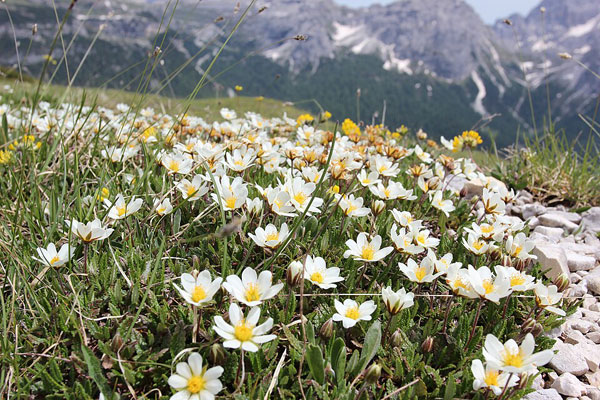
Photo by Steinsplitter - Own work, CC BY-SA 3.0
I absolutely love the plant world: they quietly shape and define the world around us, and inevitably as a researcher of prehistoric remains of plants, I tend to think of many situations in life through a plant lens. Many plants are incredibly resilient, persistent, and spread; even though they cannot simply pick up their roots and migrate.
Amongst the cornucopia of plants worthy of being the avatars of superheroes, there are few plants as iconic as Drayas octopetala. Commonly referred to as the mountain avens, D. octopetala is a miniscule Artic Alpine shrub in the rose family, with beautiful white flowers. These plants are unusual in many ways: unlike other plants of the rose family, their flowers have 8 petals (hence, octopetala); they can reproduce through both seeds and rhizomes (underground root systems); they can withstand extremely cold and arid conditions and yet are fragile when faced with warmer summers. Unlike countless other plants which are resilient, they have also had a period of Earth's geological history named after them. The Younger Dryas (~13,000–11,700 years ago), characterised by an abrupt cold and arid climatic regime over the Northern Hemisphere was named as such due to the proliferation of D. octopetala fossils dating to this phase. At a time when most plant and animal species contracted, the mountain avens thrived and supported the livelihoods of many other species.
For some of these reasons, I often think they would be perfect candidates to represent early career researchers and/or those of us who have survived for a considerable number of years in academia in research-focused and often fixed-term contracts. If trends in the persistence of short-term contracts are right, a substantial amount of research and teaching in academia somehow touches on those at the start of their careers, and/or researchers on fixed term contracts. In turn, the lack of permanent positions forces most of us to move between institutions, countries, or disciplines, exposing many of us to reinvent ourselves many time over in the process; and crucially develop more diverse networks.
The persistence of some plant species depends to a large extent on their existing traits (though, many of these are in turn shaped by their evolutionary histories): some thrive and/or persist under environmental stress, others have seeds that can persist in soil seedbanks waiting for the most opportune moment for germination, others spread through various means to colonise new environments. The diversity of strategies and survival tactics is generally what ensures broader resilience and persistence of specific habitats.
Coming back to the issue of ECRs in academia, and especially those wanting to survive and thrive in higher education: one superpower at our disposal is cultivating a diverse network. Even if we do not collaborate with them on analysis, or writing, or teaching, we get to learn from the experiences of our research friends (network), we learn to support each other in shared challenges, and to have multiple options open to us if we need to shift gears. My sentiments are echoed in many of the posts made by my friends on the UoL Research Staff Association blog, and repeated by many others in countless articles, essays, lectures, and chats over coffee. Should you ever be interested in what early career researchers in the Humanities and Social Sciences think, you can see traces of this in the ‘Being a SHAPE Researcher’ report published by the British Academy in 2024.
I am hoping that this mini blog-post, with a foray into some obscure botanical trivia, and links to writing by others, as well as your own experiences will compel you to get in touch with us in the HSS early career community, with your peers elsewhere to expand your circle of support in academia or simply look up and admire the beauty of Drayas octopetala.
In the coming months we are planning a range of events which we hope you will be interested in taking part (please keep an eye on the HSS ECR newsletter). We are also always open to ideas if you think there are gaps in training, development opportunities, or you would simply like to have more opportunities to meet other researchers from the Faculty- please do not hesitate to get in touch!
If you'd like to receive the HSS ECR Newsletter, please drop us a line at hssrke@liverpool.ac.uk.
Learn more about Ceren on her staff page.