What types of page to search?

Alternatively use our A-Z index.

Qualification type
MSc

Maternal and Fetal Medicine

Study mode
Part-time
Duration
24 months
Start date and application deadlines
Start date
January 2027
Apply by:
Starts on:

We've set the country or region your qualifications are from as United Kingdom.

Join us at our Postgraduate Online Open Week

Join us online from Monday 16 to Friday 20 March 2026 to find out more about master’s degrees and research opportunities at Liverpool.

How to apply
UK students

Apply for this course by:

There is no fee to apply for our courses.

What you'll need

In addition to the standard documentation, applicants will be required to submit the following to support their application:

  • Reference / letter of support from a supervisor or senior peer
  • Evidence of registration of a professional body that oversees healthcare professionals

Evidence of ability to perform obstetric scan to level of UK ‘Fetal Anomaly Screening Programme (FASP)’ level.

You'll also need to submit:

  • School or college transcripts/certificates
  • University transcripts and certified translations if applicable
  • Degree certificates
  • Personal statement outlining your learning ambitions

Our application process

  1. Sign into the University of Liverpool Application Portal and start your application
  2. Submit your application
  3. We'll email you to let you know we're processing your application
  4. Track the progress of your application using the Postgraduate Application Tracker (we'll send you a link to the tracker)
  5. We'll email you when a decision has been made
  6. If you've been made an offer, you can then accept or decline it using the Postgraduate Application Tracker.

Already a University of Liverpool student?

Apply faster with the quick apply form for current University of Liverpool students.

Need help applying?

Our how to apply pages provide further information about applying online for our taught postgraduate courses.

If you are unable to apply via our online form, or need further support, please contact the postgraduate enquiries team.

International students

Apply for this course by:

There is no fee to apply for our courses. However, once you’ve been made an offer to study with us you are required to pay a fee deposit.

Alternative application form

If you're located in select countries at the time of submitting your application, you must use our alternative application form. This includes:

  • Cuba
  • Crimea
  • Donetsk People’s Republic
  • Iran
  • Luhansk People's Republic
  • North Korea
  • Syria.

If you’re located in any country not listed above at the time of submitting your application, please ensure that you use the University of Liverpool Application Portal.

What you'll need

In addition to the standard documentation, applicants will be required to submit the following to support their application:

  • Reference / letter of support from a supervisor or senior peer
  • Evidence of registration of a professional body that oversees healthcare professionals

Evidence of ability to perform obstetric scan to level of UK ‘Fetal Anomaly Screening Programme (FASP)’ level.

You'll also need to submit:

  • School or college transcripts/certificates
  • University transcripts and certified translations if applicable
  • Degree certificates
  • Evidence of English Language proficiency (EU and international applicants only)
  • Personal statement outlining your learning ambitions.

Our application process

  1. Sign into the University of Liverpool Application Portal and start your application
  2. Submit your application
  3. We'll email you to let you know we're processing your application
  4. Track the progress of your application using the Postgraduate Application Tracker (we'll send you a link to the tracker)
  5. We'll email you when a decision has been made
  6. If you've been made an offer, you can then accept or decline it using the Postgraduate Application Tracker.

Already a University of Liverpool student?

Apply faster with the quick apply form for current University of Liverpool students.

Need help applying?

We provide further information about applying online.

If you are unable to apply via our online form, or need further support, please contact the postgraduate enquiries team.

Combine this subject

With a combined degree, you can study two subjects as part of the same degree programme.

  • Choose from 30 subjects and over 300 combinations
  • Choose joint or major minor subjects
  • Adjust the weight of your subjects at the end of your first year
  • Same number of credits as single honours students
  • Same classes as single honours students
  • Appeal to a wide range of employers

Explore combined degrees for Medicine courses

Let's stay in touch

Want to hear updates from us? Fill out the form below to receive invites to future events and information about studying at the University of Liverpool, through the communications channels selected. Following submission, you can opt out by contacting our enquiries team.

Complete form

Download a course leaflet

Your course leaflet download should begin automatically but if not, click to download. If you would like to keep up to date with the latest events from the University of Liverpool, complete the form below.

Complete form

Change country or region

We’re currently showing entry requirements and other information for applicants with qualifications from United Kingdom.

Please select from our list of commonly chosen countries below or choose your own.

If your country or region isn’t listed here, please contact us with any questions about studying with us.

About this course

Transform your clinical practice and help shape the future of high-risk pregnancy care worldwide. This dynamic online MSc in Maternal and Fetal Medicine from the University of Liverpool blends cutting-edge research, expert clinical insight, and specialist ultrasound training to develop confident, globally minded leaders in the field.


Introduction

Please note, your course welcome starts on 25 January 2027. Teaching starts on the 1 February 2027.

This course is subject to approval for 2027 entry; course content may be subject to change.

The MSc in Maternal and Fetal Medicine is designed for doctors, advanced specialist midwives or sonographers who want to deepen their expertise in maternal medicine and fetal medicine care. You’ll explore how medical conditions, fetal development and pregnancy physiology interact, while gaining practical insight into ultrasound and evidence-based management.

Taught entirely online, the course combines interactive lectures, clinical case discussions and peer learning.

Led by international experts from the University of Liverpool’s Institute of Life Course and Medical Sciences and Liverpool Women’s Hospital NHS Foundation Trust — one of Europe’s leading centres for obstetric and perinatal medicine — this programme connects you to a global community of clinicians and researchers dedicated to improving outcomes for mothers and babies.

Through its flexible online structure, strong clinical partnerships, and research-informed teaching, the MSc develops the advanced knowledge, analytical capability, and leadership skills required for progression in maternal and fetal health worldwide. The curriculum aligns closely with the Royal College of Obstetricians and Gynaecologists (RCOG) advanced training curriculum in maternal and fetal medicine and supports clinicians working towards specialist or subspecialist training pathways, as well as experienced practitioners seeking to update and extend their expertise.

Flexible exit awards are available, allowing students to complete a Postgraduate Certificate (60 credits) or Postgraduate Diploma (120 credits) in Maternal and Fetal Medicine.


Who is this course for?

This programme is suitable for:

  • Practising obstetricians and gynaecologists, including independent practitioners, consultants, and trainees
  • Medical doctors seeking to develop or formalise their expertise in Maternal Medicine
  • Senior trainees progressing towards independent or subspecialist practice
  • Advanced specialist midwives and sonographers working in high-risk maternity services.

It supports clinicians already in independent practice as well as those preparing for advanced training pathways. The MSc is also well suited to professionals aspiring to leadership, service development, or research roles in maternal and fetal health, both in the UK and internationally.

Designed to complement busy clinical schedules, the fully online format enables flexible study while maintaining academic rigour and specialist depth.


What you'll learn

  • Apply advanced, evidence-based approaches to the management of complex and high-risk pregnancies
  • Develop specialist skills in obstetric ultrasound, fetal assessment, and multidisciplinary clinical decision-making
  • Critically evaluate research evidence and clinical guidance to inform safe, effective practice
  • Navigate ethical, legal and communication challenges in maternal and fetal medicine
  • Integrate maternal and fetal perspectives to optimise outcomes across the antenatal-postnatal continuum.

Accreditation

This programme is delivered by the Faculty of Health and Life Sciences at the University of Liverpool, a global leader in maternal and perinatal health research and education. While the MSc in Maternal and Fetal Medicine isn’t formally accredited by an external professional body, the curriculum aligns closely with the Royal College of Obstetricians and Gynaecologists (RCOG) advanced training curriculum in maternal and fetal medicine and beyond. It also supports professional development for clinicians working towards specialist or subspecialist training pathways, as well as those seeking to extend and formalise their expertise in high-risk maternity care.

Back to top

Course content

Discover what you'll learn, what you'll study, and how you'll be taught and assessed.

Year one

This course is subject to approval for 2027 entry; course content may be subject to change.

In year one, you’ll cover high risk pregnancy ultrasound including the management of multiple pregnancy, fetal growth, placental anomalies and preterm labour prevention alongside a module on research skills. Within the research skills component there’s the option to tailor your learning to your prior experience. You’ll then cover general fetal medicine and maternal medicine, closely applied to clinical practice.

Compulsory modules

  • Foundations of Maternal and Fetal Medicine – 20 credits
  • Fetal Anomalies Beyond the Brain and Heart (Fetal Medicine 1) – 20 credits
  • Maternal Medicine 1 (MM1) – 20 credits.

Optional modules

You’ll choose one of the following modules:

  • Introduction To Research Methods: Developing Core Skills – 20 credits
  • Advanced Research Methods: Design And Data Analysis – 20 credits.

For completion of the MSc all modules are compulsory to achieve 180 credits in total. Flexible study options allow exit with:

  • Postgraduate Certificate (PGCert) in either:
    • Maternal Medicine — 3 x 20 credit modules = 60 credits total, or
    • Fetal Medicine — 3 x 20 credit modules = 60 credits total
  • Postgraduate Diploma (PGDip) — 120 credits total, that requires completion of all the taught modules in feto-maternal medicine and a single research skills module.

Please note that in order to complete the fetal medicine focused modules, you should have the ability to perform an obstetric scan to the level of a UK fetal anomaly scan. This could be shown by RCOG ‘intermediate scan’ competency or self and peer recommendation. You should have some access to ultrasound scanning to allow for practical application of taught techniques and imaging. This could be through access to a physical ultrasound machine and printer with a cohort of pregnant women to scan or through access to an ultrasound scan simulator. For any student that does not have access to either of these, we can offer access to the OPUS software system (at additional cost), enabling you to simulate ultrasound scans.

Programme details and modules listed are illustrative only and subject to change.

Year two

This course is subject to approval for 2027 entry; course content may be subject to change.

In year two, you’ll advance your expertise in Fetal Medicine, with focused training in fetal echocardiography and advanced neurosonography, developing structured approaches to complex cardiac and central nervous system anomalies, diagnostic algorithms, and multidisciplinary counselling.

You’ll also complete the second maternal medicine module which concentrates on high-impact maternal conditions and clinical complexity in pregnancy. Topics include obesity and nutritional extremes, advanced diabetes (including digital and CGM-based care), hypertensive disorders and the pre-eclampsia spectrum, thromboembolic disease, renal and respiratory disorders, maternal sepsis, and acute clinical deterioration. The module also explores long-term maternal cardiovascular risk, perinatal mental health, complex vulnerability, and oncology in pregnancy. Emphasis is placed on interpretation of complex clinical data, guideline variation, escalation pathways, and multidisciplinary decision-making under uncertainty.

In addition, you’ll undertake a 60-credit supervised dissertation. Working with an expert supervisor, you’ll design and complete an independent research project on a topic of your choice, developing advanced skills in critical appraisal, methodology, and academic writing.

Modules

  • Fetal Anomalies Involving the Brain and Heart (Fetal Medicine 2) – 20 credits
  • Maternal Medicine 2 (MM2) – 20 credits
  • Research Dissertation – 60 credits.

Please note that in order to complete the fetal medicine focused modules, you should have the ability to perform an obstetric scan to the level of a UK fetal anomaly scan. This could be shown by RCOG ‘intermediate scan’ competency or self and peer recommendation. You should have some access to ultrasound scanning to allow for practical application of taught techniques and imaging. This could be through access to a physical ultrasound machine and printer with a cohort of pregnant women to scan or through access to an ultrasound scan simulator. For any student that does not have access to either of these, we can offer access to the OPUS software system (at additional cost), enabling you to simulate ultrasound scans.

Programme details and modules listed are illustrative only and subject to change.

Teaching and assessment

How you'll learn

Teaching is delivered fully online through the University of Liverpool’s virtual learning environment, designed to provide flexibility for busy healthcare professionals working in clinical settings.

You will learn through a blend of interactive lectures, case-based discussions, problem-based learning, practical application of taught scan techniques and asynchronous discussion forums led by national and international experts in maternal and fetal medicine. Modules integrate multimedia resources, guided reading, and peer learning activities to promote collaboration and critical reflection.

Each 20-credit module includes approximately 3-4 hours per week of structured online teaching and additional independent study, which may include reading, clinical reflection, practicing ultrasound scanning techniques, guideline appraisal, and assignment preparation.

You are encouraged to apply learning directly to your own clinical practice, supported by opportunities for feedback and academic supervision. You should attempt to identify a local mentor who will support improvements in ultrasound scan training.

How you're assessed

Assessment throughout the MSc in Maternal and Fetal Medicine is designed to test your ability to apply evidence, clinical reasoning, and research to real-world obstetric practice.

Each 20-credit module is assessed through coursework assignments, which may include critical literature reviews, case-based essays, or guideline evaluations, typically between 3,000–5,000 words in length. Additional assessments include the submission of ultrasound images, academic poster development, and short oral presentations. Together, these assessments enable you to integrate research evidence with clinical decision-making, demonstrate professional reflection, develop practical ultrasound skills, and communicate findings effectively.

Online examinations will be open book. Assessment is split between applied written work and online quiz material and a final research dissertation.

The Research Dissertation (60 credits) is completed in the final year of study and provides an opportunity to undertake an independent project on a topic relevant to maternal or fetal health. You will be supported by an academic supervisor and have approximately six months to complete and submit a 15,000–20,000-word dissertation.

Formative feedback and online supervision are provided throughout the programme to support academic development and progression.

Liverpool Hallmarks

We have a distinctive approach to education, the Liverpool Curriculum Framework, which focuses on research-connected teaching, active learning, and authentic assessment to ensure our students graduate as digitally fluent and confident global citizens.

The Liverpool Curriculum framework sets out our distinctive approach to education. Our teaching staff support our students to develop academic knowledge, skills, and understanding alongside our graduate attributes:

  • Digital fluency
  • Confidence
  • Global citizenship

Our curriculum is characterised by the three Liverpool Hallmarks:

  • Research-connected teaching
  • Active learning
  • Authentic assessment

All this is underpinned by our core value of inclusivity and commitment to providing a curriculum that is accessible to all students.

Back to top

Course options

Studying with us means you can tailor your degree to suit you. Here's what is available on this course.

Gain a Postgraduate Certificate

If you enrol on a master’s degree and complete 60 credits you may be able to exit the programme early and earn a Postgraduate Certificate (PGCert) for the work you have completed. This usually amounts to one semester when completed full-time.

Gain a Postgraduate Diploma

If you enrol on a master’s degree and have completed 120 credits you may be able to exit the programme early and earn a Postgraduate Diploma (PGDip) for the work completed. This usually amounts to two full semesters when completed full-time, without having to complete the final dissertation module.

Back to top

Your experience

Designed for busy healthcare professionals, this flexible online course allows you to study from home while balancing clinical practice. You’ll engage with an international cohort through interactive teaching, discussion forums, and case-based learning, while developing research skills and clinically focused expertise in maternal and fetal medicine.

Supporting your learning

From arrival to alumni, we’re with you all the way:

An exciting place to study

  • Centre of Excellence in Teaching and Learning
  • Flexible delivery supporting health professionals throughout their careers
  • Access to Centres of Clinical Excellence across the UK
  • Programmes designed for international impact overseas
  • Training health professionals for over 180 years
  • Committed to technologically innovative teaching with state-of-the-art facilities.
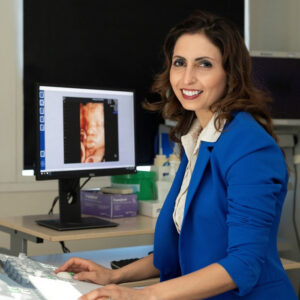
Professor Asma Khalil working at a computer

In an era of rapid clinical and technological change, this programme prepares the next generation of leaders in Womens health and Maternal Fetal Medicine. Through advanced training, interdisciplinary collaboration, and a strong foundation in research, we aim to shape safer, smarter, and more equitable maternity care.

Professor Asma Khalil: Professor of Obstetrics and Maternal Fetal Medicine, Director of the Fetal Medicine Unit at Liverpool Women’s Hospital, and Lead of the Multiple Pregnancy Service at St George’s University Hospital, London.
Two students chatting while walking through campus.

Chat with our students

Want to find out more about student life?
Chat with our student ambassadors and ask any questions you have.

Back to top

Careers and employability

This MSc supports career progression in obstetrics, maternal and fetal medicine, medicine and advanced midwifery. Graduates develop the expertise needed for senior clinical roles, subspecialty training, leadership positions, research careers, and service development in high-risk pregnancy care in the UK and internationally.

The programme is also suitable for independent practitioners who wish to consolidate and extend their expertise, formally demonstrate advanced knowledge in maternal and fetal medicine, and strengthen their professional profile within obstetric or medical practice.

When you graduate from this programme, you’ll be well prepared for a range of clinical, academic, and leadership roles, including:

  • Obstetricians and senior obstetric trainees with a specialist interest in maternal and fetal medicine
  • Doctors seeking to develop expertise in Maternal Medicine or practise as obstetric physicians
  • Progression to subspecialty training in Maternal and Fetal Medicine
  • Advanced, specialist, or consultant midwife roles in high-risk maternity care
  • Clinical educator or training lead positions
  • Research fellowships, PhD study, or academic clinical training pathways
  • Leadership roles in maternity services, quality improvement, or global maternal health.

Career support from day one to graduation and beyond

Career planning

Our campus Career Studio is a space for students and graduates to drop into and talk to a career coach. Career coaches are highly trained to help no matter what stage you are at in your career planning. You can access support to find and apply for full-time and part-time roles, placements, internships and graduate schemes. You will also find the help you need if you have a start-up idea or want to create a business plan. You can explore the world of work, prepare for job interviews, and access careers events and workshops. The Career Studio is open Monday to Friday from 10am-5pm, simply drop in at a time that works for you.

From education to employment

We develop our programmes with employers in mind. You will be supported to enhance your long-term employment prospects as you learn. We do this by exposing you to professionals, a variety of sectors and supporting you to work collaboratively with others to develop transferable skills. You are equipped with a clearer view of what to focus on in your area of interest, and to reflect on your studies. Our digital employability tools give you a tech-enhanced curriculum experience and make it easy for you to prepare for the world of work. You can use tools like the Handshake platform to connect with employers and message the Career Studio 24/7.

Networking events

You can start building good professional networks by attending events and employability activities. Our events are designed to develop your skills and expose you to many different employers, as well as to help you make contacts in your field. We help you improve your confidence when speaking to employers and give you access to unique opportunities. Our networking events also boost your understanding of the competencies and skills that employers are looking for in their recruitment process, giving you a competitive edge.

Back to top

My qualifications are from United Kingdom.

Fees and funding

Your tuition fees, funding your studies, and other costs to consider.

Tuition fees

UK fees (applies to Channel Islands, Isle of Man and Republic of Ireland)

Part-time place, per year - £6,850

International fees

Part-time place, per year - £6,850

Tuition fees shown are for the academic year 2026/27. Please note, if you apply for a PGCert, your total tuition fee will be £4,600 and if you apply for a PGDip, your total tuition fee will be £9,150 for academic year 2026/27.

Tuition fees cover the cost of your teaching and assessment, operating facilities such as libraries, IT equipment, and access to academic and personal support.

If you're a UK national, or have settled status in the UK, you may be eligible to apply for a Postgraduate Loan worth up to £12,167 to help with course fees and living costs. Learn more about paying for your studies.


Additional costs

You’ll need access to an ultrasound scan simulator, which may incur an additional cost. All images required should demonstrate normal fetal anatomy. You're expected to obtain the required ultrasound views and images for your assessment portfolio through clinical practice. Where this isn't possible, use of the approved OPUS ultrasound simulation platform will be required.

A three-month OPUS licence is available at an additional cost of approximately £1,000 for machine rental to your home, with extended access available if needed. In some regions, OPUS simulation centres or hospital-based machines may be accessible locally. You're encouraged to explore these options where available.

Find out more about the additional study costs that may apply to this course.


We’re showing the scholarships available to students from United Kingdom.

Scholarships and bursaries

We offer a range of scholarships and bursaries that could help pay your tuition and living expenses.

Bracken Scholarship

Studying a masters in any subject and aspiring to a career using data and digital skills in the public sector or within public missions such as health, renewable energy or climate change ? If you live in the Liverpool City Region, you could be eligible to apply for £5,000. Two awards are available per academic year.

John Lennon Memorial Scholarship

If you’re a UK student, either born in or with strong family connections to Merseyside, you could be eligible to apply for a fee discount of up to £4,500. You’ll need to demonstrate an active interest in global, community and environmental issues to be considered.

Sport Liverpool Performance Programme

Apply to receive tailored training support to enhance your sporting performance. Our athlete support package includes a range of benefits, from bespoke strength and conditioning training to physiotherapy sessions and one-to-one nutritional advice.

Back to top

My qualifications are from United Kingdom.

Entry requirements

The qualifications and exam results you'll need to apply for this course.

Qualification Details
Postgraduate entry requirements

You should have a minimum UK 2:2 healthcare degree (for example in medicine, nursing or radiography) or an international equivalent. You should currently be working in the field of obstetrics and have the registration of a professional body that oversees the relevant medical profession.

In order to complete the fetal medicine focused modules, you should have the ability to perform an obstetric scan to the level of a UK fetal anomaly scan.

International qualifications

You should have a minimum 2:2 healthcare degree (for example in medicine, nursing or radiography) or an international equivalent. You should currently be working in the field of obstetrics and have the registration of a professional body that oversees the relevant medical profession.

In order to complete the fetal medicine focused modules, you should have the ability to perform an obstetric scan to the level of a UK fetal anomaly scan.


English language requirements

You'll need to demonstrate competence in the use of English language, unless you’re from a majority English speaking country.

We accept a variety of international language tests and country-specific qualifications.

International applicants who do not meet the minimum required standard of English language can complete one of our Pre-Sessional English courses to achieve the required level.

Qualification Details
IELTS 7.0 overall, with no component below 6.5

Pre-sessional English

Do you need to complete a Pre-sessional English course to meet the English language requirements for this course?

The length of Pre-sessional English course you’ll need to take depends on your current level of English language ability.

Pre-sessional English in detail

If you don’t meet our English language requirements, we can use your most recent IELTS score, or the equivalent score in selected other English language tests, to determine the length of Pre-sessional English course you require.

Use the table below to check the course length you're likely to require for your current English language ability and see whether the course is available on campus or online.

Your most recent IELTS score Pre-sessional English course length On campus or online
6.5 overall, with no component below 6.0 6 weeks On campus or online
6.0 overall, with writing at 6.0 and no component below 5.5 10 weeks On campus or online
6.0 overall, with no component below 5.5 12 weeks Online
5.5 overall, with no component below 5.5 20 weeks On campus
5.5 overall, with no component below 5.0 30 weeks On campus
5.0 overall, with no more than one component at 4.5 40 weeks On campus

If you’ve completed an alternative English language test to IELTS, we may be able to use this to assess your English language ability and determine the Pre-sessional English course length you require.

Please see our guide to Pre-sessional English entry requirements for IELTS 7.0 overall, with no component below 6.5, for further details.

Back to top
Entry requirements: which qualifications do you need?

More about life in Liverpool

Discover more about the city and University.

Victoria Gallery & Museum

Why study at Liverpool?

Liverpool bursts with diversity and creativity which makes it ideal for you to undertake your postgraduate studies and access various opportunities for you and your family.

Postgraduate students walking through the campus.

Accommodation

To fully immerse yourself in the university experience, living in halls will keep you close to campus where you can always meet new people. Find your home away from home.

Image of the outside of the Management School building

Fees and Finance

Discover what expenses are covered by the cost of your tuition fees and other finance-related information you may need regarding your studies at Liverpool.


Contact us

Have a question about this course or studying with us? Our dedicated enquiries team can help.

Back to top

Last updated 11 March 2026 / / Programme terms and conditions

Changes to Maternal and Fetal Medicine MSc

See what updates we've made to this course since it was published. We document changes to information such as course content, entry requirements and how you'll be taught.

14 October 2025: 2026/27 UK and international fee increase – postgraduate HLS courses

Updates to UK and international tuition fees for entry 2026/27 made to postgraduate taught HLS courses.

25 July 2025: Palliative and End of Life Care MSc

Added in new optional module MDSC163 Advanced Practice in Palliative and End of Life Care for Children and Young People to Semester 1 and 2.

Added in new optional module MDSC418 Introduction to Ethics for Bioscience and Bioengineering & Technology to Semester 2.

29 April 2025: Duolingo requirements

Duolingo requirements updated to indicate that alongside the listed requirements, we will also accept the production, literacy, comprehension and conversation score set for academic year 2025/26 entry. Please see individual course pages for the minimum overall scores and minimum scores in each component that will be accepted.

20 February 2025: Palliative and End of Life Care MSc

Link to CPD information added to course overview

1 June 2024: Postgraduate taught updated entry requirements – 2024

The entry requirements for most postgraduate taught courses were updated from 2:1 to 2:2 in May 2024. Always check the course page for up-to-date entry requirements. 

23 March 2023: New postgraduate taught course pages

New course pages launched.