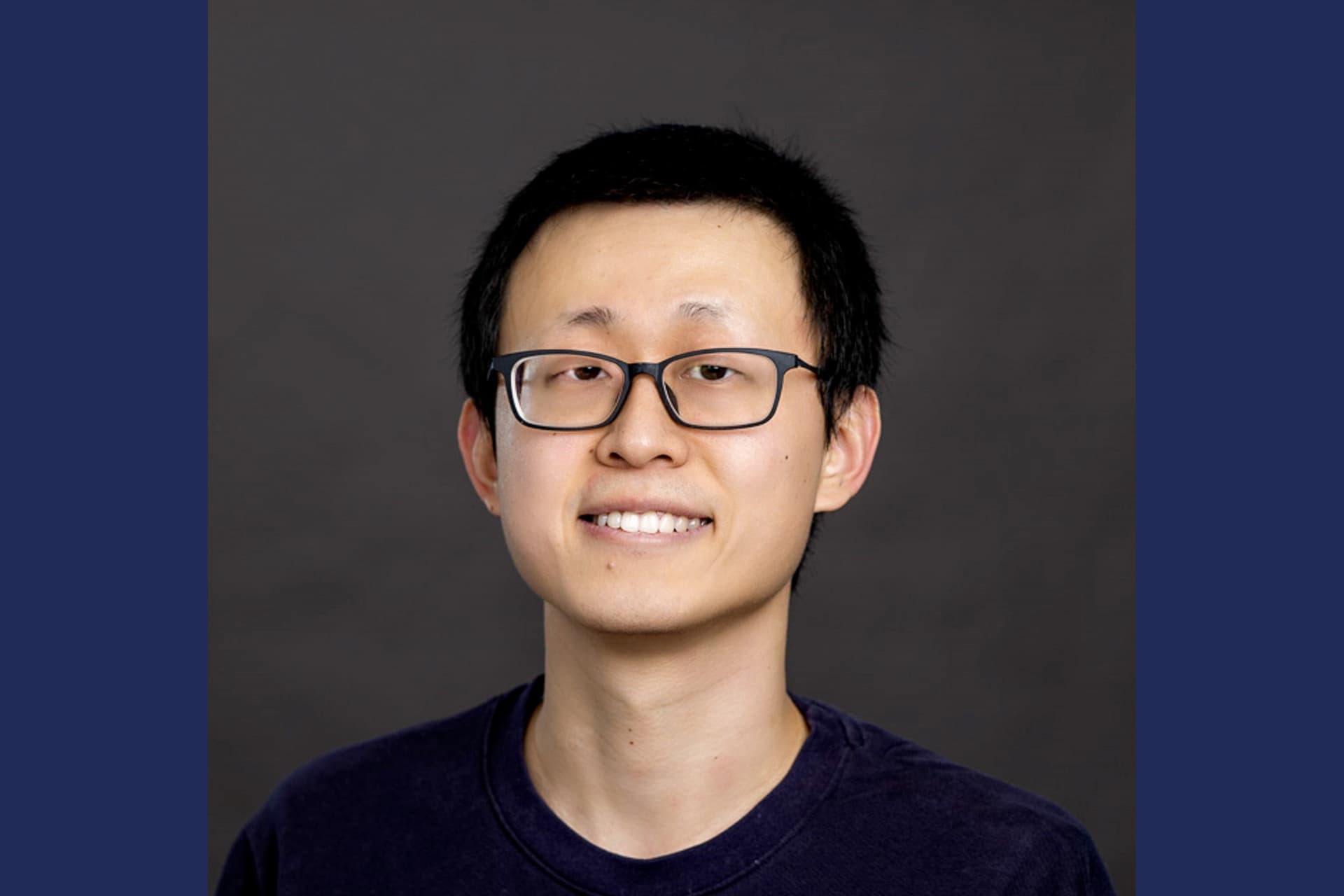
In this edition of Spotlight, we focus on Dr He Zhao, a Tenure Track Fellow in the Department of Eye and Vision Sciences. He tells us what a typical day looks like, what part of his work surprises him, and what he is excited about in the next year.
Tell us about your role – what does a typical day look like for you?
Like many academic staff in higher education, my role involves a balance between research and teaching. At this stage, however, research occupies most of my time. A typical day involves several core activities: communicating with collaborators, meeting with students to discuss their projects and provide guidance, and keeping up with the latest developments in the field through new papers and preprints. I also devote a significant amount of time to exploring new research ideas and shaping them into concrete project plans or grant proposals. These activities, including communication, exploration, and writing, form the core structure of my day and steadily drive the work toward meaningful goals.
What first drew you to work in this field / at the University?
My interest in this field began during my PhD, when I was first introduced to image processing. My initial interest developed further when I began applying machine learning and deep-learning methods to medical image analysis. Seeing how quickly these technologies develop and how they could assist clinicians in detecting and understanding disease makes the work feel both meaningful and full of potential to me. I have always believed that healthcare plays an important role in human wellbeing, and I was motivated by the idea that computational technologies can meaningfully support clinicians in diagnosing diseases and improving patient care. The Department of Eye and Vision Science at the University provides an excellent environment for this work through strong clinical partnerships, collaborative culture, and leading expertise in ophthalmic imaging. The opportunity to work closely with clinicians and contribute to research with direct clinical relevance made the University an ideal place to continue developing this line of work.
What’s the most surprising or unexpected part of your job?
One of the most unexpected parts of my job has been the close interaction with clinicians. During my previous research stages, I mainly worked with the datasets, either public or provided by supervisors, and I rarely had direct contact with clinicians. Now, engaging in conversations with clinicians has shown me how differently our fields think and communicate - what clinicians prioritise, the language they use, and how they frame a “problem”, can be quite different from a technical or algorithmic perspective. I was also surprised by how complex it can be to obtain real clinical data in a way that is useful for research. Understanding the clinical workflow, data quality issues, and practical constraints is a new thing to me. These experiences have helped me see the gap between research assumptions and real-world clinical needs, and they have made the work much more grounded and meaningful.
Looking ahead, what’s one thing you’re excited about – professionally or personally – in the next year?
I’m especially excited about two research directions that will take shape over the next year. The first is an international collaboration focused on developing non-invasive methods to generate FFA-like information from routine retinal images. This work has the potential to offer clinicians valuable vascular insights without the need for dye-based procedures. I’m also looking forward to advancing our collaboration with St Paul’s Eye Unit on multimodal learning and longitudinal prediction, where we aim to model how eye diseases progress over time by integrating different imaging modalities and clinical information. Both projects have strong clinical relevance, and I’m excited about the possibility of turning these ideas into tools that could support patient care.