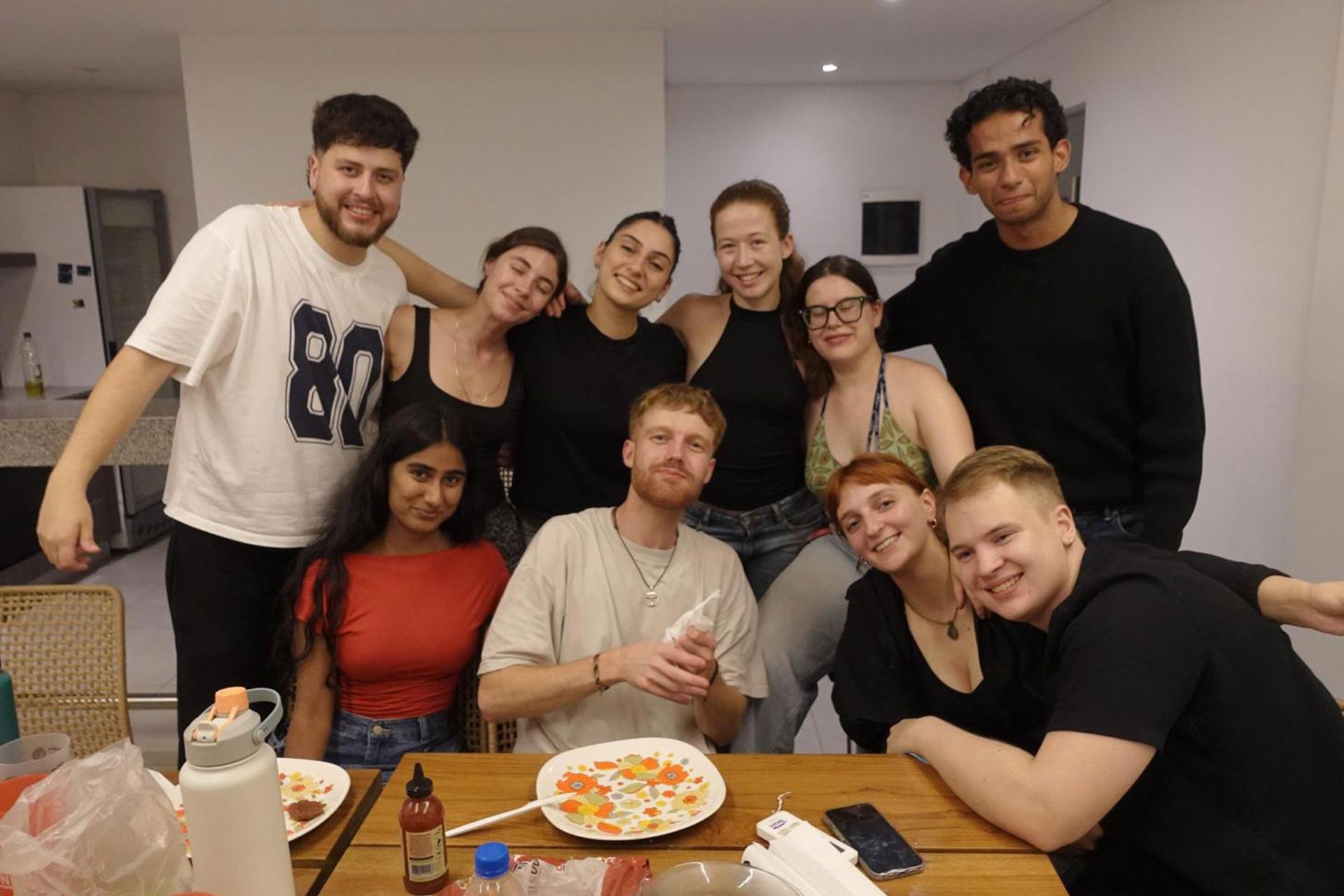
My semester abroad in Buenos Aires has been full of adventures, challenges and countless moments of stepping outside my comfort zone. What I have loved the most is how Argentina constantly invites you to learn, whether through its people, its traditions or its streets filled with stories.
In the heart of the Yryapú Jungle
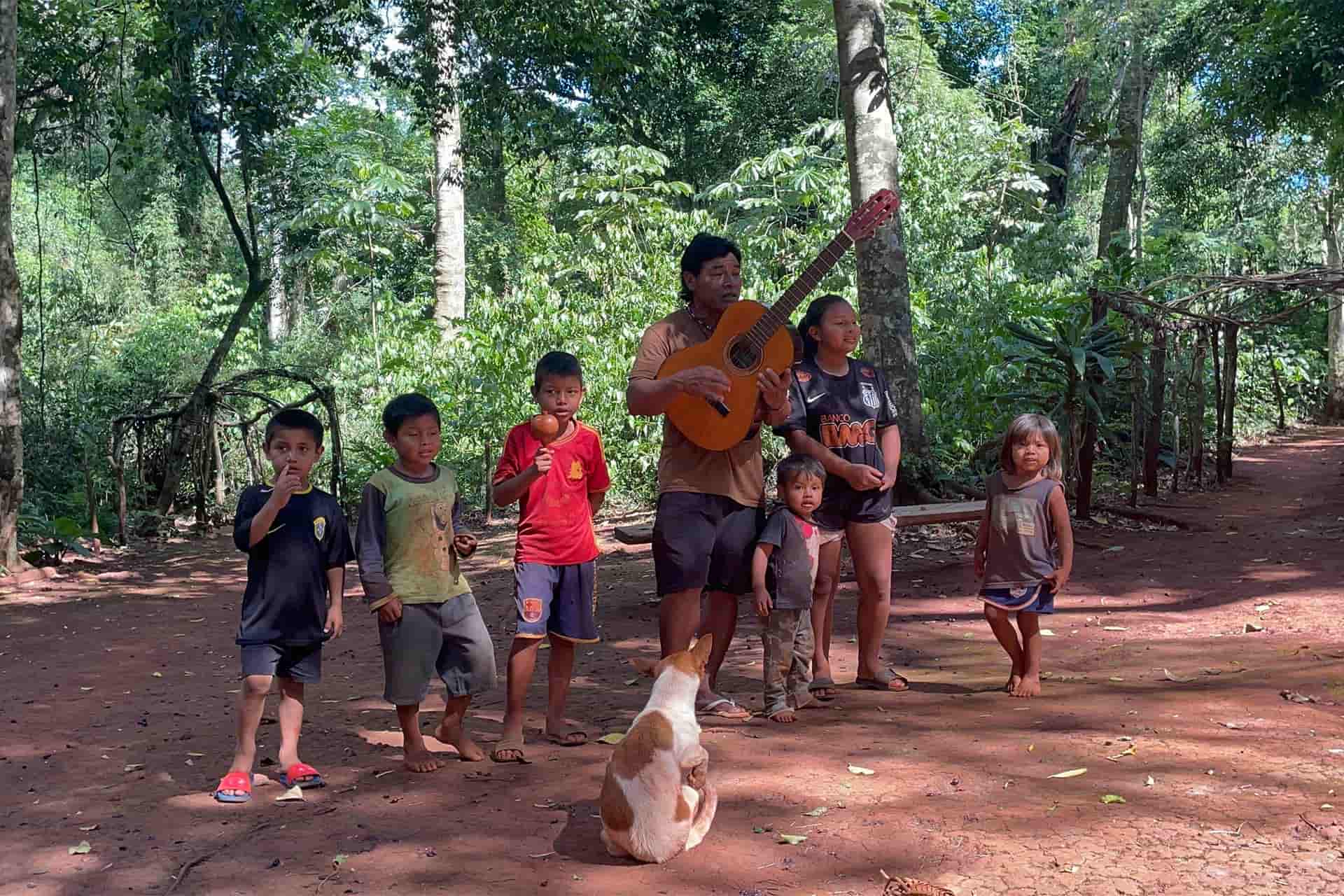
Last month, while travelling in the north of Argentina, I had the pleasure of visiting the Indigenous community, Mbya Guaraní Jasi Porã, located in the Yryapú jungle. After months of living in Buenos Aires, surrounded by constant honking and tall buildings, stepping into the forest where Guaraní is spoken, and ancestral traditions are still actively preserved, felt like experiencing a completely different Argentina. As we walked through the village, our guide explained their relationship with the land and the importance of passing down knowledge through crafts and language. One of the most beautiful moments was when a group of children surprised us by singing a traditional Guaraní song which they had learnt at school.
We were shown examples of traditional skills, such as animal traps and handmade crafts created from natural materials, each one demonstrating knowledge passed carefully through generations. Our guide, a member of the community, explained how the Jasi Porã‘s identity has been shaped by the ongoing marginalisation and the struggle for land rights. For example, although hunting jaguars and crocodiles, widely present in the area, has been traditionally part of their diet and survival practices, government restrictions now prevent them from hunting these animals. As a result, the community must rely on smaller animals, which affects their cultural traditions.
Being welcomed into the Jasi Porã community felt like a privilege, and it reminded me that studying in Latin America is about much more than improving my Spanish or visiting new cities. It is also about understanding histories and cultures that often remain invisible, even within a country itself. This experience also reminded me of the power of language. Had I not spoken Spanish, I would not have been able to visit or understand the community, as they communicate in Spanish and Guaraní.
Children singing a traditional Guaraní song:
Plaza de Mayo: a symbol of resistance
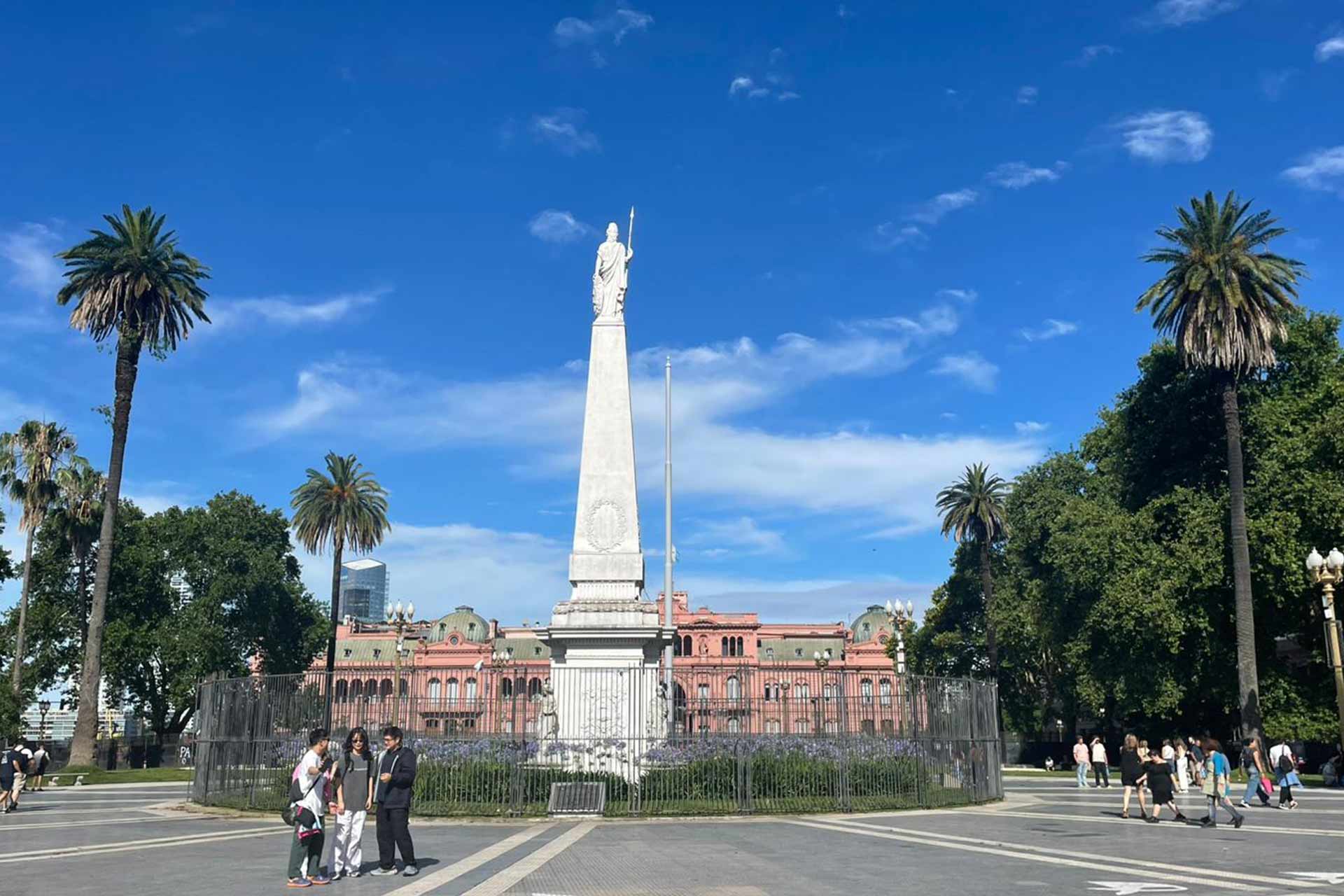
Argentinian students from my university organised a visit to Plaza de Mayo, which is where many of the most important political events in Argentina’s history have unfolded. Standing in the square, you have a direct view of the Casa Rosada, Cabildo and other iconic buildings that shape the country’s political identity. The visit was not only an amazing opportunity to meet other international students, but also a meaningful opportunity to connect what I have studied academically with the space where it all happened.
This moment felt significant to me because throughout my degree, I have learnt extensively about the desaparecidos in Argentina and the Abuelas de Plaza de Mayo. It is a topic that I have always found deeply moving, so visiting the very square where the protests began and where they still take place today was incredibly emotional. During my visit, I was fortunate to witness a real protest by the Abuelas de Plaza de Mayo. Watching them march, decades after the dictatorship, felt like a moment of respect and reflection.
An image of Plaza de Mayo:
Would I recommend a semester abroad in Buenos Aires? Without a doubt. It is easy to let fear or uncertainty hold you back, but allowing yourself to step into the unknown is what makes the experience so transformative. Spending a semester abroad is not always easy; there are always moments of uncertainty and challenges you cannot anticipate, but that is what makes the experience so meaningful.
Looking back on the past 5 months, from sharing mate with my classmates to being welcomed into countless traditional asados, I have made lifelong memories. I will return home with a new sense of confidence and broader perspective that only comes with building a life in a completely new country.