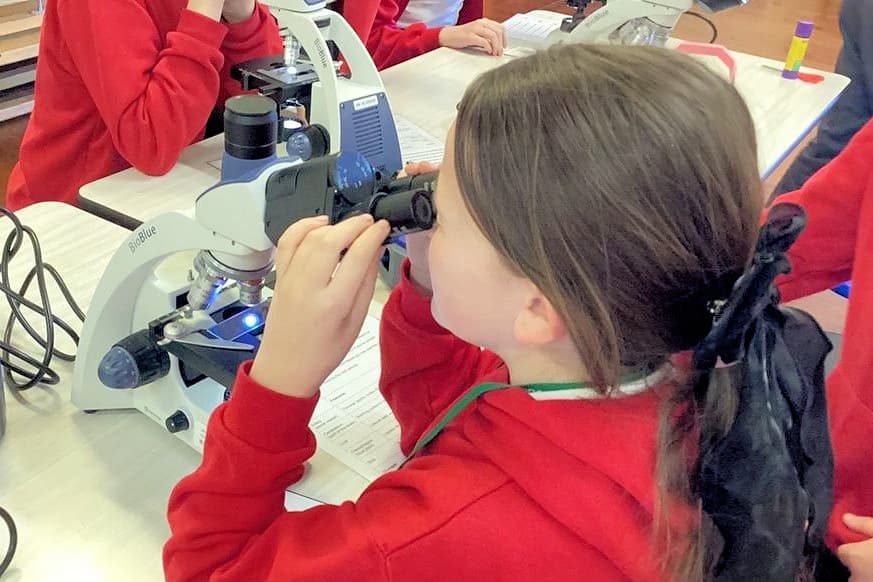
To celebrate British Science Week 2026, Professor Ian Copple’s group hosted science workshops in local primary schools. The theme was ‘Love your cells!’ and gave children an opportunity to learn about cells, how to keep them healthy and what it’s like to be a scientist.
I spent British Science Week 2026 doing something a little different from my usual work: helping primary school children to fall in love with their cells.
Over the course of the week, my research group visited four local primary schools to run a series of hands‑on workshops for pupils aged 9–11. We focused on schools in areas of high deprivation, where children often have fewer opportunities to take part in science activities outside the classroom. By the end of the week, we’d delivered ten workshops and met around 300 enthusiastic young scientists in the making.
What we got up to
The workshop theme was ‘Love your cells!’ and it gave the children a chance to explore what cells are, why they matter, and how to keep them healthy. We built the workshops around three activities that encouraged curiosity and creativity:
- Microscope detectives - Children used microscopes to examine slides of different human tissues and tried to work out which part of the body they came from.
- Craft‑your‑own cell - Using pipe cleaners, sequins, glue, and plenty of imagination, the children built colourful model cells, displaying them to show where each cell belongs in the body.
- Cell Quest board game - Designed with support from a Faculty Public Engagement Grant, the game challenged the children to keep their cells healthy while navigating the ups and downs of daily life.
The children were clearly fascinated, asking thoughtful and unexpected questions including:
- "When people give money to charity, how does that help scientists to do research?"
- "How long does it take to do an experiment?"
- "Where is the coolest place you’ve travelled to tell other scientists about your research?"
Questions like these are a reminder of how naturally inquisitive children are - and how powerful it can be to give them direct access to scientists.
The all-important feedback!
At the end of the workshop, we asked the children to write down one thing they enjoyed (in exchange for a souvenir pen!) Their comments ranged from how cool it was to look at the cells, to discovering about the body. A few even wrote that they couldn’t wait to study science at university one day, which was a highlight for all of us.
Making an impact
Running the workshops in school halls and classrooms meant we could reach children who might not otherwise encounter science in this way. On reflection, bringing science directly into schools is one of the most meaningful ways we can broaden participation and spark long‑term interest in STEM.
We’re already thinking ahead to British Science Week 2027 - and looking forward to meeting the next wave of curious young minds.