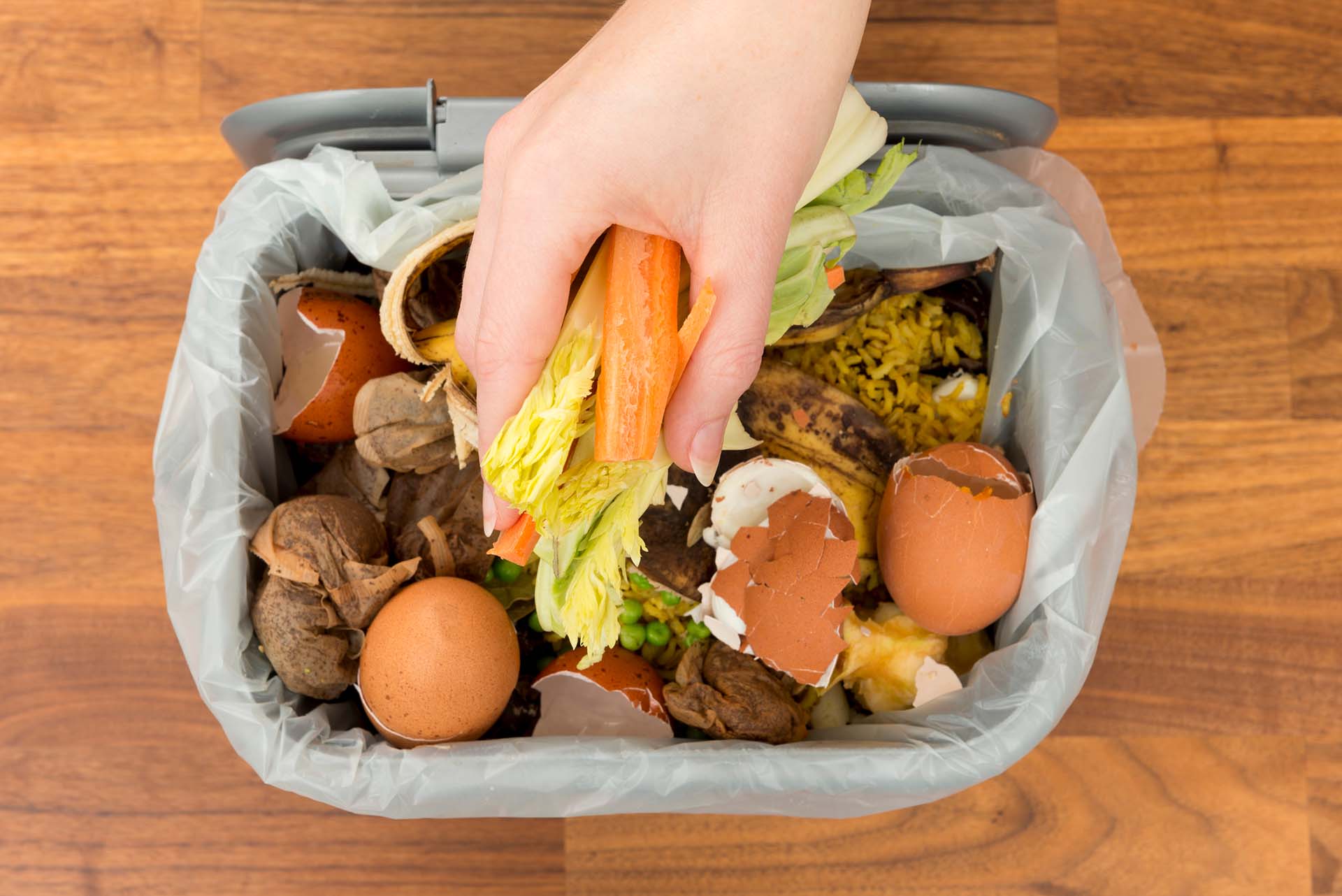
The new ‘Food Is Not Rubbish’ resources help schools understand, measure and reduce food waste while saving money and supporting sustainability.
A new toolkit designed to help schools tackle food waste has been launched through the Food Is Not Rubbish project led by Professor Charlotte Hardman, and colleagues in the Department of Psychology.
The toolkit is informed by previous work carried out by Professor Hardman and others within the Institute of Population Health, including the Food is not Rubbish project co-led by Lisa Didier, and Dr Natasha Bayes. The release of the toolkit is particularly timely, as new regulations require workplaces in England with ten or more employees – including schools – to separately collect food waste, dry recyclables and residual waste. Schools producing more than 5kg of food waste per week must arrange separate food waste collection, often at additional cost.
Reducing food waste is therefore increasingly important for schools seeking to comply with environmental regulations and meet sustainability goals. Teaching children and young people about food waste can also encourage them to be more mindful of the food on their plate and what ends up being thrown away.
Developed in collaboration with School Food Matters, the Food Is Not Rubbish toolkit brings together practical, research-informed resources to help schools understand why food waste happens and how to reduce it. The project draws on academic research, real-world case studies and interviews with school staff, local authority officers and waste professionals, alongside co-design work with pupils.
Professor Charlotte Hardman said, “We are delighted to launch our Food Is Not Rubbish toolkit to support schools to address the significant issue of food waste. The toolkit is underpinned by our research with schools which found that there isn’t a one-size-fits-all solution and instead schools would value a suite of interventions which can be tailored to individual needs. We hope that providing these evidence-based resources will empower school staff and pupils to come together and take practical actions to tackle food waste via a whole school approach”.
Explore the full Food Is Not Rubbish toolkit and learn more about the research behind the Food Is Not Rubbish project.