How you'll learn
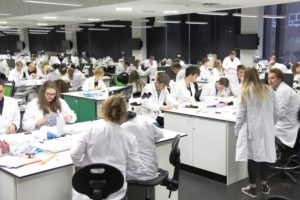
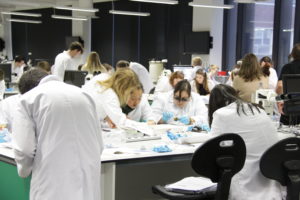
Teaching strategies include a mix of lectures, tutorials, workshops, field classes, research vessel cruises, laboratory work, computer sessions, group projects, and individual work under supervision. You will typically receive around 15 hours of formal teaching each week, as well as attend residential field courses. You will usually study four modules per semester. A module might involve two one-hour lectures each week, and a laboratory or computer-based practical as well. Tutorials are an integral part of our approach, involving groups of 5-7 students meeting regularly with a member of academic staff to discuss study skills, careers, current research, and topical issues.
As you progress through your degree, you are increasingly challenged to engage with current debates, to think critically and to study independently. You will do an ‘Honours Project’ throughout year three, which is a piece of independent research (field, lab, or data analysis) on a topic of your choice, supervised by a member of academic staff.
A number of the School’s degree programmes involve laboratory and field work. The field work is carried out in various locations, ranging from inner city docks to coastal environments. We consider applications from prospective students with disabilities on the same basis as all other students, and reasonable adjustments will be considered to address barriers to access.
How you're assessed
Assessment methods are tailored to the specific needs of each module and are designed to reflect student progression from year to year. Authentic assessment is embedded in our programmes, ensuring that you are prepared for the types of problems encountered, and have the skills needed, in commercial, research and public sector jobs. Assessment methods include written exams, assessed essays, laboratory and computer practicals, field assignments including field notebooks, poster presentations, research reports, scientific papers, group work, and oral presentations. In your third year you will complete a dissertation selected from a range of topics. This is your opportunity to develop skills as an independent academic researcher, supported on a one-to-one basis by an expert in the field.
Liverpool Hallmarks
We have a distinctive approach to education, the Liverpool Curriculum Framework, which focuses on research-connected teaching, active learning, and authentic assessment to ensure our students graduate as digitally fluent and confident global citizens.
The Liverpool Curriculum framework sets out our distinctive approach to education. Our teaching staff support our students to develop academic knowledge, skills, and understanding alongside our graduate attributes:
- Digital fluency
- Confidence
- Global citizenship
Our curriculum is characterised by the three Liverpool Hallmarks:
- Research-connected teaching
- Active learning
- Authentic assessment
All this is underpinned by our core value of inclusivity and commitment to providing a curriculum that is accessible to all students.