How you'll learn
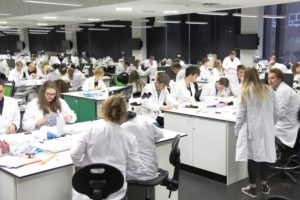
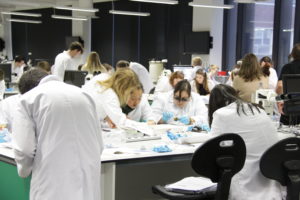
Teaching takes place through lectures, practicals, workshops, seminars, tutorials and computer-based learning, with an emphasis on learning through doing. The award-winning £23 million Central Teaching Laboratories provides a state-of-the-art facility for undergraduate practical work.
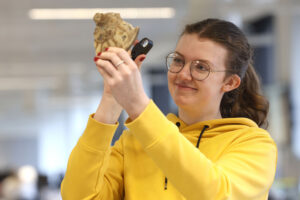
Students value the learning opportunities provided by field classes, including the rapid feedback on performance. You will typically receive at least 15 hours of formal teaching each week. Between 30 and 100 hours of fieldwork and hands-on activities are provided each year depending on the discipline.
A typical module might involve two or three one-hour lectures each week, and often a three- hour laboratory or computer-based practical as well. Tutorials typically involve groups of 4-7 students meeting with a member of staff at least every two weeks in year one and two. In year three, you will undertake an Honours project, which is a piece of independent research (field, laboratory or data analysis) on a topic of your choice, supervised by a member of staff. In years three and four students meet with their project supervisor on a weekly or more frequent basis. As you progress through your degree, you will be increasingly challenged to engage with current debates, to think critically and to study independently.
A number of the School’s degree programmes involve laboratory and field work. The field work is carried out in various locations, ranging from inner city to coastal and mountainous environments. We consider applications from prospective students with disabilities on the same basis as all other students, and reasonable adjustments will be considered to address barriers to access.
How you're assessed
Assessment is mainly by examination and coursework. Depending on the modules taken you may encounter project work, presentations (individual or group), and specific tests or tasks focused on solidifying learning outcomes.
Students are expected to score an overall mark of 50% to progress to the second year of the course. In year two, students will start on the first year of their selected degree programme at the University of Liverpool.
In year one of the degree programme, assessment matches the learning objectives for each module and may take the form of written exams, practical laboratory and computer examinations, coursework submissions in the form of essays, scientific papers, briefing notes or lab/field notebooks, reports and portfolios, oral and poster presentations and contributions to group projects, and problem-solving exercises. Assessment is via tasks that mirror those graduate students are likely to undertake working as professional geoscientists. For example, generating and interpreting quantitative spatial data, with appropriate consideration of inherent uncertainty, is a key task and necessary skill for professional environmental geoscientists, and this skill is developed and assessed on several programme modules, especially field and lab-based modules. As well as being authentic in terms of the underlying purpose of the assessed task, assessment tasks are also authentic in terms of format, intended audience, resources used, and collaborative team elements. For example, team-based environmental assessment work with professional format delivery appropriate for presentation to management-level colleagues using state-of-the-art field, lab or IT resources is central to assessments in field classes.
Liverpool Learning Framework
At Liverpool, we take a distinctive approach to education through the Liverpool Learning Framework. This means teaching that is engaging, inclusive and designed to help you succeed during your studies and beyond.
You’ll develop specialist subject knowledge alongside the skills employers value most, including:
- Digital fluency
- Confidence
- Global citizenship
Our curriculum is characterised by the three Liverpool Hallmarks:
- Research-connected teaching - learning informed by the latest ideas and discoveries
- Active learning - taking part, applying knowledge and learning by doing
- Authentic assessment - assessments designed around real-world tasks and challenges
We also embed key priorities across our curriculum, including AI literacy, employability, and sustainability, helping you prepare for the future and make a positive impact in the world.
We’re committed to creating a supportive and inclusive learning environment where every student can thrive.