I recently completed my PhD in Psychology, which aimed to explore the psychological aspects of food insecurity and the role of social enterprises in the UK. My thesis was situated in the wake of the Covid-19 pandemic and subsequent cost-of-living crisis, which dramatically increased the prevalence of food insecurity in the UK.
Due to persistent food insecurity, more and more households are relying on food charity, predominantly food banks, to access enough food. This rise is particularly concerning, as we know accessing food banks comes with a wealth of negative health and psychological impacts due to the high prevalence of processed, non-perishable food items and associated stigma related to access. As a result, alternative solutions to food insecurity, such as social enterprises should be further explored.
During my ESRC CASE PhD studentship, I worked closely with local food-based social enterprise, Can Cook, an organisational partner in my research. Can Cook run several social projects across the Northwest of England and North Wales, focused on improving fresh and healthy food access, and increasing cooking skills and confidence in areas of socioeconomic disadvantage. Two of these projects include the Meal Box project - involving delivery of highly subsidised food parcels including ingredients and recipes straight to the door of recipients - and the Slow Cooker project - involving in-person group-based sessions where recipients receive hot food and cooking demonstrations, as well as ingredients and recipes to take home.
Insights from lived experiences of Can Cook projects
As part of my PhD research, I conducted qualitative work exploring recispients' experiences of these two social projects. This piece of research was a collaborative effort between researchers at the University of Liverpool, Can Cook and Riverside, a major national social housing provider. I interviewed 25 people across 4 regions -including Greater Manchester, the Liverpool City region, Anglesey, and Cheshire - who were residents of social housing provided by Riverside and taking part in Can Cook projects. In interviews, we discussed participants’ diets and access to food before accessing the Can Cook projects, their experiences of the projects and the perceived impacts of receiving these projects on their health and wellbeing.
The findings revealed accessing the Can Cook projects enabled recipients to see improvements in their food insecurity symptoms, food skills and confidence, and perceived health and psychological wellbeing. Importantly, accessing the Can Cook projects eliminated stigma, which is often associated with accessing charitable food support services such as food banks. However, the wealth of benefits recipients experienced when taking part in the projects disappeared upon project completion, highlighting food insecurity as an issue of access.
Using evidence to support real-world impact
Overall, this study provides preliminary, case-specific but much-needed evidence regarding the potential of social enterprise models as an innovative and supportive alternative to food charity, which can help reduce food insecurity and promote physical and psychological health and wellbeing. This evidence has since been used by the project partners to secure further funding for additional projects within more social housing communities.
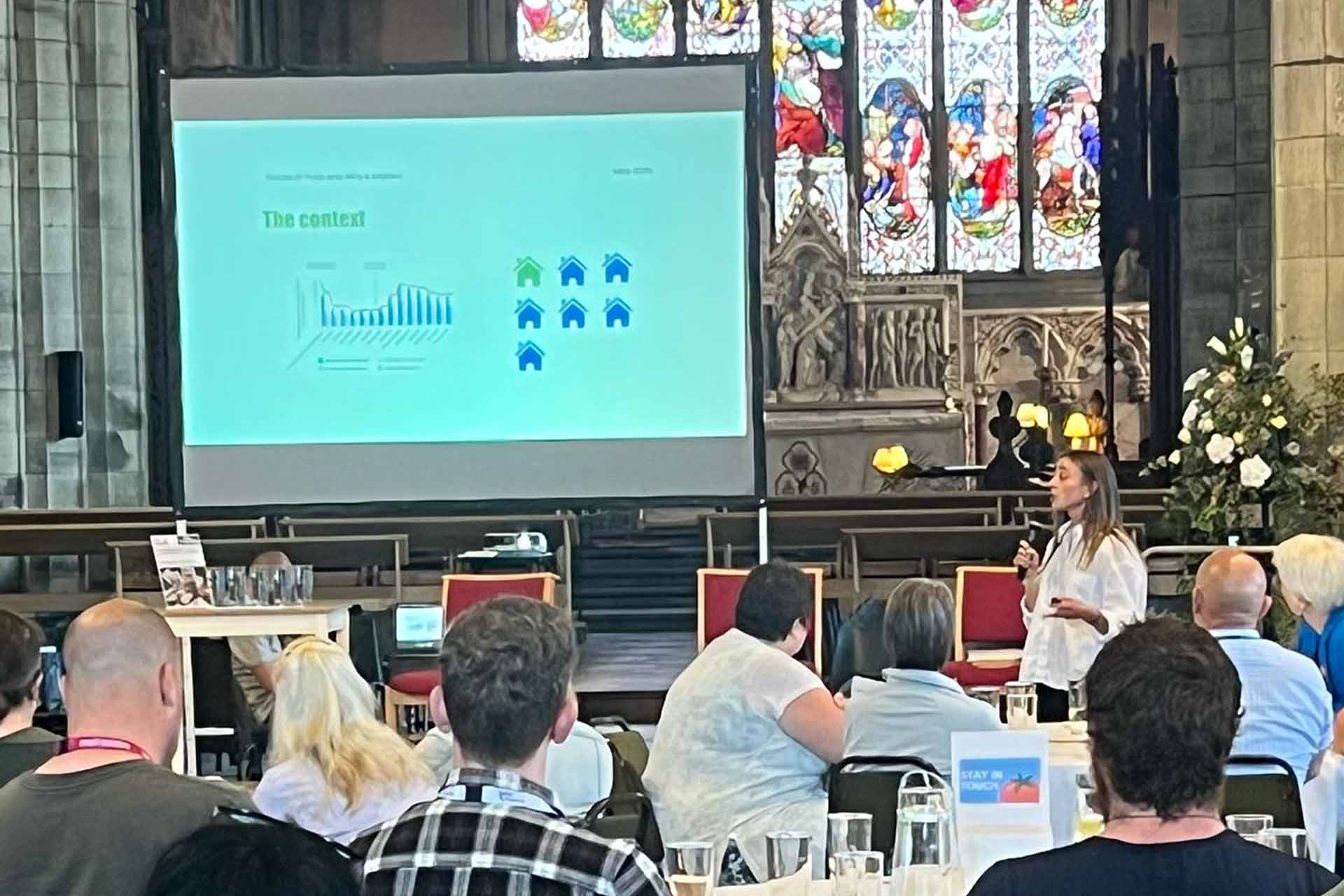
As a result of the compelling findings, I was invited to present the work at Can Cook’s conference, ‘The Future of Food and Why It Matters’, held in the magnificent St Asaph’s cathedral in Denbigh, North Wales. The event was attended by representatives from across a wide range of sectors including the third and public sector, business, academia and social housing organisations, and the presentation triggered lots of conversation around charitable versus social enterprise responses to food insecurity. I was also invited to be a panel member for the panel discussion at the end of the conference, which was a new experience for me (and quite imposter syndrome inducing!).
You can read the full findings here.
To help make my findings more accessible to a wider audience I have produced a video in collaboration with our communications team, which details the project and its impact.