At the beginning of last November, as part of my Politics & Philosophy placement, I began to volunteer at a community centre in Liverpool. When I tell people this, most have absolutely no idea what it means. And to be fair to them, I didn’t either a couple of months ago. I had expectations for sure. I thought it might have been sombre. I was unsure whether it would be physically taxing, educational or comforting. And yet in every possible way, the centre surprised me. So, what does a community centre in Britain entail?
My first day at the centre began at 10am, when I sat down with the staff before opening. Although the centre runs from Tuesday to Thursday, Wednesdays would become an easy, productive routine - the busiest day at the centre due to the fresh food items pantry. I was briefed on how a Wednesday at the centre goes. With a new manager had come some transformed creative sessions titled ‘Mindful Moments’. These were craft activities free to join, greatly encouraged, even. Every week, it took on a new form: from sewing felt Christmas ornaments to making paper plate dreamcatchers to fashioning beaded headbands. For the moment, you can get away from any external stressors or woes. This creative outlet gives you a community, a hobby and then a souvenir of it all. You find tools to deal with your own mental health. There were many times I walked into the centre upset, feeling like a typical university academic failure, and I left as if I had been to therapy. Unbeknownst to me, doing crafts gives you time to breathe, to slow down, to relax, to think rationally.

The ending of Mindful Moments coincides at 12 in the afternoon with the serving of the free lunch the centre provides. At the centre, I’ve eaten incredibly health-conscious meals: vegetable curries, egg pasta, sweet potato mash and roasted chicken. When I ask the centre’s chef how he goes about deciding lunch, the answer proves quite uncomplicated. He said, ‘‘We have to save money, so a lot of it is whatever comes in the pantry. The majority of people at the centre are Muslims, so everything has to be halal. If everything’s halal, then everyone can eat’’.
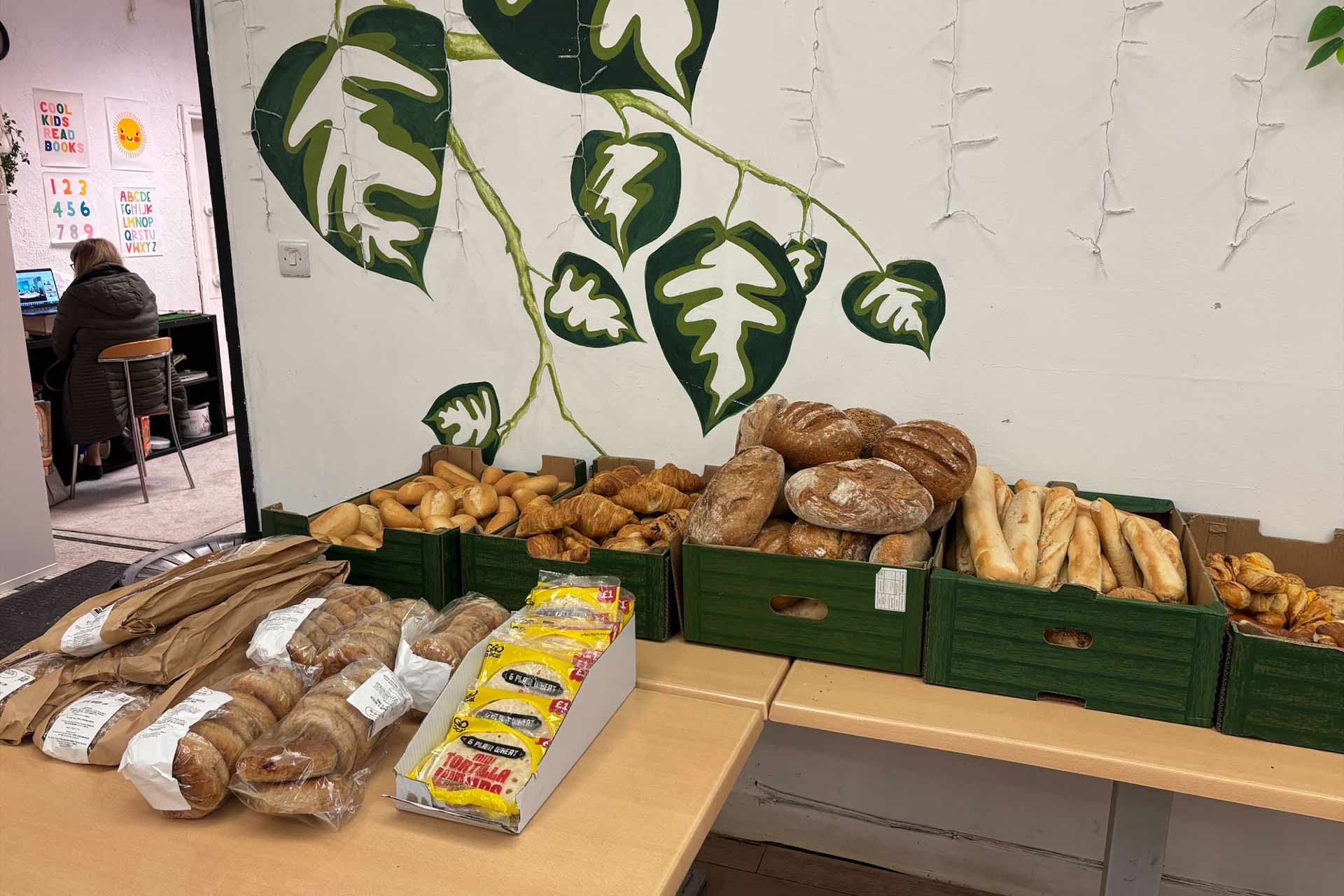
During lunchtime, a shipment of fresh food arrives. Delivery men will bring crates and crates inside and lay them at the helm of the pantry. Items come from the St Andrew’s community network. Brands such as Costco, Tesco’s finest, and M&S. Here, we organise like items and set them out on tables and countertops. It operates by a first-come, first-served ticketing system. 10 items for £3.50; 15 items for £5. One person goes up at a time. It may be explaining what a certain food is to someone andhow they can cook it. The pantry is undeniably the star of the show. The centre can get up to 14 people relying on it routinely every week. That’s 14 families, 14 homes. In a time of egregious supermarket food price inflation, this pantry appears ever more important. At 15 items for £5, residents in this community can effectively reduce the price of their weekly food shop by almost 85% than that of the average Briton.
Community centres force you to be mindful, whether that’s of yourself or the world around you. You have to reckon with homelessness, food poverty, the immigration process, covid and its impacts on mental health. You become friendly with people who have just come off the streets, and people who have just come to this country. You learn local history from first-hand anecdotes. I’ve met black Scousers at the centre who wouldn’t even come up to the area [the North of Liverpool] as kids. One noted, ‘’The racism was terrible. man. They wanted us to be ashamed. When I tell old friends I work up here, they’re still shocked.’’ As someone who has had modules on Social Exclusion and the Politics of Race in Britain, I’ve now had my university education consolidated in direct ways like these.
Community centres are a place where all the dimensionality of our country coincides. Perhaps unfortunate circumstances bring many there, but it doesn’t colour the mood of the place. We have fun, make connections, and create. I see community centres as a complete positive; they’re quite effectively a mainstay of this nation. There are almost 9500 community centres in England as of the end of 2025. I think important to paint a picture — good and bad, it’s an apt snapshot of the country.