Eurovision 2023: The results are in
A narrative synthesis of the evidence from the Eurovision 2023 evaluation.
Evaluation
Following Liverpool’s hosting of Eurovision 2023, Liverpool City Council and its partners commissioned a wide-ranging evaluation comprising a set of studies of the economic, cultural and wellbeing impacts of the event.
The University of Liverpool and Heseltine Institute were commissioned to publish a synthesis of these different evaluation strands to enable the collective findings to reach a wider audience.
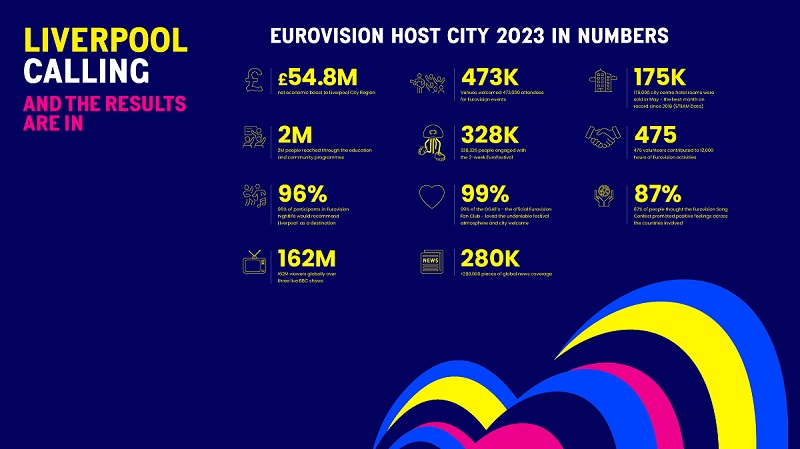
Eurovision host city 2023 in numbers
- £54.8M new economic boost to Liverpool City Region
- 473K attendees welcomed at venues for Eurovision events
- 2M people reached through the education and community programmes
- 328K people engaged with the two-week EuroFestival
- 96% of participants in Eurovision nightlife would recommend Liverpool as a destination
- 99% of the official Eurovision Fan Club loved the undeniable festival atmosphere and city welcome
- 162M viewers globally over three live BBC shows
- 280K pieces of global news coverage
- 175K city centre hotel rooms were sold in May - the best month on record since 2018 (STEAM Data)
- 475 volunteers contributes to 12,000 hours of Eurovision activities
- 87% of people thought the Eurovision song Contest promoted positive feelings across the countries involved.
Findings
The evaluation revealed how those outside Liverpool viewed Eurovision 2023 and the city, assessed the potential value of such events, and aimed to understand what made the event a success and where we can learn in the future. This report is a summary of these evaluations, highlighting the short-term effects on Liverpool and the Liverpool City Region, and the long-term legacy of Eurovision.
More detail on the evaluation can be found in the individual commissioned reports: