How you'll learn
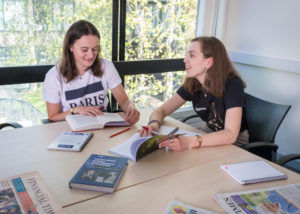
In studying Philosophy, you will learn how to defend your views with reasoned arguments, and to assess the arguments of others. Argumentative skills are learned through attending lectures and reading philosophical texts, developed by group seminar discussions, and formally assessed through essays and exams. You will complete modules to the value of 120 credits per year, from a wide range of options available. Most modules employ a blend of lectures, seminars, and online support materials. You will learn by reading and studying outside class time, by attending and participating in classes, by doing coursework and, for dissertations, via one-to-one meetings with a supervisor. There is also scope, both formally in the placement module and informally, for you to develop practical skills by volunteering.
How you're assessed
Philosophy employs a mixture of modes of assessment: exams and coursework in many different varieties including essays, oral presentations, dissertations, exercises, and supported independent work (eg in the placement module).
Liverpool Hallmarks
We have a distinctive approach to education, the Liverpool Curriculum Framework, which focuses on research-connected teaching, active learning, and authentic assessment to ensure our students graduate as digitally fluent and confident global citizens.
The Liverpool Curriculum framework sets out our distinctive approach to education. Our teaching staff support our students to develop academic knowledge, skills, and understanding alongside our graduate attributes:
- Digital fluency
- Confidence
- Global citizenship
Our curriculum is characterised by the three Liverpool Hallmarks:
- Research-connected teaching
- Active learning
- Authentic assessment
All this is underpinned by our core value of inclusivity and commitment to providing a curriculum that is accessible to all students.