To celebrate Chinese New Year, the Liverpool Confucius Institute (LCI) organised a series of activities from late January to early March 2026.
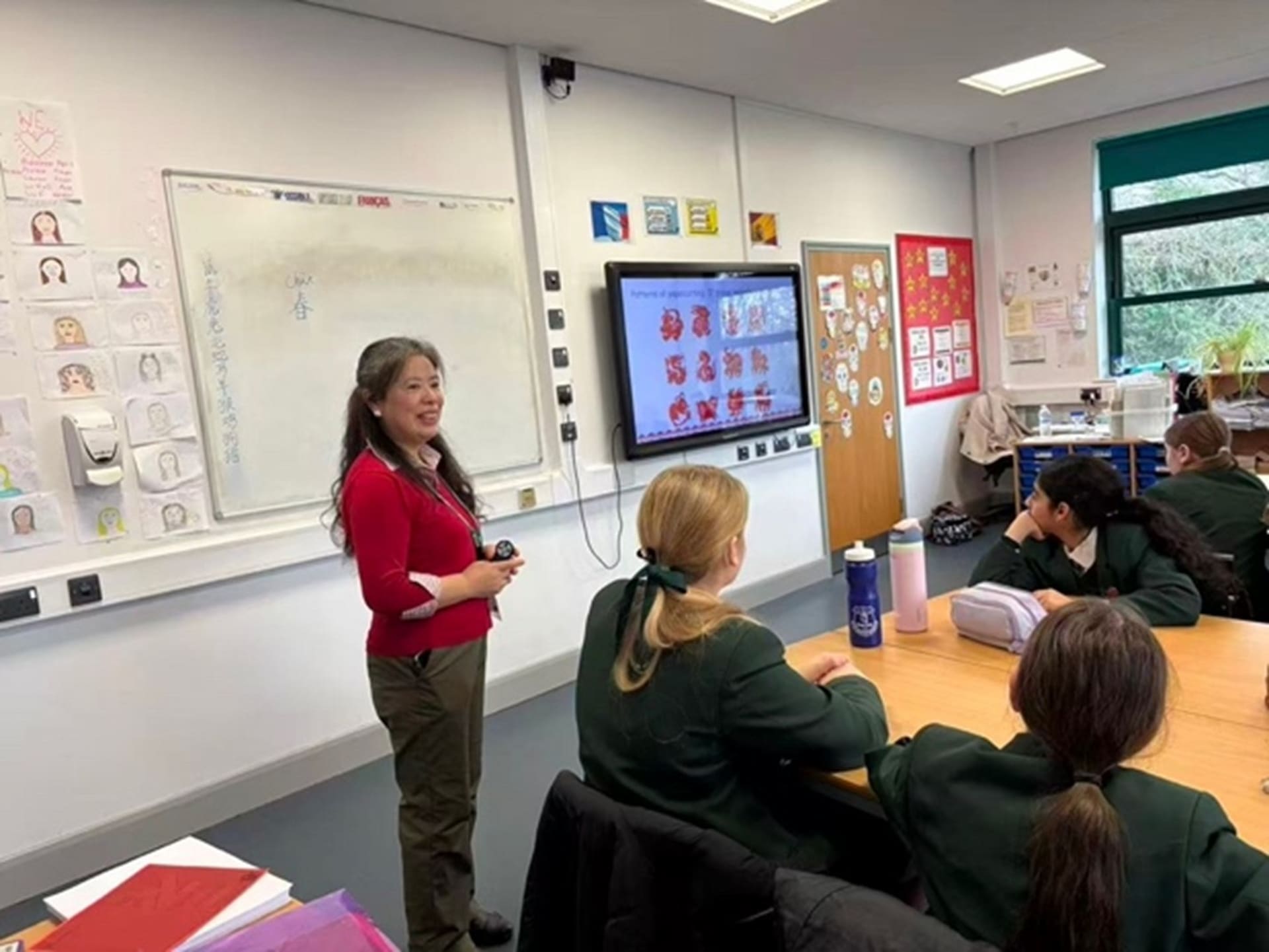
During the Chinese New Year period, teachers from LCI visited local primary and secondary schools, integrating traditional Chinese New Year customs with interactive workshops to create immersive cultural experiences.
Activities included Chinese calligraphy, traditional Chinese painting, paper-cutting, woodblock printing, Chinese dance, shadow puppetry, and introductory Chinese language sessions. Through hands-on participation and live demonstrations, students gained first-hand insight into the artistic richness and historical depth of Chinese culture.
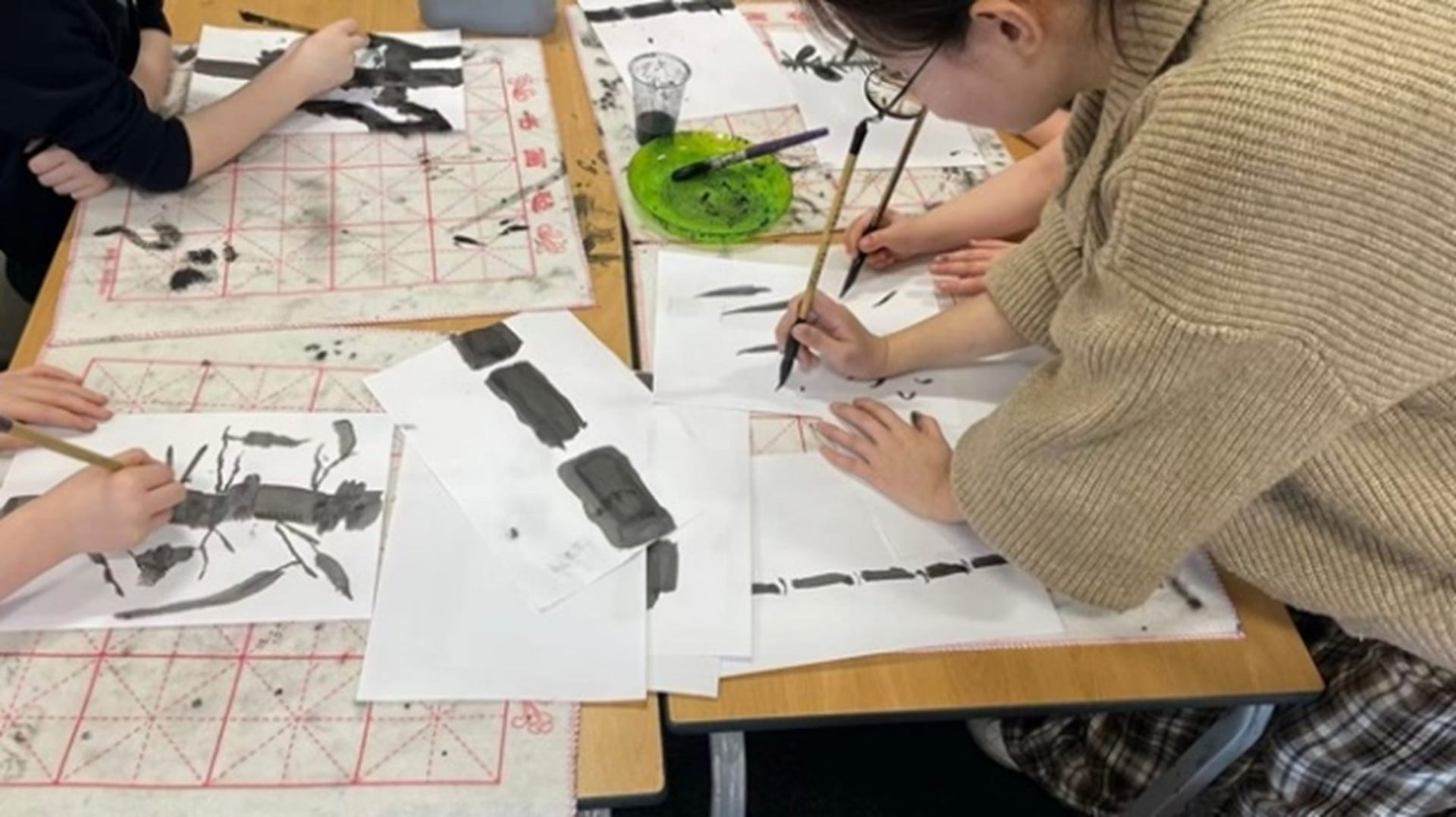 Alt text: People writing Chinese characters in ink.
These activities were delivered at seven local schools, engaging more than 500 students. Participating schools included Calday Grange Grammar School, Upton Hall School, Palmerston School, Parish Church of England Primary School, Monksdown School, Ladymount Catholic Primary School, and Scout Centre Club.
Calligraphy sessions allowed students to appreciate the artistic expression of Chinese characters. Paper-cutting and woodblock printing introduced traditional folk art and its festive symbolism. Chinese dance and shadow puppetry displays enabled students to explore historical narratives and cultural expressions within traditional performing arts. Through these interactive cultural activities, students developed a deeper understanding of the symbolic meanings of the Chinese New Year, as well as the family values and social traditions embedded in the festival.
Public Cultural Celebrations:
LCI also joined the city's celebrations, including hosting a workshop and activities at the Victoria Museum and Gallery, and partaking in the Liverpool Chinatown celebrations, organised by Culture Liverpool.
.jpg) Alt text: LCI team sat in a chalet in Chinatown, writing people's names in Mandarin characters.
Alt text: LCI team sat in a chalet in Chinatown, writing people's names in Mandarin characters.
Year of the Horse:
Chinese New Year, also known as the Spring Festival, has its origins in ancient China and is closely tied to the lunar calendar and agricultural cycles. Traditionally, it marked the end of winter and the beginning of spring, a time to honour ancestors and deities while praying for a good harvest and fortune in the year ahead. One popular legend tells of Nian, a fearsome beast that appeared at the start of each year; villagers learned to scare it away with loud noises, bright lights, and the colour red—customs that still shape the celebration today.
Each year is associated with one of the twelve animals of the Chinese zodiac. The year 2026 is the Year of the Horse, specifically the Fire Horse, which symbolises energy, independence, confidence, and forward momentum. It is often seen as a year that favours bold action, passion, and perseverance.
People celebrate Chinese New Year through a variety of vibrant traditions that typically last fifteen days, ending with the Lantern Festival. Families gather for reunion dinners on New Year’s Eve, clean their homes beforehand to sweep away bad luck, and decorate with red lanterns, couplets, and paper cuttings to invite good fortune. Fireworks and firecrackers are set off to ward off evil spirits, while children receive red envelopes (hongbao) filled with money as symbols of luck and prosperity. Other common traditions include lion and dragon dances, visiting relatives, honouring ancestors, and enjoying symbolic foods such as dumplings (wealth), fish (abundance), and rice cakes (progress). Together, these customs emphasise renewal, family unity, and hope for a prosperous year ahead.