EVSNET for diagnostic laboratories
The Equine Veterinary Surveillance Network (EVSNET) collects veterinary diagnostic laboratory data to help us understand the diseases affecting the equine population in the United Kingdom.
When a veterinary practitioner is called to visit an equine patient, a sample may be taken to further assess the patient's health. There are a range of samples which can be taken such as blood, swabs, urine and faeces and samples will very often be sent to a diagnostic laboratory for testing.
EVSNET draws on the links developed through the Small Animal Veterinary Surveillance Network (SAVSNET) to collect laboratory data to help researchers understand the health problems affecting the equine population and provide insight into how conditions may be best treated.
Benefits to collaborating laboratories
Collaborating laboratories benefit from services that support quality, insight, and research readiness:
- Interactive dashboards: Visualise AST trends and monitor resistance patterns in your submissions
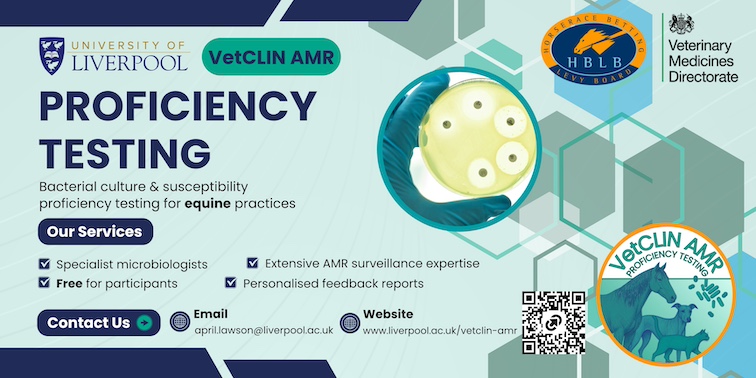
- Microbiology proficiency testing: Participate at no cost with expert support from European Diplomates in Veterinary Microbiology and tailored performance reports
- Access to analysed data: Receive standardised, research-ready datasets for review, audit, and research
- Early detection of resistance trends: Identify emerging resistance patterns to support clinical decision-making and stewardship.
- Research and collaboration opportunities: Contribute to collaborative surveillance and research initiatives.
Enrol your diagnostic laboratory in EVSNET.
The diagnostic laboratories already working with EVSNET are highlighted below.


