What types of page to search?

Alternatively use our A-Z index.

Qualification type
MPlan

Town and Regional Planning

UCAS code K400

Study mode
Full-time
Duration
4 years
Start date and application deadlines
Apply by:
Starts on:

We've set the country or region your qualifications are from as United Kingdom.

How to apply

Although the UCAS equal consideration date has now passed, many of our courses are still accepting applications from UK students for 2026 entry through UCAS.

The deadline for international students was 30 June 2026.

Please note, courses may close earlier than the advertised application deadline due to demand.

Combine this subject

With a combined degree, you can study two subjects as part of the same degree programme.

  • Choose from 30 subjects and over 300 combinations
  • Choose joint or major minor subjects
  • Same number of credits as single honours students
  • Same classes as single honours students
  • Appeal to a wide range of employers

Explore combined degrees for Architecture, Building and Planning courses

Get a prospectus

Complete form

Download a course leaflet

Your course leaflet download should begin automatically but if not, click to download. If you would like to keep up to date with the latest events from the University of Liverpool, complete the form below.

Complete form

Change country or region

We’re currently showing entry requirements and other information for applicants with qualifications from United Kingdom.

Please select from our list of commonly chosen countries below or choose your own.

If your country or region isn’t listed here, please contact us with any questions about studying with us.

Book your Open Day place

Be the first to hear when bookings open for our 2026 open events. Don’t miss this opportunity to experience our courses, campus and city for yourself.

About this course

The Town and Regional Planning MPlan programme is designed for those who wish to pursue a professional career in urban, regional and environmental planning. The MPlan offers two pathways with distinct specialisms. These are Transforming Cities and Regions and Spatial Planning for Environmental Change.


Introduction

This course is an integrated Master’s programme designed for students who wish to pursue a professional career in urban, regional, and environmental planning. Fully accredited by the Royal Town Planning Institute (RTPI), it forms part of a closely aligned suite of planning programmes with a shared structure and educational ethos. The programme equips students with the knowledge, skills, and professional competencies needed to address complex spatial challenges and shape sustainable places. 

Students begin with a shared curriculum in years one and two, building a strong foundation in planning theory, environmental issues, and urban development while developing critical thinking and analytical skills. This structured approach supports flexible pathways and fosters a strong sense of academic community.

In later years, students specialise through one of two pathways:

  • Spatial Planning for Environmental Change, focusing on environmental management and assessment (a pathway accredited by the Institute of Sustainability and Environmental Professionals (ISEP)
  • Transforming Cities and Regions, exploring regeneration.

Teaching combines lectures, seminars, fieldwork, live projects, and collaborative learning to connect theory with real-world planning practice. 

The final year focuses on professional practice, including a major consultancy-style project. Graduates develop digital, analytical, and professional skills, preparing them to become confident planning professionals capable of creating sustainable and inclusive communities. 


What you'll learn

  • An awareness and appreciation of the current planning profession
  • A depth of knowledge and understanding of a particular aspect of the field of town and regional planning
  • The development of sound practice skills in the methods and techniques of planning
  • An understanding of the legal framework within which planning operates
  • An awareness and appreciation of planning practice in other European countries
  • The development of skills in analysis, synthesis, reasoned argument and communication
  • Knowledge of the theoretical underpinnings of planning
  • The development of research, teamwork and other professional skills of relevance to planning practice.

Accreditation

The programme is accredited by the Royal Town Planning Institute (RTPI) and Institute of Environmental and Environmental Professionals (ISEP), providing combined spatial and specialist accreditation (dependent upon module selection in year three). 

Accreditation in detail

Institute of Sustainability and Environmental Professionals (ISEP)

Royal Town Planning Institute

RTPI

The Royal Town Planning Institute works in partnership with universities to develop and accredit professional planning qualifications to put graduates on track to become a Chartered Town Planner.

Back to top

We’ve been awarded a Gold rating for educational excellence.


Course content

Discover what you'll learn, what you'll study, and how you'll be taught and assessed.

Year one

Your first year of study introduces you to planning issues and the circumstances in which they arise. It provides an understanding of how planning powers, agencies and policies work to overcome the challenges that face cities and communities. You will also improve your oral, written and visual communication skills and engage in group-based problem solving and practical work with local field days so you can put your newfound skills into practice in a real-life setting.

You will take the following compulsory modules and select two choices from the optional modules detailed below.

Modules

Programme details and modules listed are illustrative only and subject to change. The course content currently shown on this page reflects the programme as it is running in September 2026. The University is currently reviewing all of its programmes for 2027 entry. View the 2027 version of this course for more information.

Year two

Year two is when you develop your specialism for either transforming cities and regions or spatial planning for environmental change. You will be introduced to the social, economic, and environmental causes of urban and regional change and the concept of environmental sustainability and its connections with patterns of human development. Project work helps you develop an awareness of the issues that arise in the development of planning schemes while a field trip examines social, economic and environmental planning challenges in a rural setting.

You will take the following compulsory modules and select one choice from the optional modules detailed below.

Modules

Programme details and modules listed are illustrative only and subject to change. The course content currently shown on this page reflects the programme as it is running in September 2026. The University is currently reviewing all of its programmes for 2027 entry. View the 2027 version of this course for more information.

Year three

In your third year of study, you will select your specialist pathway, either transforming cities and regions or spatial planning for environmental change. You will also take three compulsory modules.

Modules

Programme details and modules listed are illustrative only and subject to change. The course content currently shown on this page reflects the programme as it is running in September 2026. The University is currently reviewing all of its programmes for 2027 entry. View the 2027 version of this course for more information.

Year four

Year four focuses on professional planning practice and includes a major project in the module spatial planning in action; coverage of planning theory and ethical questions in planning practice. This year also includes an assessed work placement for a minimum of three weeks working with a planning-related agency. Previous students have undertaken their placement in Merseyside, elsewhere in the UK or overseas, for example in Denmark, Poland, and Hong Kong.

You will take the following compulsory modules.

Modules

Programme details and modules listed are illustrative only and subject to change. The course content currently shown on this page reflects the programme as it is running in September 2026. The University is currently reviewing all of its programmes for 2027 entry. View the 2027 version of this course for more information.

Teaching and assessment

How you'll learn

Planning education has an important vocational focus and in Liverpool we consider a real world connection to be extremely important. Our students gain a broad understanding of planning, from the ways in which towns and cities have evolved and are being reshaped to meet the challenges of the 21st century to the effects of planning on the environment and planning’s role in urban regeneration.

To do this we have designed varied programmes of study with a range of teaching styles. You will learn by doing through place-based projects and field classes as well as be introduced to real-life examples from around the world.

Our programmes also include specialised training in geographic information systems, mapping and urban design. Together these approaches ensure that you gain valuable transferable skills whilst studying with us.

How you're assessed

Assessments are designed around developing skills and styles of communication that will be relevant to future employers. So, in addition to exams and essays, you will also undertake assessments that include computer-based exercises, oral presentations, policy briefs, poster presentations, field projects, research reports, design work, group work, seminar presentations and papers. Students complete a compulsory dissertation or project module in the final year on a topic of your choice. This is your opportunity to develop skills as an independent academic researcher, supported on a one-to-one basis by an expert in the field.

Liverpool Learning Framework

At Liverpool, we take a distinctive approach to education through the Liverpool Learning Framework. This means teaching that is engaging, inclusive and designed to help you succeed during your studies and beyond.

You’ll develop specialist subject knowledge alongside the skills employers value most, including:

  • Digital fluency
  • Confidence
  • Global citizenship

Our curriculum is characterised by the three Liverpool Hallmarks:

  • Research-connected teaching - learning informed by the latest ideas and discoveries
  • Active learning - taking part, applying knowledge and learning by doing
  • Authentic assessment - assessments designed around real-world tasks and challenges

We also embed key priorities across our curriculum, including AI literacy, employability, and sustainability, helping you prepare for the future and make a positive impact in the world.

We’re committed to creating a supportive and inclusive learning environment where every student can thrive.

Back to top

Course options

Studying with us means you can tailor your degree to suit you. Here's what is available on this course.

Global opportunities

University of Liverpool students can choose from an exciting range of study placements at partner universities worldwide. Choose to spend a year at XJTLU in China or a year or semester at an institution of your choice.

Year in China

Immerse yourself in Chinese culture on an optional additional year at Xi'an Jiaotong Liverpool University in stunning Suzhou.

  • Learn Chinese
  • Study in a bustling world heritage city
  • Improve employment prospects
  • Study Chinese culture
  • 30 minutes from Shanghai
  • Learn new skills

Read more about Year at XJTLU, China

Year abroad

Broaden your world by spending an additional year of study at a partner university abroad following your second year of study.

  • Choose from up-to 26 countries
  • Experience another way of life
  • Inspire your future career or studies
  • Improved prospects of earning a 2:1 or First
  • More likely to earn higher salary
  • More likely to be employed after graduating

Where can I spend a year abroad on this course?

  • Australia
  • Canada
  • Hong Kong
  • Malaysia
  • Singapore
  • South Korea
  • USA

More about taking a year abroad

Semester abroad

Take a semester of your second year of study at one of our worldwide partner institutions.

  • Inspire your future career or studies
  • Improved prospects of earning a 2:1 or First
  • More likely to earn higher salary
  • More likely to be employed after graduating

More about taking a semester abroad

Summer abroad

Spend a summer abroad on a study placement or research project at one of our worldwide partner institutions.

  • Spend a summer abroad in addition to your degree programme
  • Study abroad without adding an extra year
  • Choose any summer between your first and final year of study
  • Get the chance to study subjects outside your discipline

Where can I spend a summer abroad on this course?

  • Hong Kong
  • Japan
  • South Korea

More about taking a summer abroad

Year in industry

Year in industry placements give you an in-depth workplace experience where you can develop your skills and apply your learning.

  • Develop key employability skills that graduate employers are looking for
  • Experience and understand workplace culture and discipline
  • Understand the relationship between academic theory and real world application
  • Begin your professional network
  • Gain industry insight and insight into potential career options.

You don't need to decide now - you can choose to add a year in industry after you've begun your degree.

To spend a year in industry, you'll need to secure a placement with an organisation. If you're unable to find a placement, you'll continue with the standard version of the course without a year in industry.

Language study

Every student at The University of Liverpool can study a language as part of, or alongside their degree. You can choose:

  • A dedicated languages degree
  • A language as a joint or major/minor degree
  • Language modules (selected degrees)
  • Language classes alongside your studies

Read more about studying a language

Back to top

Your experience

All of our programmes benefit from the expertise of our academic staff who are leading global discussions in spatial planning, planning economics, and environmental assessment and management. This means you will benefit from research-led teaching, bringing the latest planning theory and practice into the classroom. Within the department, we also edit two respected peer-reviewed academic journals (Town Planning Review and Impact Assessment and Project Appraisal) and host the Centre for Sustainable and Resilient Cities and the Environmental Assessment and Management Centre. All of this means you can be confident that your learning is at the forefront of the discipline.

Explore where you'll study

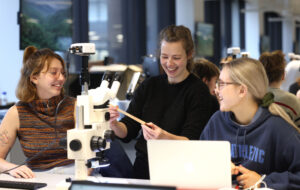
Geography student working in the lab
Geography student in lab
Study room
Picture by Gareth Jones
Student doing lab work
Picture by Gareth Jones

Virtual tour

Supporting your learning

From arrival to alumni, we’re with you all the way:

Two students chatting while walking through campus.

Chat with our students

Want to find out more about student life?
Chat with our student ambassadors and ask any questions you have.

Back to top

Careers and employability

Our Royal Town Planning Institute (RTPI) and Institute of Environmental Management and Assessment (IEMA) accredited programmes ensure that you are fully qualified to enter this dynamic profession on graduation. 

If you wish to continue your education beyond your undergraduate degree we also offer a range of postgraduate degrees, including our RTPI accredited Master of Civic Design. 

We also offer a series of specialist postgraduate programmes including: 

  • Housing and Community Planning MA (RTPI accredited)
  • Urban Design and Planning MCD (RTPI accredited)
  • Environmental Assessment and Management MSc (IEMA accredited)
  • Sustainable Urban Planning MA
  • Further PhD study. 

Our programmes are varied, interdisciplinary, and have a strong vocational focus, meaning that Liverpool planning graduates enter a wide range of planning related careers in the public, private and voluntary sectors. Career development is embedded throughout the programme. Students receive extensive and structured support through a dedicated programme of career development and enterprise activities integrated into the curriculum as well as through the University’s Careers & Employability Service. This includes careers workshops, employer-led presentations, recruitment and networking events, internship opportunities, sector-specific careers resources, and access to digital tools such as LinkedIn Learning and online interview platforms.

Career paths taken by our recent graduates include:

  • Planning and environmental consultants
  • Transport planning and urban regeneration
  • Economic development
  • Environmental management
  • Social housing. 


90% of geography and planning students are in work and/or further study 15 months after graduation.

(Discover Uni, 2018-19.)

Back to top

My qualifications are from United Kingdom.

Fees and funding

Your tuition fees, funding your studies, and other costs to consider.

Tuition fees

UK fees (applies to Channel Islands, Isle of Man and Republic of Ireland)

Full-time place, per year - £9,790
Year in industry fee - £1,955
Year abroad fee - £1,465 (applies to year in China)

International fees

Full-time place, per year - £27,000
Year in industry fee - £1,955
Year abroad fee - £13,500 (applies to year in China)

The fees shown are for the academic year 2026/27. Please be advised that tuition fees may increase each year for both UK and international students. For UK students, this will be subject to the government’s regulated fee limits.

Tuition fees cover the cost of your teaching and assessment, operating facilities such as libraries, IT equipment, and access to academic and personal support. Learn more about paying for your studies.


Additional costs

We understand that budgeting for your time at university is important, and we want to make sure you understand any course-related costs that are not covered by your tuition fee. You can find information on the general and subject-specific costs you could expect to incur on our study costs webpage.


We’re showing the scholarships available to students from United Kingdom.

Scholarships and bursaries

We offer a range of scholarships and bursaries that could help pay your tuition and living expenses.

The Bloomberg Scholarship

4 scholarships are available each year to support undergraduate applicants from socio-economically under-represented backgrounds who permanently reside in the Liverpool City Region. Successful applicants will receive a stipend of £5,000 per year for 3 years. Applications open in August 2026.

Ruth Cannell Scholarship Fund

This scholarship will support undergraduate students from widening participation backgrounds in the Department of Languages, Cultures and Film with their year abroad.

Whiteley Award

This award offers £3,000 per year for a UK undergraduate student from an under-represented background who has successfully completed the Liverpool Scholars or Pathways to Medicine programme.

The Liverpool Bursary

If you’re a UK student joining an undergraduate degree and have a household income below £35,000, you could be eligible for a Liverpool Bursary worth up to £2,000 for each year of undergraduate study.

Asylum Seekers Scholarship

Apply for an Asylum Seekers Scholarship and you could have your tuition fees paid in full and receive help with study costs. You’ll need to have applied for asylum in the UK, or be the dependant of an asylum seeker, and be joining an eligible undergraduate degree.

Care Leavers’ Opportunity Bursary

If you’ve spent 13 or more weeks in Local Authority care since age 14, you could be eligible for a bursary of £3,000 per year of study. You’ll need to be a UK student joining an eligible undergraduate degree and be aged 28 or above on 1 September in the year you start.

Cowrie Foundation Scholarship

Are you a UK student with a Black African or Caribbean heritage and a household income of £25,000 or less? You could be eligible to apply for a Cowrie Foundation Scholarship worth up to £8,000 for each year of undergraduate study.

Estranged Students Bursary

If you’re a UK student identified as estranged by Student Finance England (or the equivalent UK funding body), you could be eligible for a bursary of £1,000 for each year of undergraduate study.

Genesys Life Sciences Scholarship

Joining a School of Biosciences degree and have a household income of less than £25,000? If you’re a UK student, you could apply to receive £4,500 per year for three years of your undergraduate course.

Nolan Scholarships

Do you live in the Liverpool City Region with a household income of £25,000 or less? Did neither of your parents attend University? You could be eligible to apply for a Nolan Scholarship worth £5,000 per year for three years of undergraduate study.

Rigby Enterprise Award

Are you a UK student with a household income of £25,000 or less? If you’ve participated in an eligible outreach programme, you could be eligible to apply for a Rigby Enterprise Award worth £5,000 per year for three years of your undergraduate degree.

ROLABOTIC Scholarship

Are you a UK student with a household income of £26,500 or less? Did neither of your parents attend University? You could be eligible to apply for a ROLABOTIC Scholarship worth £4,500 for each year of your undergraduate degree.

Sport Liverpool Performance Programme

Apply to receive tailored training support to enhance your sporting performance. Our athlete support package includes a range of benefits, from bespoke strength and conditioning training to physiotherapy sessions and one-to-one nutritional advice.

Technetix Broadhurst Engineering Scholarship

Joining a degree in the School of Electrical Engineering, Electronics and Computer Science? If you’re a UK student with household income below £25,000, you could be eligible to apply for £5,000 a year for three years of study. Two awards will be available per academic year.

Young Adult Carer’s (YAC) Bursary

If you’re a young adult and a registered carer in the UK, you might be eligible for a £1,000 bursary for each year of study. You’ll need to be aged 18-25 on 1 September in the year you start your undergraduate degree.

Back to top

Entry requirements

Clearing is now closed to UK and Republic of Ireland students for entry 2026.

Back to top

English language requirements

You'll need to demonstrate competence in the use of English language, unless you’re from a majority English speaking country.

We accept a variety of international language tests and country-specific qualifications.

International applicants who do not meet the minimum required standard of English language can complete one of our Pre-Sessional English courses to achieve the required level.

Qualification Details
IELTS 6.5 overall, with no component below 5.5
TOEFL iBT If you took a TOEFL test on or before 20 January 2026, you’ll need 88 overall, with minimum scores of listening 17, writing 17, reading 17 and speaking 19. If you took a TOEFL test from 21 January 2026 onwards, when a new scoring system was introduced, you’ll need 4.5 overall, with 4 or above in all components. TOEFL Home Edition not accepted.
Duolingo English Test 125 overall, with speaking, reading and writing not less than 105, and listening not below 100
Pearson PTE Academic 61 overall, with no component below 59
LanguageCert Academic 70 overall, with no skill below 60
Cambridge IGCSE First Language English 0500 Grade C overall, with a minimum of grade 2 in speaking and listening. Speaking and listening must be separately endorsed on the certificate.
Cambridge IGCSE First Language English 0990 Grade 4 overall, with Merit in speaking and listening
Cambridge IGCSE Second Language English 0510/0511 0510: Grade B overall, with a minimum of grade 2 in speaking. Speaking must be separately endorsed on the certificate. 0511: Grade B overall.
Cambridge IGCSE Second Language English 0993/0991 0993: Grade 6 overall, with a minimum of grade 2 in speaking. Speaking must be separately endorsed on the certificate. 0991: Grade 6 overall.  
Cambridge ESOL Level 2/3 Advanced 176 overall, with no paper below 162
International Baccalaureate English A: Literature or Language & Literature Grade 5 at Standard Level or grade 5 at Higher Level
International Baccalaureate English B Grade 7 at Standard Level or grade 6 at Higher Level

Pre-sessional English

Do you need to complete a Pre-sessional English course to meet the English language requirements for this course?

The length of Pre-sessional English course you’ll need to take depends on your current level of English language ability.

Pre-sessional English in detail

If you don’t meet our English language requirements, we can use your most recent IELTS score, or the equivalent score in selected other English language tests, to determine the length of Pre-sessional English course you require.

Use the table below to check the course length you're likely to require for your current English language ability and see whether the course is available on campus or online.

Your most recent IELTS score Pre-sessional English course length On campus or online
6.0 overall, with no component below 5.5 6 weeks On campus or online
5.5 overall, with no more than one component at 5.0 10 weeks On campus or online
5.5 overall, with no component below 5.0 12 weeks Online
5.0 overall, with no component below 5.0 20 weeks On campus
5.0 overall, with no component below 4.5 30 weeks On campus
4.5 overall, with no more than one component at 4.0 40 weeks On campus

If you’ve completed an alternative English language test to IELTS, we may be able to use this to assess your English language ability and determine the Pre-sessional English course length you require.

Please see our guide to Pre-sessional English entry requirements for IELTS 6.5 overall, with no component below 5.5, for further details.

Back to top

Contact us

Have a question about this course or studying with us? Our dedicated enquiries team can help.

Back to top

Last updated 16 June 2026 / / Programme terms and conditions

Changes to Town and Regional Planning MPlan

See what updates we've made to this course since it was published. We document changes to information such as course content, entry requirements and how you'll be taught.

15 June 2026: Content updates for 2027 entry – Undergraduate Environmental Sciences

This course has been updated for 2027 entry as part of a review of all our programmes. This review has considered refining study pathways, strengthening links with employers, integrating generative AI, developing students’ research skills, and enhancing alignment with our research strengths. Please note, as at all times, the University reserves the right to make reasonable changes, including to content, entry requirements, or fees, or to discontinue programmes. Applicants will be informed of any significant change.

11 June 2026: Environmental Sciences course updates for 2027

Some of this course information, including the overview, yearly content, careers and experience information, has been updated for entry 2027/28.

1 June 2026: Town and Regional Planning MPlan – Accreditation

Updated accreditation from ‘Institute of Environmental Management and Assessment (IEMA)’ to ‘Institute of Sustainability and Environmental Professionals (ISEP)’.

15 January 2025: Town and Regional Planning MPlan – Duolingo English test requirements

Duolingo English test requirements updated: 125 overall, with speaking, reading and writing not less than 105, and listening not below 100

7 December 2022: Accreditation information update

Accreditation section text changed from:

‘The programme is accredited by the Royal Town Planning Institute (RTPI) and Institute of Environmental Management and Assessment (IEMA) , providing combined spatial and specialist accreditation.’

to:

‘The programme is accredited by the Royal Town Planning Institute (RTPI) and Institute of Environmental Management and Assessment (IEMA), providing combined spatial and specialist accreditation (dependent upon module selection in year three)’

7 June 2022: New course pages

New course pages launched.