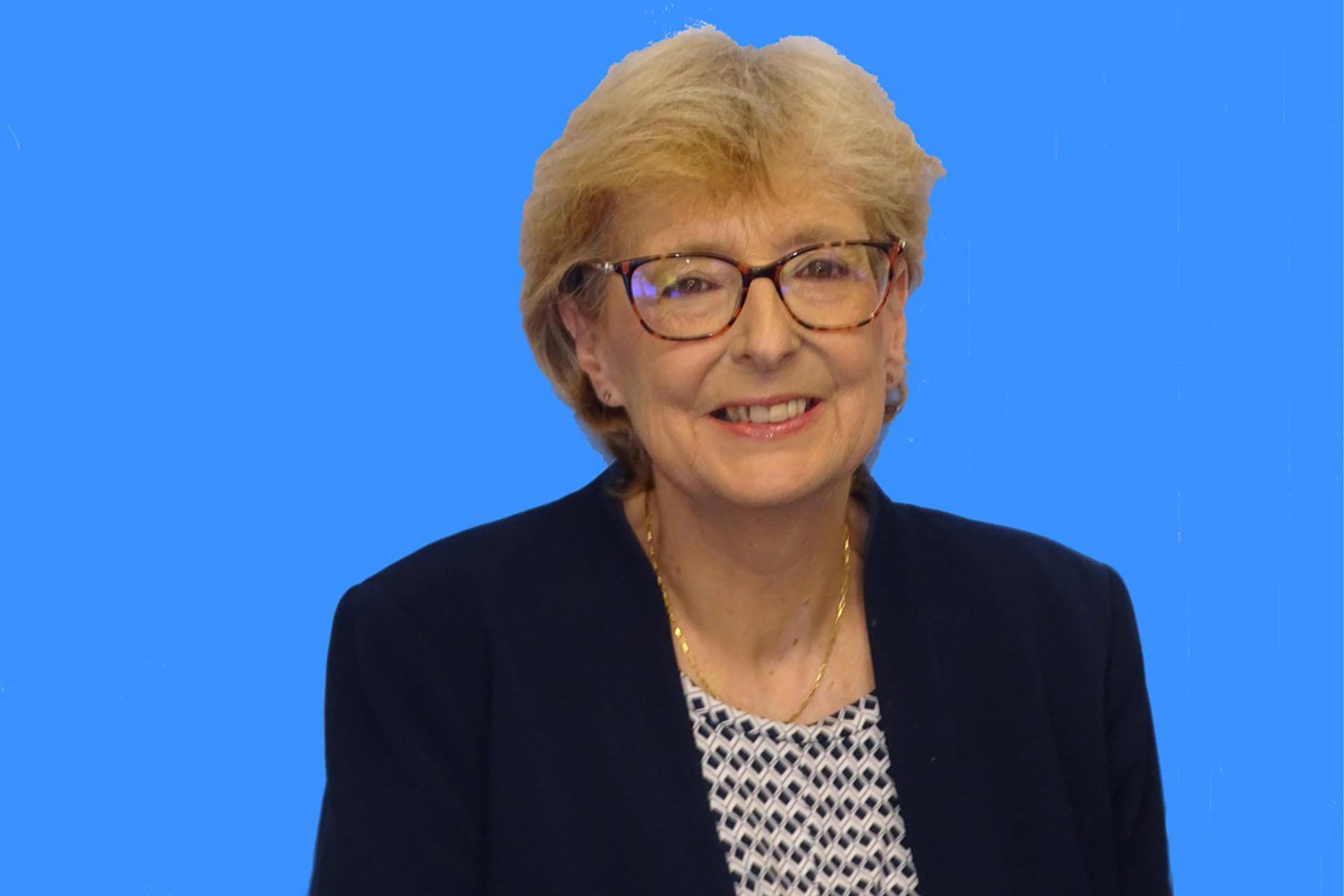
On 13 February 2026, we had the pleasure of hosting Dr Diane Swift as part of our Reflective Practitioner module of the MA Education course. Awarded the OBE (Order of the British Empire) for her contributions to education, chair of Stoke and Staffordshire Teacher Education Collective (SSTEC), and a fellow of the Chartered College of Teaching, Diane walked us through her nuanced studies on professional knowledge and pedagogy.
Having inquired further into what stands behind teacher burnout, imposter syndrome and the worrying attrition of those who join the profession, Dr Diane brought to our attention the several issues regarding the understanding of pedagogy and professional knowledge on a fundamental level.
In the Department for Education’s Teaching Standards, where pedagogy is not mentioned once, what determines the success of teachers’ practice is the demonstration towards ‘knowing that’ and ‘knowing how’. But is that all it takes?
In the discussion on how teachers develop professional knowledge, Dr Diane evaluated the most common methods used to enhance the well-established practice of observation: reflection and reflexivity. Both profoundly known and widely-used as the leading ways of developing ‘classroom expertise’ and enhancing one's own professional practice, reflection invites one to mirror the practice of a more senior professional, and reflexivity encourages self-introspection in the moment of observation.
Yet one element not considered with enough attention in the case of either is context. Where mirroring can work successfully in a given time and setting, under a change of either, the practice learned could become utterly irrelevant. This is where diffraction, a physical metaphor used by Dr Diane, bridges the gap. As a wave that is not formed in the spot, it can be seen where it meets the sand, but far from the eye at the open sea, this method of reflective practice highlights that what happens in the classroom in a given moment is not independent of an array of factors that influence it. That includes the previous knowledge, experience and values of the observing teacher, together with those of the teacher being observed, but also of all those whose theories are being brought up during the lesson.
This contextual vastness of what happens in each classroom, signposts to Dr Diane’s comprehensive vision of pedagogy as a form of tacit knowledge, which connects content and context (and cannot be accessed by observation, reflection or reflexivity alone). In her understanding, tacit knowledge lies in neither of the two elements, but in the relation between them. With that, she stresses that whereas this tacit knowledge cannot be made explicit (as that process would be called tacit communication), the reasoning and logic behind what happens can, through open dialogue and the active use of questions starting with why.
As an emerging education professional, particularly interested in the fostering of curiosity in education, I found this guest lecture incredibly thought-provoking and interesting. Upon reflection on Dr Diane’s contributions, what bridges the gap between outermost and context-dependent professional knowledge, and one that goes beyond learned schemas, is, in fact, curiosity. Just as children who come to school with a plethora of questions, so do teachers, who, in the right environment, supported by the right systems, can more holistically grasp the essence of pedagogy and flourish in the profession. With that, education becomes more than teaching towards ‘knowing that’ and ‘knowing how’, as children are guided by more confident and empowered educators.
Once again, a massive thank you to Dr Diane Swift, who shared so much valuable insight with our cohort.