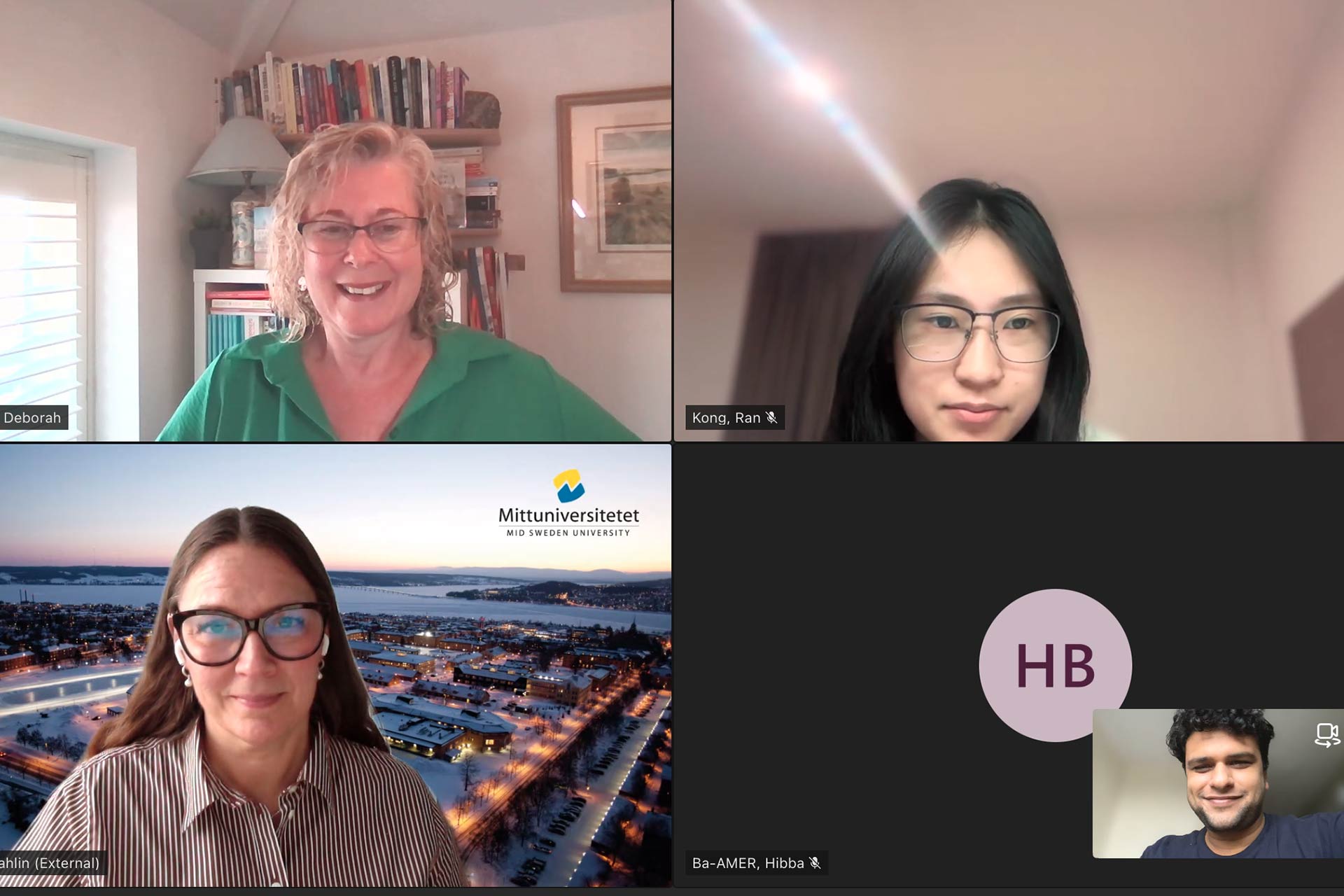
Dr Susanne Sahlin, whose research on school leadership, identity formation, and professional development has grown in significance in discussions about what it means to lead morally and successfully in education, was a guest on our MA Education programme, where we are studying Reflective Practice. Her talk provided an engaging look at the human side of leadership, which is influenced by relationships, introspection, vulnerability, and continuous sensemaking in addition to organisational and policy requirements.
Leadership as identity work
The idea that becoming a leader is an involving process of identity construction, rather than merely acquiring skills or positional authority, was one of Sahlins' main points. She described how new leaders frequently must deal with uncertainty, loneliness and conflicting expectations based on her research. She contended that peer-mentoring groups become crucial ‘identity workspaces’ where beginners can test concepts, discuss problems, and express their aspirations to become leaders.
Her focus on the social aspect of identity was particularly noteworthy. We don't all become leaders by ourselves. Rather, we learn about leadership through dialogue, introspection, and mean-making with people who experience comparable difficulties.
Acquiring knowledge outside of official professional development
Most of the meaningful learning happens informally, through discussion, reflective moments, and resolving daily leadership conflicts, according to Sahlins' research. Experienced leaders view their workplace as a learning environment and frequently place a far higher value on peer discussion and reflection time than on formula training.
This calls into question conventional practices regarding professional development. Sahlin proposed that systems should foster opportunities for collaborative reflection, autonomy, and context-relevant inquiry rather than adding more courses or strict programmes.
Vulnerability, reflection, and the realities of leadership
The discussions about vulnerability were among the most insightful aspects of the seminar. Headteachers rarely have areas where they can express uncertainty without worrying about being judged. When based on trust, peer-mentoring groups offer uncommon emotional support in a role that is frequently characterised by high accountability and ‘performing’ confidence.
This resonates beyond school leadership, as students in the seminar discussed. Reflective practice calls for transparency, bravery, and a readiness to challenge or own our presumptions, regardless of our position, whether as a teacher, middle leader, or head teacher.
Consequences for upcoming leaders
The session highlighted several important lessons for those of us getting ready for careers in education:
- We must consciously create communities of reflection because leadership development is relational.
- Even experienced leaders are constantly changing who they are as professionals.
- Informal learning is important because everyday encounters and problems present chances for development.
- Support networks are crucial because, without safe spaces for transparency, leadership cannot flourish.
A seminar that prompted us to pause and reflect
We were reminded that both leadership and the development of reflective practice are much more than a position or set of skills. It is a journey that is lived, negotiated, and can be intensely personal. Her insights were both academically rich and personally and practically relevant. She urged us to consider how leaders develop as well as how they behave.