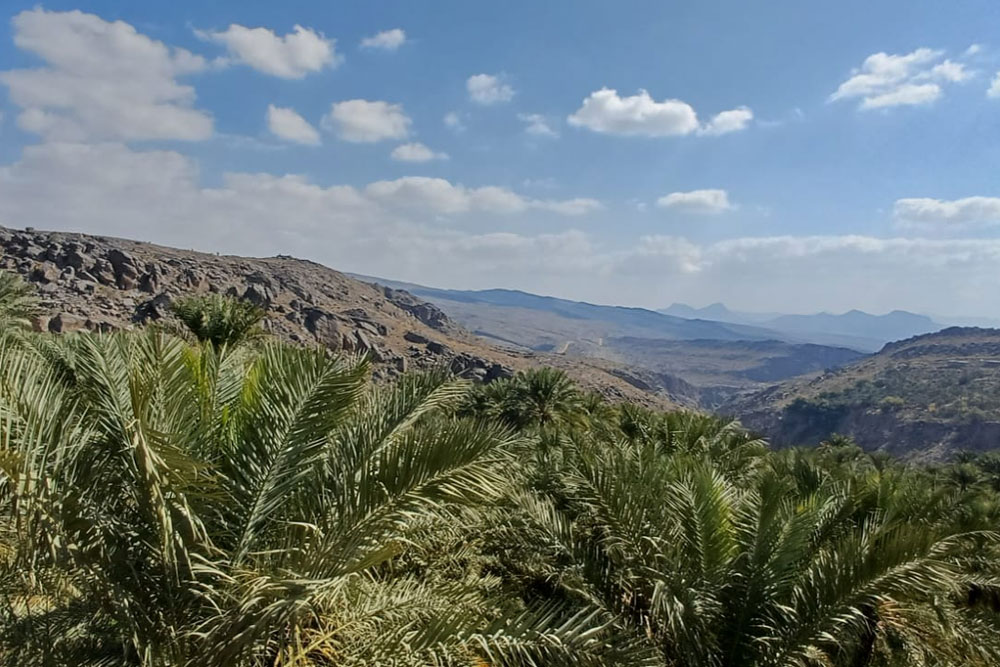
On 13th January 2026, The University of Liverpool’s ArCHIAM Centre successfully delivered a high-profile Multi-Stakeholder Workshop on Sustainable Urban Development Guidelines for Historic Oasis Landscapes of Oman, bringing together local communities, professionals, and policy actors in the historic settlement of Misfat al-Abriyin.
The workshop, organised in collaboration with Misfat al-’Ahliya LLC and held under the patronage of the Ministry of Housing and Urban Planning, Sultanate of Oman, formed part of the international research project “Supporting Government and Grassroots Stakeholders in Oman to Effectively Integrate Heritage Management into Sustainable Urban Development”, funded by the Arts and Humanities Research Council.
Professor Soumyen Bandyopadhyay, Director of the Heritage Institute and Co-Lead of the ArCHIAM Centre with Dr Giamila Quattrone and Dr Konstantina Georgiadou, provided strategic leadership and expertise that helped shape discussions on the future of historic oasis settlements in the context of sustainable growth.
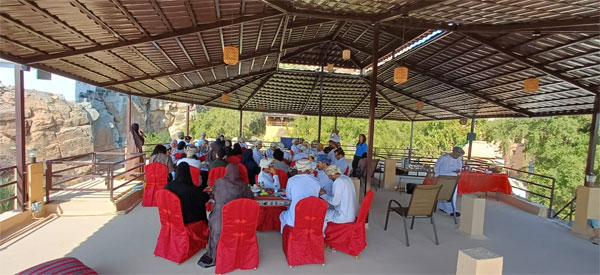
Attendees at the multi-stakeholder heritage workshop
Bridging heritage and development
Designed to strengthen cooperation between property owners, lease holders, policy implementers, investors, consultants and contractors, the workshop equipped participants with the technical and strategic tools needed to implement sympathetic development in historic landscapes, ensuring that development enhances (rather than compromises) cultural heritage.
Through scenario-based exercises, group discussions and hands-on applications, participants explored the strategic guidelines developed by ArCHIAM for integrating historic urban cores into contemporary development frameworks. The research team, led by Professor Bandyopadhyay and coordinated by Dr Quattrone, included ArCHIAM members Dr Mary Shepperson, Dr Konstantina Georgiadou, Claudia Briguglio, Matina Vrettou and Pasquale Larosa.
Learning on site
The programme included interactive presentations, collaborative activities and a guided tour of key sites including Bait as-Sirag, Harat As-Shua and Rogan Cafe allowing participants to directly engage with the living fabric of Misfat al-Abriyin’s historic oasis environment.
Participants were expected to leave with enhanced knowledge of built heritage conservation, adaptive reuse, and international best practice, as well as a strengthened sense of shared responsibility for managing change in historic settings.
Strengthening global partnerships
The workshop reflects the University of Liverpool’s growing international role in addressing global challenges around heritage protection, sustainable urbanism and community-led development. By combining academic research with on-the-ground collaboration, the project continues to support Oman’s efforts to balance economic growth with the preservation of its unique cultural landscapes.