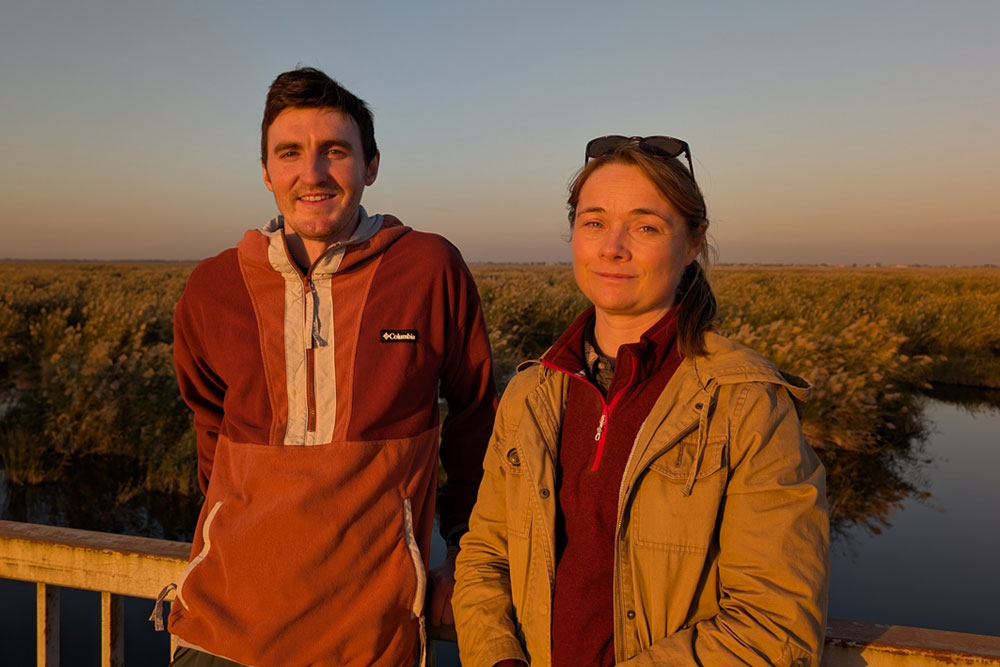
A new University of Liverpool–led research project will examine how communities in Iraq’s southern marshes have sustained human settlement for millennia, offering fresh perspectives on climate resilience and cultural heritage in the face of environmental change.
Lead investigator Dr Mary Shepperson, Lecturer in Architecture and Urban Heritage, has been awarded over £28,000 through the Arts and Humanities Research Council’s (AHRC) Cultural Heritage and Climate Change Networks to Drive Policy Change scheme. The project brings together researchers from the University of Liverpool, the University of Glasgow, the University of Al-Qadisiyah in Iraq and Leiden University, working in partnership with the Iraqi State Board for Antiquities and Heritage.
Dr Shepperson is also a Research Associate at ArCHIAM (the Centre for the Study of Architecture and Cultural Heritage of India, Arabia and the Maghreb).
Iraq’s marshes (the largest wetlands in the Middle East) have long occupied an uneasy place in archaeological and political imaginations. Historically dismissed as agriculturally unproductive and difficult to control, they were largely overlooked in dominant narratives of Mesopotamian civilisation that prioritised large-scale irrigation and urban development.
In recent decades, however, research has helped reframe the marshes as central to early human history, with evidence suggesting that some of the world’s earliest cities developed within and around these biodiverse wetlands during the fourth millennium BCE. This reassessment contributed to the marshes being recognised as a UNESCO World Heritage Site for their cultural and environmental significance.
Despite this renewed attention, the lifeways of the marsh-dwelling Ahwari communities remain under-represented. For thousands of years, these communities developed distinctive forms of rural settlement adapted to a changing wetland environment, including the construction of artificial islands for reed houses that could rise and fall with fluctuating water levels. The marshes also served as places of refuge from centralising powers, from ancient Mesopotamian states to modern conflicts.
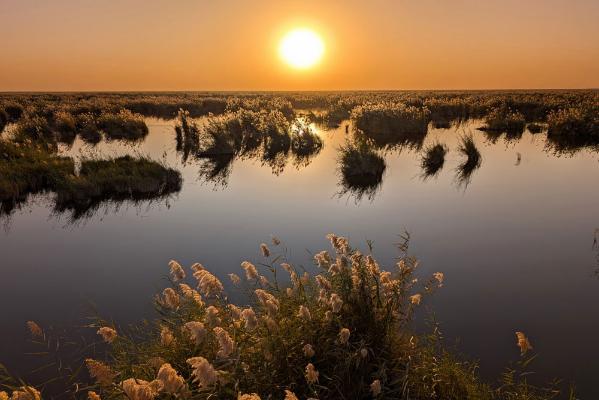
A view across the Iraq marshes at sunset.
A region of change and persistence
The region has repeatedly been reshaped by large-scale human intervention, from early Islamic and Ottoman water-management schemes to the deliberate drainage of the marshes under Saddam Hussein in the 1980s and 1990s. Although water was restored after 2003, the marshes now face renewed threats from climate change, upstream dam construction and water extraction linked to surrounding oilfields, which are reducing river flows, increasing salinity and undermining local livelihoods.
Focusing on the Western Hamar marsh, the project will adopt a multidisciplinary approach combining archaeology, heritage studies, geology, hydrology and ethnography to examine long-term relationships between settlement and environment.
Dr Shepperson said:
“We hope this project will shed new light on long-term settlement persistence in the unique environment of the Iraqi marshes. It will be a rare exploration of rural settlement in an archaeological region defined by the earliest appearance of major urban centres, offering an alternative narrative to the dominant story of extractive urbanism in the Mesopotamian past. We look forward to working with our partners at the universities of Al-Qadisiyah, Glasgow and Leiden, and with our colleagues from the Iraqi State Board for Antiquities and Heritage.”
The project forms part of a wider AHRC initiative aimed at connecting cultural heritage research with climate policy. By foregrounding long-term human experience in the marshes, the team hopes to support heritage- and ecology-based strategies that promote more sustainable futures for the region and its communities.