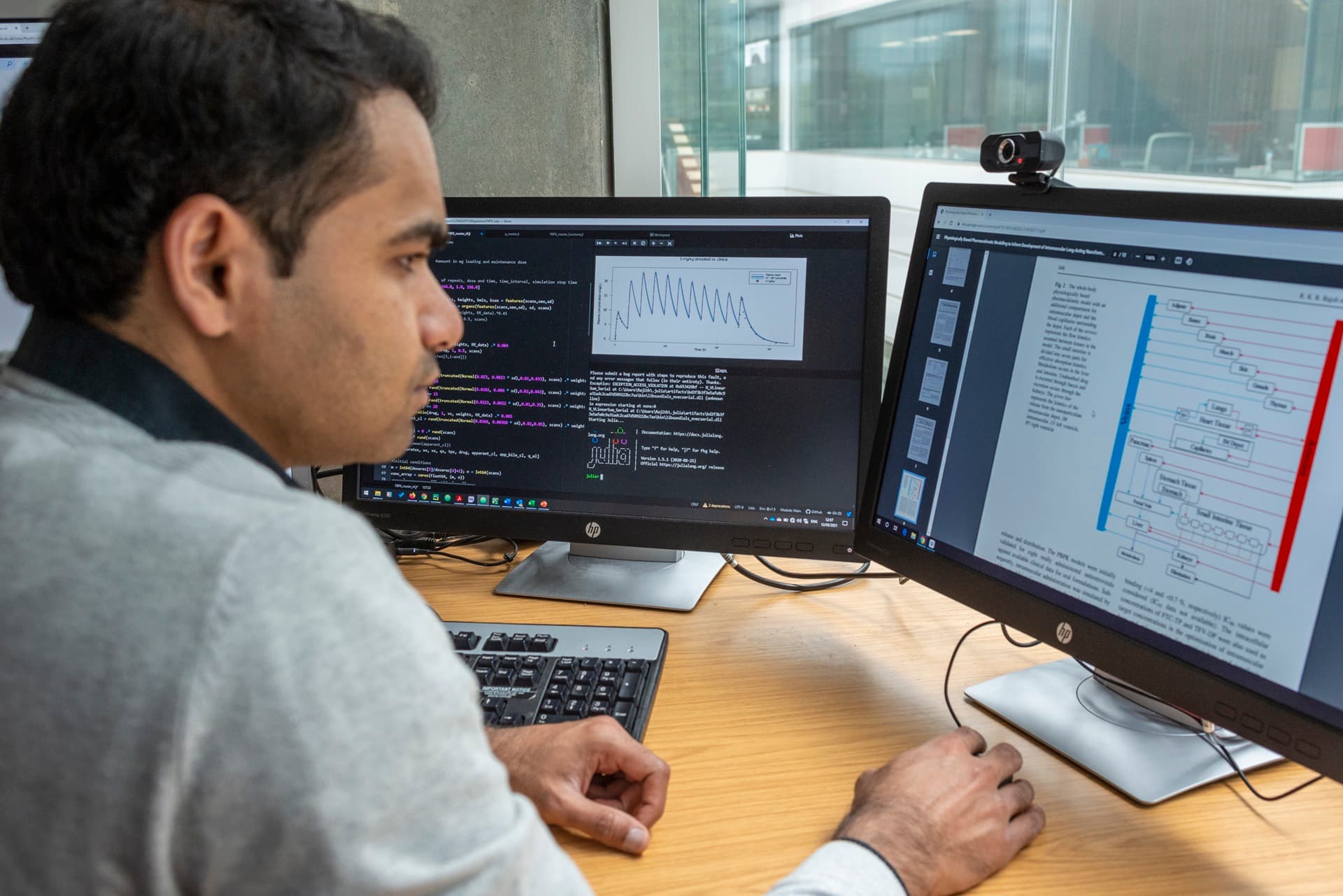
The Centre of Excellence for Long-acting Therapeutics – Global Health (CELT Global Health) have announced today that they’re launching Teoreler 2.0, the free to use online simulation tool to describe the pharmacokinetics of drugs using different physiologically-based pharmacokinetic (PBPK) models. Teoreler 2.0, funded by global health agency Unitaid, is setting a new standard for innovation.
Our mission is to provide high quality models and redefine what users can expect from a modern PBPK application. Building on the success of the original version, Teoreler 2.0 introduces a comprehensive suite of upgrades that reflect three years of customer feedback, research, and innovation. The latest release reinforces our commitment to delivering cutting-edge technology that empowers users to achieve more with greater efficiency.
With version 2.0, we’ve reimagined the entire experience from the ground up. It represents a leap forward that brings more content, more speed, and more possibilities than ever before. Early adopters and beta testers of Teoreler 2.0 have complimented its ease of use, improved responsiveness and faster simulations.
Key new features in the new version of Teoreler
- Enhanced Performance
A fully optimised engine delivers at least 80% faster processing, enabling smoother workflows, without any page navigations and optimised real-time responsiveness - More Models
Version 2.0 shall include an expanded library of models—which already includes adult PBPK model, a child/adolescent model, drug-drug interaction model and models for both mice and rats in the original version—covering more compounds in the library, improved accuracy, and more input options, giving users greater flexibility and choice - Additional Documentation
A significantly enriched documentation hub offers clearer walkthroughs, examples, and onboarding guides, enabling faster and deeper understanding of physiologically based pharmacokinetic (PBPK) modelling - Redesigned User Interface
A modern, intuitive user interface designed for clarity, simplicity, and accessibility across all devices.
Teoreler 2.0 has the power to inform decision points in early medicine development and later stages of dose optimisation. This all helps medical research avoid wasting time and resources, by making sure when we reach clinical trials we’re in the best position to avoid the need for repeated work. Ultimately, efficient PBPK modelling helps us get safe and effective medication to patients more efficiently.
Availability
Teoreler 2.0 is available for new and existing users on teoreler.com starting today, after it's announcement and demonstration at our first LA-LINK workshop. Users of the original version will see a complete change to the website with many more changes and enhancements to come in regular updates to the application.
Feedback from the Users
Feedback from users was used to guide this new version. Early responses already highlight appreciation for the expanded model library, improved documentation, and overall performance enhancements.
Feedback for Teoreler 2.0 is still very important to us. We will use it for the next phase of development, ensuring future updates continue to align with real-world needs.
You can provide feedback via our Teoreler feedback form on our website or by emailing us on askcelt@liverpool.ac.uk