From Postdoc to Permanent: How the RSA Shaped My Career Development
Posted on: 10 December 2025 by Dr Sophie Jones in Researchers
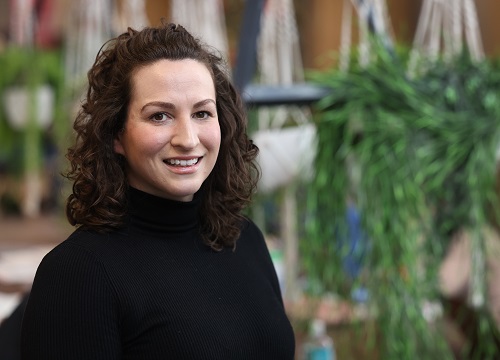
Sophie Jones is a Lecturer in Eighteenth-Century History.
A historian of the eighteenth-century British Atlantic, her research focuses on the socio-cultural development of the North American colonies. Jones has published on a range of topics including early-modern merchants and their families, eighteenth-century American subscription libraries, and early-modern literacy. Her forthcoming monograph considers how local contexts shaped political identities during the American Revolution.
From Postdoc to Permanent: How the RSA Shaped My Career Development
I joined the University of Liverpool as a Postdoc in September 2019, working on the £1m AHRC-funded project, Reading and Cultural Formation in the Eighteenth-Century Atlantic. This was an international and collaborative project, working with a team of academic researchers and non-HEI partners from around the world. This is something which is quite unusual in my discipline (History), but I was drawn to the idea of working as part of a global, collaborative team.
Unfortunately, the Covid-19 pandemic occurred a few months into the project. One week the project team were in Sydney, working with the Digital Humanities Research Group – the next, we were locking down. Finding myself working from home in isolation, I started to attend RSA-organised events to meet with colleagues and make new friends. By 2021 I had joined the core team as a Deputy Co-Chair and quickly stepped into the role of Co-Chair by the end of the year, taking on additional responsibilities.
While I initially joined the RSA for companionship and structure, engaging with the RSA has been instrumental to my professional development. As a Co-Chair of the RSA, I organised and took part in countless conferences and workshops: including the annual Research Staff Conference, Lunch & Learn sessions, and Making an Impact events. One of the benefits of organising these events is that my fellow Co-Chairs and Deputies were able to shape these events to our own interests, ensuring that they covered topics that really mattered to Postdocs in that moment. It also gave me exclusive opportunities to join other training taking place across the University – some personal highlights for me were the Collective Leadership programme and media training. All of these events are listed in the weekly RSA newsletter, so do take the time to read through and sign up for events that you think might be beneficial.
As an RSA Co-Chair, I was privileged to represent my fellow postdocs on a number of prestigious committees – including the Concordat Steering Group and the Research and Impact Committee (RIC). My colleague Rishav Agrawal has already written about how attendance at these conversations provides a unique insight into learning how University Policy and Strategy plays out in real time at the highest level. My experience was that being present at the table also raised my profile: I developed a reputation as someone who was enthusiastic, dependable, and had leadership potential. As a result, participation on one Committee led to invitations to provide ECR representation on other Committees – including the HSS RIC, the AHRC IAA Management Group, and (a source of personal pride) UUK’s Research Culture & Practice Forum. While I’m not part of the RSA core team anymore, I still happily continue to serve my University community on local Committees.
On a day-to-day level, being part of the RSA brought me out of the ‘bubble’ of my department and helped me to feel part of the University as a whole. I worked with postdocs from across the University’s three faculties (many of whom are now good friends, and whom I would not have met otherwise); I worked closely with PS staff – including our wonderful Researcher Development and Culture Team; and with colleagues of different seniority. This was invaluable experience for shaping my network, building my confidence in working outside of my ‘comfort zone’, and learning to multi-task on a range of deadlines. As a result of my work with the RSA, I was truly honoured to be the inaugural recipient of the Research Culture Champion award.
When my postdoc contract came to an end in 2023, I successfully applied for a temporary Lectureship within my Department through the University’s Redeployment process. The RSA has worked hard to secure equitable redeployment opportunities for researchers over the years, and it was thanks to the RSA that I had the confidence to navigate this process. In 2024 I found myself navigating redeployment again – this time, at the same time as maternity leave – and this was when I was fortunate enough to secure my permanent role.
Postdocs face a difficult balancing act. Research is demanding, and we’re often told that it’s our research and subsequent publications which we need to focus on if we want to successfully apply for academic roles. While this is true, spending time on our personal and professional development is so important – especially if that permanent academic role never materialises. Thanks to the RSA, when I was applying for my Lectureship positions, I was able to draw upon all of the skills and experience that I had gained as a Co-Chair over the previous three years. While I had the necessary research and academic background to quality me for the role, engaging with the RSA gave me the ‘extra special’ qualities on top. These are the things that can set postdocs apart from other candidates, providing tangible evidence of their leadership potential and versatility.
As we reach the end of 2025, why not set a New Year’s Resolution to sign up for some Researcher training advertised in the RSA newsletter? Who knows where it might take you.
Key Takeaways
- Engaging with researcher development helps postdocs gain valuable transferable skills and experience
- Engaging with researcher development broadens your personal and professional network
- Transferable skills are essential when applying for academic positions, and can set you apart from other candidates
- Prioritising your personal and professional development – beyond your research - is incredibly important for postdocs
Keywords: Confidence , Impact, Managing uncertainty, Organisation, Researchers, Redeployment.