Reflections on an Internship at Distance with CIE
Posted on: 16 December 2025 by Yubin Zhang, Qiudi Chen and Jinyue Lyu in General

As part of the Syntegrative Learning Module for the MSc in Digital Education at Xi'an Jiaotong-Liverpool University (XJTLU), the Centre for Innovation in Education annually accepts student interns to work on current and future-facing innovation projects – aligning with the Learning Outcomes (Los) of the syntegrative module, expanding their knowledge and skills, and enhancing their employability and experience.
This blog includes personal reflections from the student interns, who each worked on 3 separate strands of investigation from October to December 2025.
Yubin Zhang investigated digital perspectives in education, with a focus on Game-based Learning (GBL) and escape rooms. You can read Yubin’s reflections below.
Qiudi Chen investigated Game-based Learning (GBL) and developed an Open Educational Resource (OER). Read Qiudi’s reflections below.
Jinyue Lyu worked had a focus on Multimodal learning and Generative AI. You can read Jinyue’s reflections below.
All support resources developed during the internship are available via the CIE resource database:
- H5P Branching Scenario Escape Room Teaching
- Creating an Escape Room Using Interactive Book in H5P
- A comparison of Generative AI tools for generating multimodal artefacts such as images and videos
You can view additional examples of escape rooms in H5P via the Gamefulness and Escape Rooms Canvas Support Resource (self-enroll).
Reflections from Yubin Zhang
During my remote internship at The Centre for Innovation in Education (CIE) at the University of Liverpool, I worked entirely online, despite being in a time zone significantly different from that of the core team. This arrangement posed real challenges for synchronous communication and maintaining a sense of immediate connection with the team. Yet, precisely because of those challenges, I gained a deep insight into professional collaboration in the digital age, as well as autonomous project management — marking a period of important personal growth for me.
We maintained regular contact through scheduled Microsoft Teams meetings, which served not only as progress-reporting sessions but also as collaborative platforms for receiving guidance, stimulating ideas, and calibrating project direction. Between meetings, asynchronous channels — email, shared documents, and task-management tools — ensured continuous, transparent workflows, allowing the project to advance smoothly across time zones. Throughout this process, my supervisor demonstrated responsiveness and professional patience, offering clear frameworks and timely feedback. This created a working environment that balanced flexibility with strong support, enabling me to make independent decisions while staying aligned with team objectives.
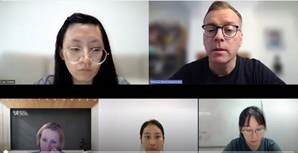
Through this experience, I came to realize that effective remote collaboration does not rely on being “always online”, but rather depends on shared clarity of goals, precise asynchronous communication, and a proactive sense of responsibility. I gradually learned to present progress in structured written form, anticipate potential problems, and develop disciplined time management and task-advancement habits. Rather than simply a professional exercise, this internship became an early adaptation to future work patterns: in an era of increasingly tight digital connectivity, cross-region and cross-time-zone collaboration is becoming routine, and the ability to navigate such remote modes effectively is becoming a key component of contemporary professional competence.
My work mainly focused on gamified learning and digital escape-room environments: I conducted research, design, and resource development in this domain. One of the outcomes was a fully developed digital educational escape room. This direction holds important significance in higher education:
It addresses the urgent need to enhance student engagement and learning motivation. For course modules with complex or abstract content — such as the “digital perspective of education” — traditional teaching methods sometimes struggle to concretize theory. Through gamified learning — especially in the form of an escape room — by embedding narrative, problem-solving, instant feedback, and exploratory fun, learning transforms passive information reception into an active, experiential process.
At the same time, my work contributed to the teaching innovation and digital-literacy development of instructors. In addition to creating the escape-room resource, I wrote a detailed DIY guide for educators, intending to promote this teaching tool and empower instructors to design interactive learning experiences themselves — thereby more deeply embedding the philosophy of gamified learning into curricula. The essence of this work was not “gamification for the sake of games,” but leveraging the motivational and cognitive principles behind game mechanics to create deeper, more meaningful learning experiences.
Specifically, my internship tasks comprised three main parts:
First, I developed an interactive escape-room using H5P branching scenario — “Education 1.0 to 4.0.” This resource unfolds across five progressive stages, transforming abstract educational theories into an immersive gaming experience. From multiple-choice challenges representing Education 1.0, to collaborative tasks for Education 2.0, autonomous decision-making for Education 3.0, and technology-matching activities for Education 4.0, each stage corresponded to specific learning objectives and competency development. This project demonstrated my ability to integrate instructional design thinking with digital tool applications.
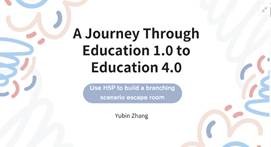
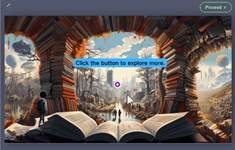
Second, I compiled a DIY Guide titled “H5P Branching Scenario Escape Room Teaching: A DIY Guide” Designed to help educators independently craft similar resources, the guide includes clear step-by-step instructions and examples, integrates theoretical underpinnings and design principles, pays particular attention to visualizing technical procedures, and emphasizes the importance of reflection and iteration.
Third, I collaborated with team members to complete a data-analysis report on CIE’s existing resources, systematically examining the Centre’s resource base and offering concrete recommendations for its future development. This task showcased my ability to apply research and analytical skills to real-world contexts and to develop strategic thinking.
Overall, the internship achieved an organic integration of theory, technology, and professional development. The most valuable outcome was that I experienced first-hand the process of translating educational theory into practice: from the initial review of literature on gamified learning, understanding its underlying principles, to concrete application in an academic setting; from design to implementation of a fully functional digital tool with explicit learning objectives. Technically, I improved my proficiency in tools like H5P and Canvas and gained hands-on experience in aligning interactive elements with learning goals, constructing progressively challenging tasks, designing user pathways, and embedding feedback mechanisms. Professionally, under my supervisor’s guidance, I made independent design decisions through critical thinking, and, through teamwork, honed my ability to decompose complex information, identify strategic gaps, and integrate collective outcomes.
Of course, I also encountered several challenges. The primary difficulty at the outset was that the topic — educational escape rooms — was overly broad and hard to focus on. By combining my supervisor's directional suggestions with independent research, I ultimately narrowed the scope to “the evolution from Education 1.0 to 4.0,” making it both aligned with the curriculum content and suitable for puzzle-based format. Another challenge arose during the analysis of a large resource database: faced with overwhelming data, I initially did not know where to start. I then adjusted my approach, first clarifying specific, actionable analytical questions, then identifying relevant data subsets, and discussing with my supervisor accordingly — thereby transforming confusion into a well-structured analytical process.
Through critical reflection, I also identified areas for further improvement: first, at the project’s beginning, I could have initiated more proactive and frequent communication, rather than relying solely on scheduled meetings; second, in group presentations, I should avoid text-heavy slides and instead emphasize visual presentation and clear oral explanation; third, when proposing development suggestions in the future, I should base them more on evidence and support them with literature or case studies to enhance persuasiveness.
This internship further clarified my professional aspirations. I am eager to continue working at the intersection of education, technology, and academic development, focusing on creating rigorous, engaging, and innovative learning experiences. Whether in a university innovation Centre, the ed-tech industry, or instructional design roles, I hope to become a professional capable of empowering educators and helping them creatively integrate digital tools into teaching — ultimately contributing to the enhancement of teaching and learning in higher education. This experience has not only equipped me with a range of practical skills but also pointed me to a clear and motivated career path for the future.
Reflections from Qiudi Chen
In an era where digital technology is reshaping the educational landscape, the deep integration of cutting-edge educational theories with technological tools to create efficient and interactive learning experiences has become a core proposition for driving innovation in higher education. As Ji et al. (2024) noted, "Digital technology has become an indispensable driving force for educational innovation, but its application must be guided by educational essence rather than technical determinism." This perspective highlights the importance of striking a balance between technological empowerment and the inherent nature of education. As a second-year master's student in Digital Education at Xi'an Jiaotong-Liverpool University, I was privileged to participate in a three-month online internship with the Centre for Innovation in Education (CIE) at the University of Liverpool this semester. With a core mission to empower faculty and staff, optimize curriculum design, and enhance student learning experiences, CIE promotes educational innovation through academic collaboration and project implementation. The project I participated in, "Development of Open Educational Resources (OER) Based on Gamified Learning (GBL)," is a practical manifestation of educational digital transformation from the perspective of integrating technological empowerment with educational goals.
My core responsibilities during this cross-timezone online internship centered on three key areas: systematically reviewing relevant literature in fields such as gamified learning and educational escape rooms to build a solid theoretical foundation; developing interactive OERs sharable on the Canvas platform using H5P tools, transforming abstract educational theories into practical content; drafting the Creating an Escape Room Using Interactive Book in H5P to provide faculty with a clear operational framework; and participating in CIE's resource database analysis team, where I was responsible for auditing AI-related guides and analyzing data on podcast and blog communication strategies.
Throughout the three-month practice, online mentor meetings were held every 1-2 weeks, task assignments were sent via email, and real-time communication was conducted on Microsoft Teams, serving as crucial guarantees for advancing work. Through cross-cultural collaboration and digital practice, I not only produced tangible outcomes such as OERs, DIY guides, and database analysis reports but also achieved comprehensive growth in professional competence, collaboration skills, and communication abilities. I gained a profound understanding of the core logic of integrating "theory-technology-practice" in digital education.
Digital Education Practice
The core practice of this internship focused on developing and optimizing gamified learning resources, an area of significant importance in higher education. Traditional teaching models often face challenges such as insufficient student engagement and difficulty in understanding abstract theories. Gamified learning, by embedding learning objectives into engaging and interactive game scenarios, effectively stimulates learning motivation, reduces cognitive load, and achieves "learning through play." Gamifiedsis by Bai, Hew & Huang (2020) showed that gamified learning has a significant medium effect on student learning outcomes in educational settings, with its core mechanism lying in activating learners' intrinsic motivation systems through elements such as goal challenges, immediate feedback, and fulfillment of recognition needs. Meanwhile, the development and sharing of OERs align with the trends in higher education, including resource accessibility and innovative teaching models. The Midwestern Higher Education Compact [MHEC] & Zaback (2022) indicated that OER can bring significant cost savings to universities and students, while promoting the sharing of teaching experiences among different institutions and providing reusable, high-quality teaching tools for faculty from diverse backgrounds.
In the practice process, I consistently followed the core logic of "theory implementation - tool adaptation - user-centricity." First, through a systematic literature review, I clarified the core distinction between gamification (integrating game elements such as points and badges into non-game scenarios) and gamified learning (embedding learning objectives into complete game activities). I also gained an in-depth understanding of the application scenarios of the three major educational theories — behaviorism, constructivism, and cognitivism — laying a theoretical foundation for resource development. Subsequently, addressing the core challenge in digital education of "how to select appropriate digital tools to transform abstract theories into engaging interactive content," I strategically matched various H5P templates: using Interactive Book to present basic concepts, adopting Escape Room to carry theoretical learning modules, designing narrative-based levels to deepen learners' understanding in the process of acquiring "theoretical keys," embedding terminology explanations in Interactive Video with timed interactive questions, and finally implementing knowledge review through Quiz. This design approach of "modular content + precise tool matching" ensured both the systematicity of knowledge and the fun of learning.
In addition, when collaborating with the team on CIE's resource database analysis task, we used participation report data from two academic years (2023-2024 and 2024-2025) to analyze multiple dimensions, including audience interaction graphs, popular guide analysis, resource gap identification, AI theme expansion, and communication strategy optimization. Through task division, collaborative editing, and regular communication, we not only completed core work such as gap analysis, new resource recommendations, and social media promotion plan design, but also developed a data-driven approach to educational resource optimization, providing practical references for CIE's service upgrades. This process confirmed the cyclical logic of "data insight - strategy adjustment - effect verification" in Coleman et al.'s (2019) educational data mining theory, which emphasizes in research on educational data clustering and student at-risk status prediction that data-driven decision-making is the core path to improving the accuracy of educational services.
Critical Reflection
Experience and Adaptation of Online Cross-Timezone Collaboration
This online cross-timezone internship was both a challenge and a valuable opportunity to enhance my collaboration skills. Due to the time difference between China and the UK, some communications required advance scheduling. In the early stage, I encountered issues such as maladjustment to communication rhythms and delayed information synchronization. This aligns with the research found by Chauvin et al. (n.d.) that time zone differences significantly reduce the volume of effective synchronous communication, with the main bottlenecks being information attenuation in asynchronous communication and the lack of immediate feedback. However, by establishing a precise communication mechanism — using the asynchronous messaging function on Teams to synchronize work progress and focusing real-time meetings on core issue discussions — we effectively resolved the obstacles posed by the time difference. The support from practice mentors was particularly crucial. At the initial meeting, they developed a detailed work schedule and task milestones; beyond that, they provided timely answers to my questions via regular email feedback and one-on-one communications, which ensured I always stayed aligned with project goals. This cross-time zone collaboration experience made me deeply realize that digital tools are the core support for breaking geographical limitations. At the same time, clear communication rules and an inclusive collaborative atmosphere are key to the success of cross-cultural online cooperation. This is highly consistent with the core viewpoints in Wise's (2024) "Global Virtual Team Trust-Building Model," which emphasizes that communication frequency, task transparency, and cultural sensitivity are the three pillars of trust building.
Strengths and Weaknesses in Personal Performance
During the internship, I demonstrated strong execution and adaptability. I successfully advanced various tasks in strict accordance with the project schedule and completed core work, including OER development and DIY guide writing. When facing problems in cross-cultural communication and technical operations, I took the initiative to seek help from mentors and team members and quickly adjusted my work methods. Meanwhile, I achieved significant breakthroughs in integrating theory with practice, successfully transforming the three major educational theories into interactive learning experiences and developing a reusable approach to creating digital resources.
However, upon reflection, there are still two core areas that need improvement. First, I need to enhance my English communication skills. Although I can complete basic communications, I still need to rely on meeting recordings and translation tools to assist in understanding complex instructions from mentors or conducting in-depth professional discussions, which affects communication efficiency. The root cause of this problem lies in insufficient proficiency in oral expression and flexible application of professional vocabulary. In the future, I need to strengthen my listening and speaking abilities through intensive English listening practice and active participation in English academic discussions, rather than limiting myself to written expression. Second, the depth of data analysis and strategy design is insufficient. When formulating communication strategies for podcasts and blogs, although I proposed ideas such as hierarchical audience promotion and thematic challenges, I lacked quantitative analysis of the expected effects of these strategies. I did not fully consider the differences in user behavior across various platforms.
Additionally, when producing CIE promotional videos, I utilized AI dubbing without thoroughly investigating the target audience's preferences for voice styles, which may have impacted on the promotional effect. This reflects my lack of awareness of the user needs research phase, which is inconsistent with the "user experience first" digital education design principle emphasized by Okuboyejo, Adekanye, and Ayeni (2025). Their research suggests that pre-research on user needs can generally enhance the acceptance of educational products.
Critical Thinking on the Application of Digital Educational Technology
Digital educational technology provides strong support for teaching innovation, but educational goals must guide the practical application of tools. Bai, Hew & Huang's (2020) research also warns that poor gamification design may reduce intrinsic motivation, distract students, and cause fragmented learning experiences. This view highlights the risk of prioritizing "form over content" in technology applications. When developing resources using H5P, I realized that the choice of interactive forms should not only pursue novelty but also be highly consistent with the learning content and objectives. An excessive focus on gamified elements at the expense of in-depth knowledge transfer can deviate from the essence of education. This understanding became even clearer when using AI tools to assist work: Doubao can quickly generate content frameworks, and Napkin can realize theoretical visualization, but the output of both needs to be screened and optimized in combination with educational scenarios. Otherwise, problems such as content being divorced from reality and insufficient logical rigor may arise — this is a specific practice aimed at addressing the risk of technological tool abuse.
Therefore, the core of digital education is not technology itself, but rather "human-machine collaboration” combining the efficiency of technology with the expertise of education to develop resources that are both engaging and educationally valuable. At the same time, the accessibility of digital resources is also worthy of attention. It is necessary to consider the technical adaptability of different users to prevent the creation of new educational divides due to the complexity of tool operations.
Conclusion
The three-month internship experience enabled comprehensive growth in professional competence, collaboration skills, and cognitive thinking. At the professional level, I not only deepened my understanding of core concepts, such as gamified learning and open educational resources, but also mastered key skills, including H5P tool operation, digital resource design, and data-driven educational analysis, thereby forming a comprehensive work logic of "theory - design - technology - evaluation." In terms of soft skills, the cross-timezone and cross-cultural collaboration experience enabled me to learn how to utilize tools such as Microsoft Teams' asynchronous functions and shared documents to overcome time zone and spatial barriers, thereby improving communication efficiency and enhancing team collaboration capabilities. I also gained a deeper understanding of "trust building" and "task transparency" in cross-cultural communication. At the thinking level, through critical reflection on the application of digital educational technology, I can dialectically view the relationship between technological empowerment and the essence of education, ensuring that resource development always centers on learning objectives.
This internship further clarified my career goals: in the future, I plan to specialize in the field of digital educational resource development and the application of educational technology. Whether entering a university to provide educational technology support for faculty or joining an e-tech company to participate in product development, I am committed to becoming a bridge connecting academic theory and practice — transforming abstract educational theories into implementable digital tools, so that technology truly serves the improvement of teaching efficiency and the optimization of learning experiences.
To expand the internship outcomes, I will promote my growth in three aspects in the future: first, deepen technical application capabilities, learn advanced functions of more digital educational tools, and explore the practice of AI in personalized learning resource development, such as optimizing resource interaction design through learner behavior data analysis; second, strengthen data analysis thinking, systematically learn educational data mining methods, and improve the ability to identify resource gaps and optimize communication strategies from data, making decisions more scientific; third, accumulate cross-scenario practical experience, take the initiative to participate in cross-institutional and interdisciplinary digital education projects, and apply the "development - evaluation - iteration" approach formed during this internship to more scenarios, gradually improving the professionalism and influence of resource development. I firmly believe that only by continuously combining professional knowledge with technical capabilities and adhering to the original aspiration of education can we move forward steadily in the wave of educational digital transformation and contribute to the dual goals of "technological accessibility" and "teaching quality improvement."
References
Bai, S., Hew, K. F., & Huang, B. (2020). Does gamification improve student learning outcome? Evidence from a meta-analysis and synthesis of qualitative data in educational contexts. Educational Research Review, 30. https://doi.org/10.1016/j.edurev.2020.100322
Chauvin, J., Choudhury, P., & Fang, T. P. (n.d.). Working around the clock: temporal distance, intrafirm communication, and time shifting of the employee workday.
Coleman, C., Baker, R. S., & Stephenson, S. (2019). A Better Cold-Start for Early Prediction of Student At-Risk Status in New School Districts. International Educational Data Mining Society.
Midwestern Higher Education Compact, & Zaback, K. (2022). Toward Convergence: Creating Clarity to Drive More Consistency in Understanding the Benefits and Costs of OER. Research Report. In Midwestern Higher Education Compact.
Okuboyejo, S., Adekanye, O., & Ayeni, F. (2025). Evaluating User Experience in Learning Applications among University Students in Nigeria Using UEQ. International Journal of Emerging Technologies in Learning, 20(2), 4–14. https://doi.org/10.3991/ijet.v20i02.54757
Wise, T. P. (2024). Trust in virtual teams : organization, strategies and assurance for successful projects. Routledge, Taylor & Francis Group.
Xuecong Ji, G., Wing Keung Chan, P., McCormick, A., & Won, M. (2024). COMMUNITY VOCIES: Scholarly responses to UNESCO Global Education Monitoring Report 2024 Pacific Technology in Education: A tool on whose terms? International Education Journal: Comparative Perspectives, 23(2), 154–155. https://doi.org/10.70830/iejcp.2302.20369
Reflections from Jinyue Lyu
The three-month internship experience at the CIE team of the University of Liverpool left a deep impression on me, especially in terms of dealing with the time difference. As we are in different geographical time zones, this also indicates that there are some differences in our working hours and arrangements. However, as the internship progresses, it also shows that we need to have greater flexibility and accuracy in the arrangement of learning tasks and the allocation of time management. During this internship, we utilized email and the online collaboration platform (TEAMS) for communication. Although there were time differences between us, we also sought similar times for regular discussions and reports. Moreover, when encountering problems during the task execution, we could promptly receive feedback from our mentors and make targeted modifications based on the feedback.
Similarly, this cross-time zone cooperative learning has further made me realize the importance of online collaboration. Even though we are in different regions and time zones, we can still use online collaboration platforms for real-time communication and collaboration, which further helps to make learning and work more efficient. For instance, during the training course, the instructor demonstrated in a more intuitive way how to design the course content and operate the platform using CANVAS and the H5P platform through screen sharing and communicated and exchanged through actual learning practices. It further helps us to provide timely guidance when facing confusion in practical operations, thereby enabling us to master the use of learning tools more efficiently. During this internship, through the full process planning of learning tasks, I further enhanced my time management skills and information coordination abilities, which provided certain support for the standardization and efficiency of my future studies or work.
During this internship experience, I also focused on the research and practical application of multimodal learning. Among them, my tasks mainly include comparing different generative AI tools, finding examples to create visual information for visualization, and writing user guides for generative AI tools, etc. In the continuous process of learning and practice, I gradually realized the role of applying different digital technology tools in strengthening the learning process (such as simplifying and organizing information, deepening understanding, etc.). This learning method, to a certain extent, also makes up for the traditional book-based learning approach, which can help students flexibly choose highly appropriate technical tools for learning.
One of the main tasks during this internship was to write a user guide for generative AI tools. In the actual operation process, if it is necessary to remember a relatively abstract concept, intuitive visual information (such as text-to-image or text-to-video conversion) can be utilized for output. By directly inputting text instructions (such as converting information into flowcharts or mind maps, etc.), this also helps students make more abstract logical relationships or conceptual information clearer, reducing the difficulty of memory for them to a certain extent.
This internship experience has further helped me understand how to utilize digital tools in higher education teaching scenarios to enhance students' learning interest and efficiency, while also providing me with fresh perspectives on this subject.
During this internship, through continuous learning and practice, I first strengthened my perspective on understanding educational issues. For instance, during the process of writing the user guide for generative AI tools, I tested the various functions of different forms of AI tools and gained a better understanding of the different requirements for different learning tools and the different ideal effects to be achieved due to the differences in users' levels and habits. Similarly, during the writing process, I have further strengthened my understanding of how to combine different technical learning tools to better meet students' diverse learning needs, how to increase the visibility and intuitiveness of learning materials, and how to further enhance students' interest in learning.
These experiences have further helped me to enhance the application and research of relevant learning models in my future educational practice. In this group cooperation task, we need to conduct in-depth analysis and summary of the obtained reports, access data and website information. At the same time, some of the information will also be presented through visual effects. During this process, it is first necessary to have a comprehensive understanding of the website and simultaneously integrate and compare the information and data related to design principles. This also includes classifying different types of information and effectively using it to express viewpoints. Through the absorption and internalization of diverse information, my perspective on problems from multiple angles and critical thinking ability have been further enhanced.
Secondly, the most significant takeaway from this experience was enhancing my digital literacy, particularly in leveraging digital tools. Platforms like Dreamina, VIDU, and H5P served as key learning resources. Through hands-on practice and mastering these tools, I gained valuable experience that will enable me to integrate technology more effectively into future studies.
But in the process of practice, I also faced some challenges.
In the initial stage of my research, I need to quickly gain a deep understanding of different types of multimodal learning tools and their impact on the field of education. When confronted with a vast amount of academic information and AI tools, I need to precisely screen out the most representative viewpoints and resource tools for targeted expression of opinions, which has also become a challenge in the practical process. Therefore, before starting a task, I always set task goals, such as what kind of effect I hope to achieve or the relevant research direction, etc., to screen out relevant learning materials in a targeted manner. This process has further enhanced one's ability to integrate information, thus making the learning process more efficient in subsequent studies.
In the early stage of comparing different generative AI tools, facing unfamiliar applications and different operation interfaces, especially in the use of some more professional functions, I couldn't operate each tool proficiently, and I was also confused about some professional terms. Therefore, in order to conduct a more comprehensive comparison of each tool and its functions, I will choose to search for relevant information among various media tools (such as search engines, video websites, graphic and text production platforms, etc.), and also select different media tools to help me test the text-to-image or text-to-video functions in the tools more intuitively. During this process. To better test the generated visual information, I also delved deeper into relevant professional terms (such as lens language, shot size, etc.).
This internship has not only enhanced my ability to analyze problems from multiple perspectives but also given me a clearer understanding of how multimodal tools can be applied in learning. Of course, there is still room for improvement. In my future studies or career, I will further strengthen my proficiency in using various technical tools and deepen my knowledge of related professional expertise. By doing so, I aim to improve my digital literacy and better apply these tools in real-world scenarios.
Keywords: Interactive, Escape-room, Digital, H5P, Branching, Scenario, Educational, Pedagogy, Artificial Intelligence, Multi-modal.