We've set the country or region your qualifications are from as United Kingdom.
About this course
The Sports Business and Analytics MSc will provide you with a master’s level understanding of sports as a global business and the role that analytics plays in decision making.
Introduction
The programme explores sports businesses and organisations, their decision-making processes, and the stakeholders, along with the challenges and opportunities facing the business of sport. You’ll look at sport through the lens of a wide range of disciplines including economics, finance, marketing, and analytics. Sport analytics takes a central role in the programme and the importance of analytics to decision-making in sport is at the forefront. As well as developing programming skills, the influences of data and analytics in shaping contemporary sports business are explored. The school’s sports research and executive education delivered by the Centre for Sports Business is world-leading and this new programme will utilise the Centre’s expertise in analytics and other disciplines.
Our MSc in Sports Business and Analytics offers a unique and comprehensive approach, combining expertise in sports data with essential business applications. This is a rare opportunity, as no other programmes at Russell Group Universities offer this blend of skills.
Who is this course for?
The programme is suited to individuals with ambitions to work in sports and sports-related sectors, in roles where data and information are essential to decision-making. Such roles could be across different parts of the organisation, where data and information can improve performance and outcomes.
What you'll learn
The programme will provide you with the opportunity to study for a master’s degree in a Russell Group University which has an excellent reputation and network within Football, Cricket, Rugby and other sports based on its provision of high-quality education in the business of sport over the past 15 years.
Accreditation
The University of Liverpool Management School is one of an elite group of institutions worldwide to hold the gold standard triple accreditation from AACSB, AMBA and EQUIS.
You will have access to a specialist, in-house postgraduate careers team and have access to one-to-one career guidance, workshops, seminars, and employability initiatives. Graduates from our Sports Business and Analytics MSc course will have the skills to pursue careers in sports with roles in operations, strategy, business development, sales, management and analytics.
The School has a thriving international master’s community with a comprehensive, interdisciplinary programme of social and extra-curricular events and dedicated careers and employability support.
Explore where you'll study
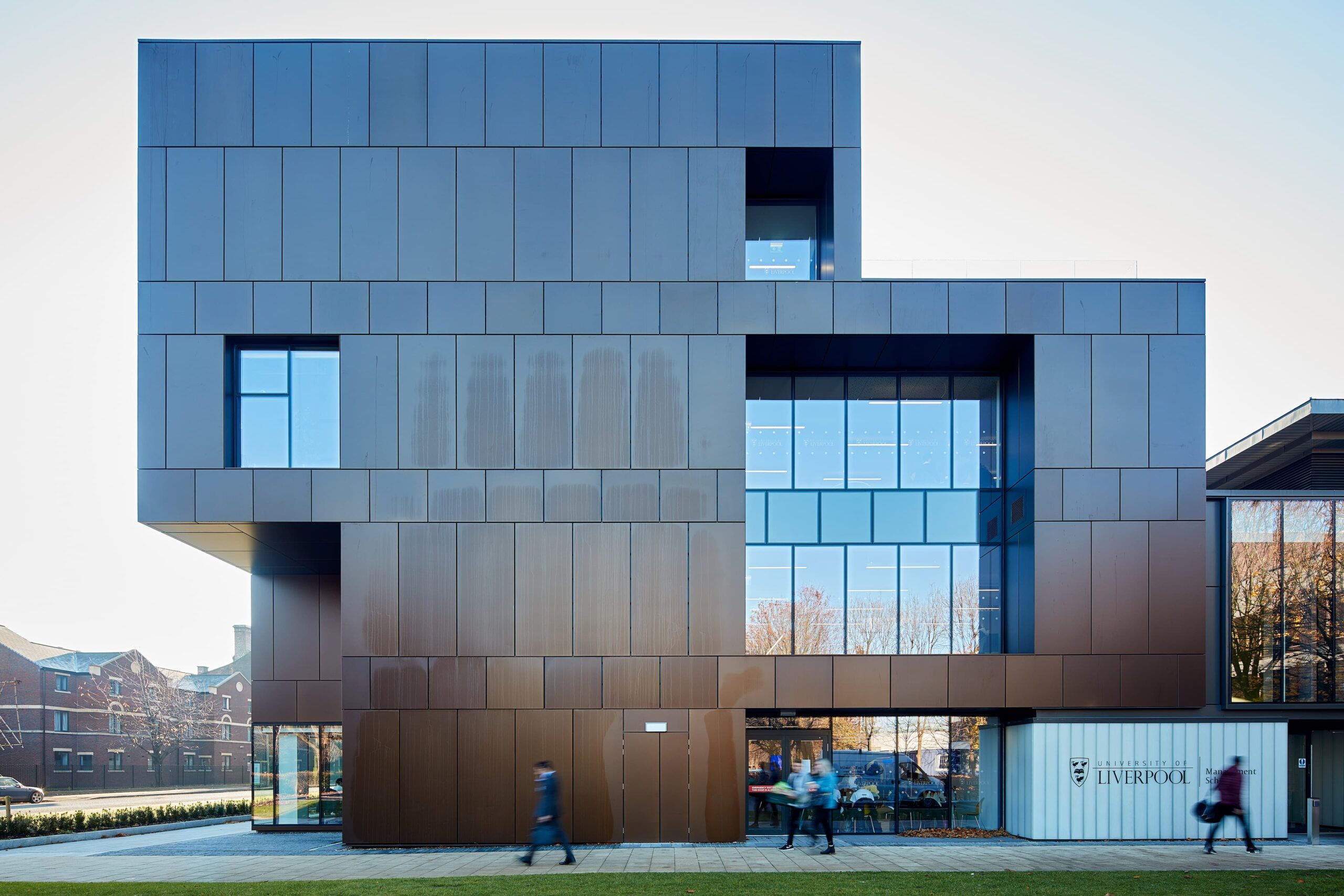
BloombergAbercromby SquareManagement SchoolPicture by Gareth JonesPicture by Gareth JonesPicture by Gareth Jones
Virtual tour
Supporting your learning
From arrival to alumni, we’re with you all the way:
Careers and employability support, including help with career planning, understanding the job market and strengthening your networking skills
A dedicated student services team can help you get assistance with your studies, help with health and wellbeing, and access to financial advice
Support for students with differing needs from the Disability advice and guidance team. They can identify and recommend appropriate support provisions for you.
Sports Business and Management MSc has given me incredible opportunities and I've cultivated friendships that will last for the rest of my life.
Alex Hives, MSc Sports Business and Management
Chat with our students
Want to find out more about student life?
Chat with our student ambassadors and ask any questions you have.
You will have access to a specialist, in-house postgraduate careers team and have access to one-to-one career guidance, workshops, seminars, and employability initiatives. Graduates from our Sports Business and Analytics MSc course will have the skills to pursue careers in sports with roles in operations, strategy, business development, sales, management and analytics.
You will have access to a specialist, in-house postgraduate careers team and have access to one-to-one career guidance, workshops, seminars, and employability initiatives. Graduates from our Sports Business and Analytics MSc course will have the skills to pursue careers in sports with roles such as:
Sports data analyst
Sports business strategist
Sports marketing manager
Sports operations manager
Sports finance analyst
Business development manager – Sports industry
Sports sponsorship manager
Sports event analyst
Sports HR manager
Customer insights analyst – Sports sector
Sports technology consultant
Sports researcher.
Career support from day one to graduation and beyond
Career planning
Our campus Career Studio is a space for students and graduates to drop into and talk to a career coach. Career coaches are highly trained to help no matter what stage you are at in your career planning. You can access support to find and apply for full-time and part-time roles, placements, internships and graduate schemes. You will also find the help you need if you have a start-up idea or want to create a business plan. You can explore the world of work, prepare for job interviews, and access careers events and workshops. The Career Studio is open Monday to Friday from 10am-5pm, simply drop in at a time that works for you.
We develop our programmes with employers in mind. You will be supported to enhance your long-term employment prospects as you learn. We do this by exposing you to professionals, a variety of sectors and supporting you to work collaboratively with others to develop transferable skills. You are equipped with a clearer view of what to focus on in your area of interest, and to reflect on your studies. Our digital employability tools give you a tech-enhanced curriculum experience and make it easy for you to prepare for the world of work. You can use tools like the Handshake platform to connect with employers and message the Career Studio 24/7.
You can start building good professional networks by attending events and employability activities. Our events are designed to develop your skills and expose you to many different employers, as well as to help you make contacts in your field. We help you improve your confidence when speaking to employers and give you access to unique opportunities. Our networking events also boost your understanding of the competencies and skills that employers are looking for in their recruitment process, giving you a competitive edge.
Your tuition fees, funding your studies, and other costs to consider.
Tuition fees
UK fees (applies to Channel Islands, Isle of Man and Republic of Ireland)
Full-time place, per year - £15,000
Part-time place, per year - £7,500
International fees
Full-time place, per year - £32,000
Part-time place, per year - £16,000
Tuition fees are for the academic year 2026/27.
Tuition fees cover the cost of your teaching and assessment, operating facilities such as libraries, IT equipment, and access to academic and personal support.
If you're a UK national, or have settled status in the UK, you may be eligible to apply for a Postgraduate Loan worth up to £12,858 to help with course fees and living costs. Learn more about paying for your studies.
Additional costs
We understand that budgeting for your time at university is important, and we want to make sure you understand any course-related costs that are not covered by your tuition fee. This could include buying a laptop, books, or stationery.
Are you a UK or Republic of Ireland student who completed your undergraduate degree at the University of Liverpool? You could receive a £1,500 tuition fee discount, subject to the full eligibility criteria. This scholarship will be awarded to all eligible students.
If you've graduated with an undergraduate degree in Chemistry, and you've accepted a place on a master's course, you could be entitled to a £10,000 contribution towards your tuition fees. Please note your master's can be in a range of subject areas, and is not restricted to Chemistry. This award is available to one student per academic year who's considered to be from a widening participation background.
The scholarship will be open to two UK students in the 2026/27 academic year and is worth £5,000. Students must be studying a postgraduate course at the University of Liverpool. Those on data science or coding courses may be given priority.
If you’re a UK student, either born in or with strong family connections to Merseyside, you could be eligible to apply for a fee discount of up to £4,500. You’ll need to demonstrate an active interest in global, community and environmental issues to be considered.
Apply to receive tailored training support to enhance your sporting performance. Our athlete support package includes a range of benefits, from bespoke strength and conditioning training to physiotherapy sessions and one-to-one nutritional advice.
The qualifications and exam results you'll need to apply for this course.
Qualification
Details
Postgraduate entry requirements
We accept a 2:2 honours degree from a UK university, or an equivalent academic qualification from a similar non-UK institution. This degree can be in any subject discipline. Non-graduates with very extensive professional experience and/or other prior qualifications may also be considered.
International qualifications
Many countries have a different education system to that of the UK, meaning your qualifications may not meet our entry requirements. Completing your Foundation Certificate, such as that offered by the University of Liverpool International College, means you're guaranteed a place on your chosen course.
International applicants who do not meet the minimum required standard of English language can complete one of our Pre-Sessional English courses to achieve the required level.
Qualification
Details
IELTS
6.5 overall, with no component below 6.0
Duolingo English Test
125 overall, with writing not less than 125, speaking and reading not less than 115, and listening not below 110. For academic year 2025/26 only, we will also accept the production, literacy, comprehension and conversation score set: 120 overall, with no component below 105.
Pre-sessional English
Do you need to complete a Pre-sessional English course to meet the English language requirements for this course?
The length of Pre-sessional English course you’ll need to take depends on your current level of English language ability.
Use the table below to check the course length you're likely to require for your current English language ability and see whether the course is available on campus or online.
Your most recent IELTS score
Pre-sessional English course length
On campus or online
6.0 overall, with writing at 6.0 and no component below 5.5
6 weeks
On campus or online
5.5 overall, with writing at 5.5 and no component below 5.0
10 weeks
On campus or online
5.5 overall, with no more than one component at 5.0
12 weeks
Online
5.5 overall, with no component below 5.0
20 weeks
On campus
5.0 overall, with no more than one component at 4.5
30 weeks
On campus
4.5 overall, with no more than one component at 4.0
40 weeks
On campus
If you’ve completed an alternative English language test to IELTS, we may be able to use this to assess your English language ability and determine the Pre-sessional English course length you require.
Liverpool bursts with diversity and creativity which makes it ideal for you to undertake your postgraduate studies and access various opportunities for you and your family.
To fully immerse yourself in the university experience, living in halls will keep you close to campus where you can always meet new people. Find your home away from home.
Discover what expenses are covered by the cost of your tuition fees and other finance-related information you may need regarding your studies at Liverpool.
Contact us
Have a question about this course or studying with us? Our dedicated enquiries team can help.