Building Confidence: The YINI Bootcamp Model
Posted on: 7 January 2020 by Michelle Da Silva Willis in News, Awards & Insights
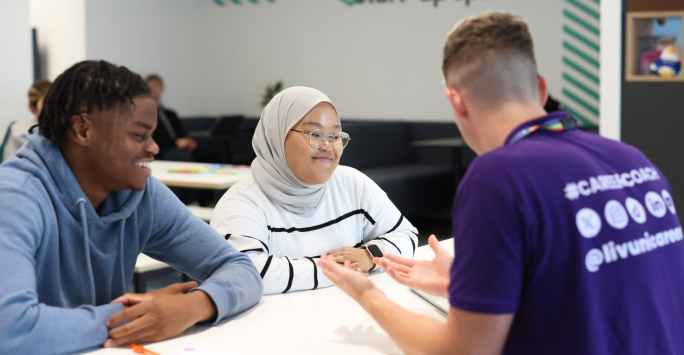
Preparing for a Year in Industry placement can feel overwhelming for many students. The Science and Engineering Year in Industry (YINI) programme at the University of Liverpool has evolved into a two-stage Bootcamp model designed to support students earlier, build confidence and guide them through the placement application process.
Building confidence early
The Year in Industry programme has been part of Liverpool’s employability offer for several years. In recent cohorts, however, it has developed into a more deliberate and supportive model — helping students start preparing earlier and approach the process with greater confidence.
The YINI Bootcamp model now includes two stages, beginning with an introductory session in the first year and followed by a more intensive preparation programme in the second year.
Chell, who leads Year in Industry activity across the Faculty of Science and Engineering, explains that the change came from recognising how overwhelming the placement process can feel for students starting from scratch.
“Originally, support was focused on second year. Students would arrive back in September and suddenly realise they needed a CV, LinkedIn profile, interview skills and a placement strategy. It was just too late to start everything from scratch.”
Starting earlier: the Mini Bootcamp
To address this, the team introduced a Mini YINI Bootcamp during the spring semester of first year.
The aim is not to pressure students into committing to a placement immediately, but to spark curiosity and provide an early understanding of the process.
During these sessions, students hear directly from peers who have completed placements. These student panels often provide the most valuable insight, as they talk honestly about their experiences, including the nerves and uncertainties they faced.
Many first-year students worry less about the placement itself and more about the practical implications — leaving friends, housing arrangements or feeling like they might fall behind academically.
Hearing from students who have already gone through the process helps normalise those concerns.
At the end of the session, students receive a simple checklist outlining steps they can take over the summer to prepare gradually, so they arrive in second year feeling more confident.
The full Bootcamp experience
The main YINI Bootcamp takes place in September, at the start of second year.
By this point, students ideally have a draft CV or a starting point to build on. The Bootcamp then focuses on refining their approach and helping them understand how placement recruitment works in practice.
The programme typically includes:
-
CV and LinkedIn development
-
Application strategy and guidance
-
Speed networking with employers
-
Mock interviews and interview preparation
-
Assessment centre-style activities
One of the most valuable aspects of the Bootcamp is helping students understand the reality of the recruitment process.
On average, students may submit around 23 applications and attend several interviews before securing a placement. Understanding this helps students see rejection as part of the process rather than a personal setback.
Practising in a safe environment
Mock interviews are a particularly important element of the programme.
Practising interviews in a supportive setting allows students to refine how they communicate their skills and experience before facing real employer interviews.
Chell notes that students who take part in mock interviews often perform significantly better in real recruitment processes.
“Interviews are a skill, and practising in a safe space makes a huge difference.”
Support beyond the Bootcamp
The YINI Bootcamp works closely with the University’s Careers Studio and digital tools such as Handshake, which students use to explore placement opportunities and resources.
Holding early sessions in the Careers Studio also helps students become familiar with the space and encourages them to return for further support throughout the year.
By the time students reach their final year, many are already confident navigating opportunities, booking support and preparing for graduate recruitment.
More than just placements
While the programme helps many students secure placements, its benefits extend beyond those who do.
Even students who ultimately decide not to pursue a placement still gain valuable experience through the preparation process. They develop skills in applications, interviews, reflection and professional communication that will be useful in graduate recruitment.
To date, the YINI Bootcamp model has engaged over 300 Science and Engineering students, with around 120 students participating directly in Bootcamp activity.
Students have gone on to secure placements with major organisations including Unilever, Siemens, Bentley and BDO.
Perhaps more importantly, the programme helps students develop confidence and resilience — qualities that remain valuable long after the placement year itself.
As Chell reflects:
“I remember them from second year — anxious, unsure and applying for placements. Then I see them again a year and a half later, and they’re different. They’re more like a colleague than a student.”
Keywords: Education and Student Experience.