Can seabirds avoid climate-induced extinction through rapid changes in migration?
5:00pm - 7:30pm /
Thursday 30th April 2026
/ Venue: Lecture Theatre B Central Teaching Hub
Type: Lecture /
Category: Department
Add this event to my calendar
Click on "Create a calendar file" and your browser will download a .ics file for this event.
Microsoft Outlook: Download the file, double-click it to open it in Outlook, then click on "Save & Close" to save it to your calendar. If that doesn't work go into Outlook, click on the File tab, then on Open & Export, then Open Calendar. Select your .ics file then click on "Save & Close".
Google Calendar: download the file, then go into your calendar. On the left where it says "Other calendars" click on the arrow icon and then click on Import calendar. Click on Browse and select the .ics file, then click on Import.
Apple Calendar: The file may open automatically with an option to save it to your calendar. If not, download the file, then you can either drag it to Calendar or import the file by going to File >Import > Import and choosing the .ics file.
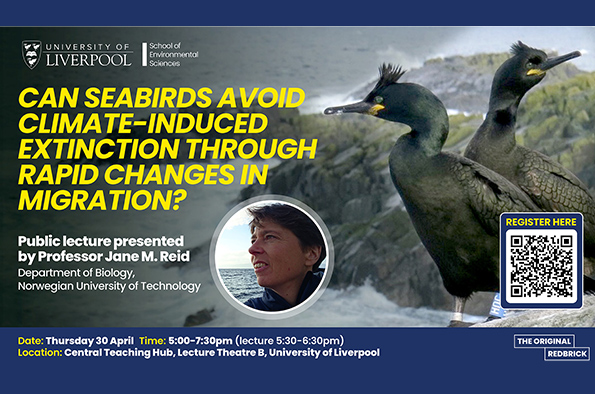
The 21st century is witnessing rapid climatic changes, including increasing frequencies of extreme climatic events that can severely impact wild populations. How will these populations respond? Will they overcome climate-induced challenges through rapid evolutionary or behavioural changes, or will they be doomed to local or global extinction? I will answer these questions focusing on a climate-threatened population of European shags in eastern Scotland. Using long-term colour-ringing and year-round resighting data I reveal how extreme winter storms are causing very strong yet very variable natural selection on seasonal migration, and highlight the degree to which such selection could translate into rapid adaptive evolution of seasonal movements. I therefore reveal the degree to which one of the UK’s most iconic seabird species is likely to be challenged by changing seasonal climates.
Arrival: 5:00pm
Lecture start: 5:30pm (60 min lecture including questions)
Drinks reception & Nibbles – 6:30pm – 7:30pm
Arrival: 5:00pm
Lecture start: 5:30pm (60 min lecture including questions)
Drinks reception & Nibbles – 6:30pm – 7:30pm