International Day of Remembrance of the Victims of Slavery and the Transatlantic Slave Trade
.jpg)
Since 2007, the 25th March has been the United Nations' International Day of Remembrance of the Victims of Slavery and the Transatlantic Slave Trade.
Today is a significant day of reflection for the world and for Liverpool in particular, a city central to the story of British involvement in enslavement. It is estimated that around 12 million Africans were trafficked and enslaved by Europe to be worked, often to their death, on plantations mainly across the Caribbean and Americas. In order to justify these heinous centuries-long crimes, a system of anti-Black racism and white supremacy was established, which subjugated African people to being less than human. The legacies reverberate still across the globe.
Remembering the victims and their descendants in public and formal education is an integral part of the healing and repair necessary in communities, as outlined in the second consecutive UN International Decade for People of African Descent (2025-2034).
This past week, Dr Leona Vaughn, Senior Lecturer/Research Fellow (Politics) and the Decolonial Methods Pillar Co-Lead for the Centre for the Study of International Slavery, took part in the third UNESCO International Dialogue for Reparatory Justice.
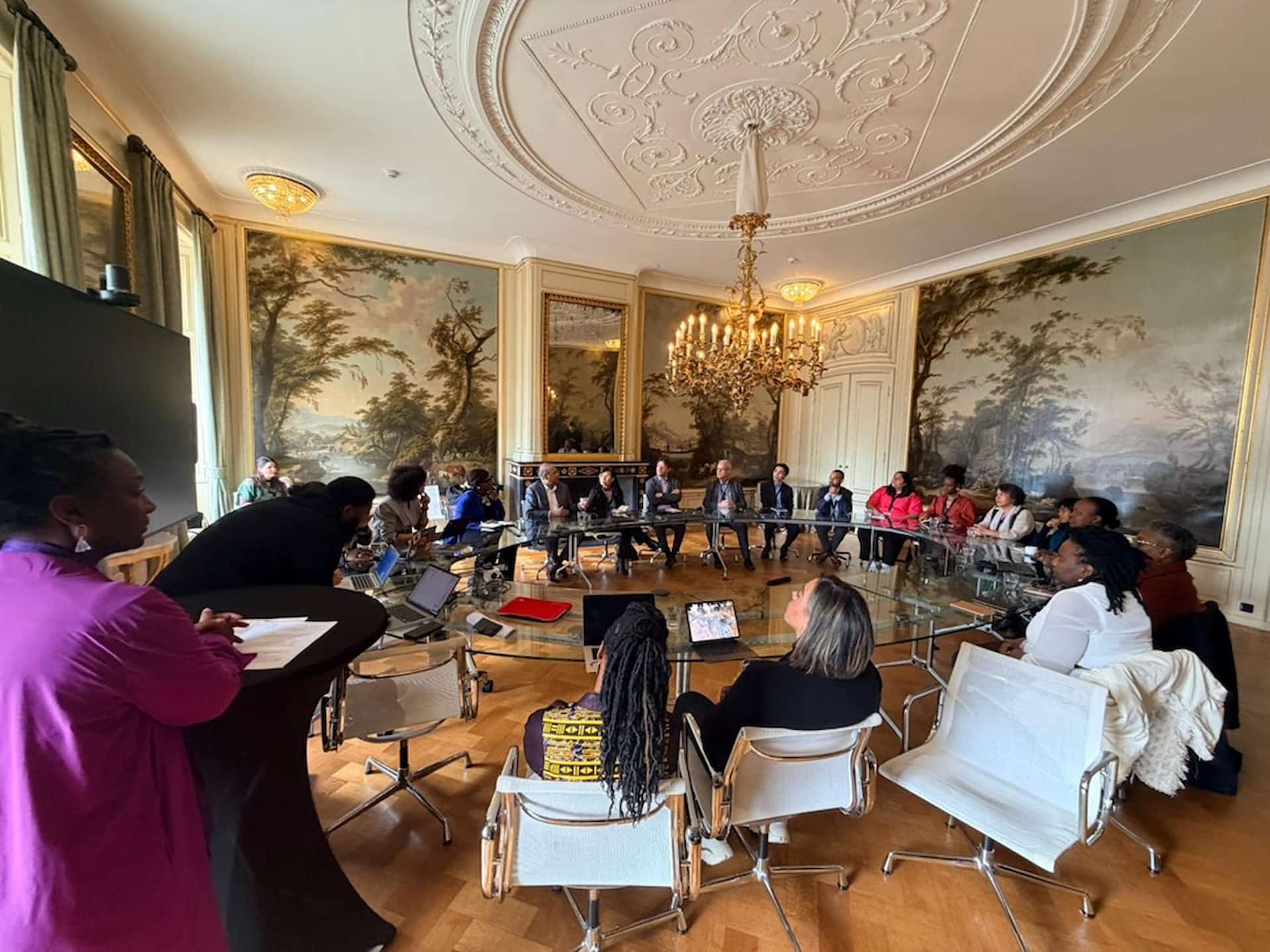 Alt text: People sat around a round table for the third UNESCO International Dialogue for Reparatory Justice.
Following a previous dialogue in London in 2025, this event was hosted by the Office of the National Coordinator against Discrimination and Racism for the Kingdom of the Netherlands to gather experts to begin drafting a ‘tool-kit’ for reparatory justice processes. The group will continue to connect to advance this work in 2026.