University of Liverpool Senior Leadership visits CERN
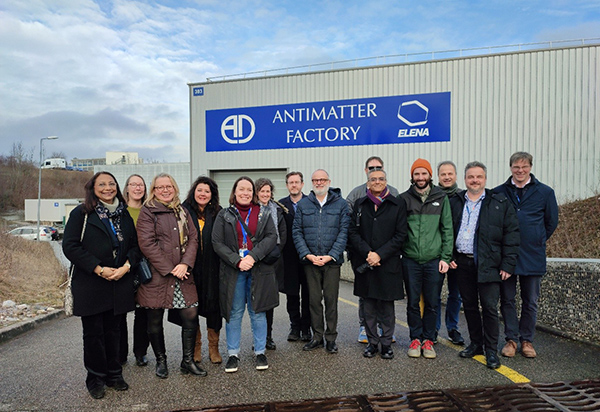
Two members of the University of Liverpool’s senior leadership team, Professor Anthony Hollander (Pro-Vice-Chancellor for Research and Impact) and Professor Tariq Ali (Pro-Vice-Chancellor for Global Engagement and Partnerships) visited the Antimatter Factory on 22 January as part of a 2-day visit of CERN.
The visit gave delegates an opportunity to see the Antiproton Decelerator (AD), the Extra Low Energy Antiproton Ring (ELENA) and the Antihydrogen Experiment: gravity, Interferometry, Spectroscopy (AEgIS) experiment up close.
Fellows from the AVA project have made decisive contributions to antimatter physics R&D and the Antimatter Factory as a whole. This includes research into the ELENA electron cooler, the development of advanced diagnostics for the precise measurement of beam current, position and emittance, as well as studies into the beam dynamics in the storage ring and associated beam transfer lines. When it comes to Liverpool, the QUASAR Group, which hosted several AVA Fellows, has made key contributions to the AEgIS experiment for more than a decade, and has joined the collaboration as a full member in 2023.
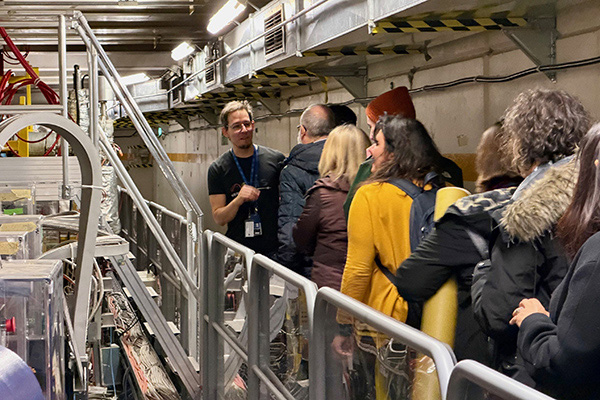
Dr Benjamin Rienaecker guiding the Liverpool visitors along the AD.
Dr Benjamin Rienaecker, elected AEgIS Physics Coordinator, gave an enthusiastic talk about the QUASAR Group’s research into low energy antimatter in AEgIS, and explained in detail how the 2025 breakthrough in positronium laser cooling became possible. He also talked about the targeted future measurements that shall give a much deeper insight into antimatter systems, and help identify potential differences between matter and antimatter.
The visitors were fascinated by the complexity and interdisciplinary nature of the AEgIS projects, as well as by the many contributions that Liverpool has made to wider antimatter research over the years, in particular through its lead role in the pan-European AVA network.