Qualification type
MArch

Master of Architecture (Integrated)

UCAS code K102

Entry requirements
A level: AAA
View full requirements
Study mode
Full-time
Duration
4 years full-time
Start date and application deadlines
Start date
September 2027
Apply by:
Starts on:

We've set the country or region your qualifications are from as United Kingdom.

How to apply

Ready to apply? You can apply for this course online now using the UCAS website. The deadline for UK students to apply for this course is 13 January 2027.

The deadline for international students is 30 June 2027.

Use these details to apply for this course through UCAS:

  • University name: University of Liverpool
  • Course: Master of Architecture (Integrated) K102
  • Location: Main site
  • Start date: 27 September 2027
Combine this subject

With a combined degree, you can study two subjects as part of the same degree programme.

  • Choose from 30 subjects and over 300 combinations
  • Choose joint or major minor subjects
  • Adjust the weight of your subjects at the end of your first year
  • Same number of credits as single honours students
  • Same classes as single honours students
  • Appeal to a wide range of employers

Explore combined degrees for Architecture, Building and Planning courses

Get a prospectus

Complete form

Download a course leaflet

Your course leaflet download should begin automatically but if not, click to download. If you would like to keep up to date with the latest events from the University of Liverpool, complete the form below.

Complete form

Change country or region

We’re currently showing entry requirements and other information for applicants with qualifications from United Kingdom.

Please select from our list of commonly chosen countries below or choose your own.

If your country or region isn’t listed here, please contact us with any questions about studying with us.

Book your Open Day place

Be the first to hear when bookings open for our 2026 open events. Don’t miss this opportunity to experience our courses, campus and city for yourself.

About this course

The Master of Architecture (Integrated) is a studio-led four-year professional degree designed for students who want to become creative, competent and critically engaged designers in a rapidly changing construction industry.


Introduction

Combining design studio, contextual studies and technical studies, the course develops knowledge, understanding and ability to investigate real-world architectural challenges through research-led and enquiry-based learning.

The programme is designed for an accelerated timeline to meet the Architects Registration Board’s (ARB) master’s-level accreditation requirements (confirmation due in spring 2027), in preparation for professional practical experience in architecture. It is also devised to meet the Royal Institute of British Architects (RIBA) Part 1 and Part 2 validation requirements (sought in advance of the first graduating cohort in 2030).

Based within the internationally renowned Liverpool School of Architecture, recently extended by Royal Gold Medal winners O’Donnell + Tuomey, learning takes place through design studio tutorials and reviews, lectures, seminars, site visits and field trips, working with leading academics and practising architects with a focus on ARB competency outcomes and RIBA educational themes and values.

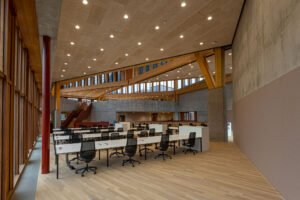
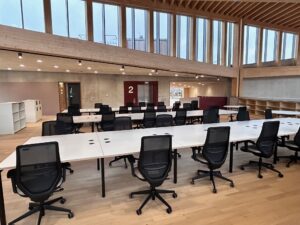
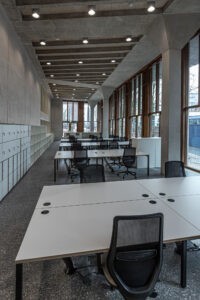
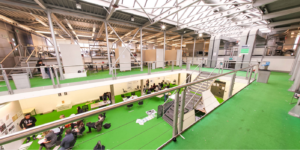
Students benefit from dedicated studio desks across new and upgraded spaces as well as specialist workshop facilities which include extensive analogue tools, alongside laser cutters, routers and 3D printers. Opportunities to study abroad, including optional field trips and single-semester exchanges in year two, further enhance international perspectives.

Please note that this course is subject to university approval.


What you'll learn

  • Resolution of creative, innovative and responsible architectural designs
  • Communication of architectural ideas using a range of visual, verbal and written methods
  • Development of detailed and creative design briefs that address diverse conditions
  • A response to social and environmental challenges that considers a range of contexts
  • Independent and collaborative research and evaluation skills to inform design and critical thinking
  • The history and theory of architecture, urbanism and the broader humanities
  • Understanding of the legal and regulatory environment to ensure fire and life safety, accessibility, and energy efficiency
  • Building technology principles related to structure, construction and materiality
  • Environmental design systems to address the climate crisis and broader sustainability principles
  • Ethical and professional practice, including business skills that are equitable and inclusive.

Accreditation

We are currently awaiting master’s-level accreditation from the ARB, which is due to be confirmed in spring 2027. We are also seeking RIBA validation for the course at Part 1 and Part 2 levels. The outcome of this will be decided in advance of the first graduating cohort in 2030.

Accreditation in detail

ARB

The Architects Registration Board (ARB) is the independent statutory regulator of architects in the UK, and is also the UK's Competent Authority for Architects. In order to call yourself an architect in the UK you must be registered with the ARB.

ARB ensures that all registered architects meet the required standards and have the necessary qualifications to practise, as well as upholding relevant legislation and investigating any complaints made against a member.

In order to register in the UK, students who begin the BA Architecture course from September 2025 onwards will typically need to hold an ARB accredited UK qualification at masters-level, and a Part 3 or a practice qualification.

Completing the BA Architecture course is therefore an important step towards gaining entry to a masters-level qualification. The Liverpool School of Architecture is currently initiating approval for an ARB accredited masters-level qualification, to replace our outgoing ARB accredited Part 2 qualification.

RIBA

Dating all the way back to 1837, the Royal Institute of British Architects is the UK's chartered body for architecture. It was founded to promote the advancement of architecture and maintain high-quality design and customer service. RIBA chartered membership is voluntary and is not a legal requirement to practise as an architect. However, membership allows an architect to use the term “chartered” and the RIBA suffix.

The typical route to becoming a Chartered Architect in the United Kingdom is a combination of academic studies at a university and practical experience. It involves training for five years at university and completing a minimum of two years practical experience before final qualification.

We were the first University in the UK to award an RIBA validated degree and have had continuous validation since. Our first degree, the BA Hons in Architecture is a three year degree giving RIBA Part 1 validation on completion. Our second degree is the Master of Architecture (MArch Hons) giving RIBA Part 2 validation. We recommend that our MArch graduates take the Part 3 Advanced Diploma in Professional Practice in Architecture qualification through the route offered by the RIBA (Chester), with which we have close links.

Back to top

We’ve been awarded a Gold rating for educational excellence.


Course content

Discover what you'll learn, what you'll study, and how you'll be taught and assessed.

Year one

In Design Studio 1 the fundamentals of communication are tested and explored in ‘Design Communication 1.1’, including architectural representation and communication skills in sketching, model-making and orthographic drawing, as well as industry-standard software in ‘Design Communication 1.2’. Alongside this, introductory small to medium scale design projects are developed across ‘Design Project 1.1 and 1.2’, allowing creativity to be nurtured.

In Contextual Studies 1, ‘Reading Architecture’ introduces skills of architectural analysis through the reading of buildings across a range of scales, alongside ‘History of Architecture, Environment and Culture’ through a worldwide survey from ancient times to the present. ‘Conceptual Thinking and Reflective Practice’ encourages students to discover what influences their identity, the world around them, and their designs.

Technical Studies 1 introduces ‘Environmental Design Principles’ to produce climate-responsive and low-carbon buildings, alongside ‘Building Technology Fundamentals’ which explores essential concepts of structure, construction, and building systems. ‘Architecture and the Construction Industry’ introduces students to the industry and its key professionals.


Compulsory modules

We’ll share more information about the year one compulsory modules ARCH115, ARCH125, ARCH135 and ARCH145 soon.

All modules must be passed (no compensation).

Programme details and modules listed are illustrative only and subject to change. This course has been updated for 2027 entry as part of a review of all our programmes. This review has considered refining study pathways, strengthening links with employers, integrating generative AI, developing students’ research skills, and enhancing alignment with our research strengths. Please note, as at all times, the University reserves the right to make reasonable changes, including to content, entry requirements, or fees, or to discontinue programmes. Applicants will be informed of any significant change.

Year two

Across two modules in Design Studio 2, ‘Design Project 2.1 and 2.2’ offer space to explore architectural design to a specific brief in greater depth, exploring the relationship between public and private space, type, context, and urban morphology, as well as ensuring an ability to investigate the increased complexity of function. Advanced architectural design communication methods are introduced in ‘Design Communication 2.1’.

In Contextual Studies 2, ‘Urbanism: History, Design & Sustainability’ examines the origins and transformation of cities in a global context, and ‘Modern Architecture: Histories and Critique’ explores significant modern architecture and offers an understanding of the historical contexts in which they are produced. ‘Architectural Representation’ addresses how architects represent their projects in a myriad of ways.

In Technical Studies 2, ‘Passive Environmental Design Systems’,  presents energy and environmental issues and introduces the design of passive environmental systems for buildings. ‘Structural and Constructional Systems’ begins to fully integrate structural, material, environmental, and construction systems within architectural design. ‘Planning and Building Regulations’ is an opportunity to reflect on a work of architecture via the regulatory environment.

Modules

We’ll share more information about the following year two compulsory and optional modules soon.

Compulsory modules

  • ARCH215
  • ARCH225
  • ARCH235
  • ARCH245.

Optional modules:

  • ARCH236
  • ARCH246.

Please note:

  • Students not taking a semester abroad will take ARCH215, ARCH225, ARCH235 and ARCH245
  • Students who take semester one abroad must take ARCH225, ARCH236 and ARCH246 when they return
  • Students who take semester two abroad must take ARCH215, ARCH211 and ARCH271 before they depart
  • All modules must be passed (no compensation).

Modules

Programme details and modules listed are illustrative only and subject to change. This course has been updated for 2027 entry as part of a review of all our programmes. This review has considered refining study pathways, strengthening links with employers, integrating generative AI, developing students’ research skills, and enhancing alignment with our research strengths. Please note, as at all times, the University reserves the right to make reasonable changes, including to content, entry requirements, or fees, or to discontinue programmes. Applicants will be informed of any significant change.

Year three

Design Studio 3 is a year-long project, split across two modules, working from a macro to a micro scale. The first phase comprises ‘Spatial Strategy’, which explores the critical reading and strategic positioning for a site such as an urban block or street network, followed by ‘Architectural Interfaces’, which develops an architectural project focusing on the interfaces between public and private space and the wider built environment. The second phase investigates an advanced architectural design (‘Design Project 3.2’) that addresses architectural choices in particular relating to fire and life safety, environmental, social and economic sustainability, spatial strategies, building character, and structural strategies, then ‘Material and Technical Strategies’ enables a high level of technical detail to finalise the project.

In Contextual Studies 3, ‘Architectural Practice and Society’ further explores the architects’ role, the construction industry, its legal framework, and architectural practice management. Alongside this, ‘Special Themes of Architectural Humanities’ investigates a range of existing and emerging architectural theories, protagonists, buildings and representational means, and ‘Urban Strategies for Placemaking’ explores key urban design theories and principles, focusing on methods for analysing urban contexts and developing informed design strategies.

Technical Studies 3 investigates ‘Acoustic, Lighting and Active Environmental Systems’ from the perspective of user requirements. ‘Integrated Technology in Construction’ develops an integrated understanding of structure, materials, construction, and building systems as core drivers of architectural design. The ‘Design Report’ is an opportunity to reflect on a work of architecture through the lens of design practice and procurement, professionalism and ethics.

Compulsory modules

We’ll share more information about the year three compulsory modules ARCH315, ARCH325, ARCH335, and ARCH345 soon.

All modules must be passed (no compensation).

Programme details and modules listed are illustrative only and subject to change. This course has been updated for 2027 entry as part of a review of all our programmes. This review has considered refining study pathways, strengthening links with employers, integrating generative AI, developing students’ research skills, and enhancing alignment with our research strengths. Please note, as at all times, the University reserves the right to make reasonable changes, including to content, entry requirements, or fees, or to discontinue programmes. Applicants will be informed of any significant change.

Year four

Masters Design Studio 4 begins with ‘Design Project 4.1’ and explores advanced architectural research and design through a choice of distinct thematic strands. Independent design positions are developed, grounded in critical research and contextual enquiry. The year continues with ‘Design and Detail,’ developing projects to an advanced level of technical, material, and environmental resolution, followed by ‘Design and Representation’, focusing on how projects are communicated and contextualised, using advanced drawings, models, and an exhibition to critically reflect on architecture’s role in shaping future ways of living.

Contextual Studies 4 first introduces a broad range of ‘Specialist Topics’, offering an opportunity to take a position on the issues raised, setting the groundwork for a detailed investigation of the ‘Specialist Subject’, where a chosen subject is researched, analysed and communicated in depth.

In Technical Studies 4, ‘Net Zero Carbon’ considers the practical implications of designing a building to Net Zero Carbon standards and ‘Professional Practice and Contract Law’ provides the skills and understanding to evaluate the running of a small architectural practice, together with the legal and regulatory framework within this context. The ‘Sustainability Report’ supports the design studio by bringing together its key architectural ideas and decisions, focusing specifically on environmental, social and economic sustainability.

Compulsory modules

We’ll share more information about the year four compulsory modules ARCH415, ARCH425, ARCH435, and ARCH445 soon.

All modules must be passed (no compensation).

Programme details and modules listed are illustrative only and subject to change. This course has been updated for 2027 entry as part of a review of all our programmes. This review has considered refining study pathways, strengthening links with employers, integrating generative AI, developing students’ research skills, and enhancing alignment with our research strengths. Please note, as at all times, the University reserves the right to make reasonable changes, including to content, entry requirements, or fees, or to discontinue programmes. Applicants will be informed of any significant change.

Teaching and assessment

How you'll learn

Teaching and learning methods can largely be distinguished as design studio or lecture-based. 50% of the course is dedicated to the Design Studio strand, with the other 50% of the course dedicated to the Technical Studies (25%) and Contextual Studies (25%) lecture-based strands.

Design Studio: students will develop architectural design projects based on studio briefs of varying duration and depth, with teaching via small group tutorials and/or one-to-one tutorials, where students can discuss their design ideas and receive formative feedback. Tutorials are mandatory twice a week in year one, mandatory once a week in years two and three, with a second day each week for optional tutorial feedback, and mandatory once a week in year four. Design studio also includes opportunities for students to present their design ideas verbally and visually, and learning is further supported by talks and lectures, fieldwork (i.e. site visits), study trips, and specialist consultation tutorials and seminars.

Contextual Studies and Technical Studies: Teaching is primarily delivered through formal lecture series offering expert knowledge on several key topics. Large- and small-scale seminars are used to support learning in lecture-based modules, enabling greater depth of discussion, usually as a follow-on from the delivery of lecture content, and allowing optionality in areas that students wish to investigate further. Group tutorials also support learning in the development of some coursework tasks, as well as individual or group consultancy tutorials to support design studio tasks.

How you're assessed

The assessment strategy involves both formative and summative methods. Design studio modules employ formative assessment via regular design tutorials and reviews, and summative assessment is through design portfolio submissions, as a signature pedagogy for architecture. Lecture-based modules employ formative assessment via class tests, seminars and tutorials, and summative assessment is via formal written exams and take-home exams, as well as coursework essays, reports and presentations.

The assessment load is distributed across the programme, with all 30-credit modules having a maximum of three summative assessment points each. Assessment deadlines are carefully distributed across both semesters to maximise student engagement with learning and support student welfare. In accordance with the University’s Code of Practice on Assessment, the pass threshold for the MArch Architecture (integrated) modules is 40% in years one, two and three, and 50% for modules in year four. All modules are mandatory. Each assessment component, i.e. the different assessment tasks for nested subjects within each module, must be passed. To pass year two and progress to year three, a student must obtain an overall year average of at least 55%. To pass year three and progress to year four, a student must obtain an overall year average of at least 55%.

Liverpool Learning Framework

At Liverpool, we take a distinctive approach to education through the Liverpool Learning Framework. This means teaching that is engaging, inclusive and designed to help you succeed during your studies and beyond.

You’ll develop specialist subject knowledge alongside the skills employers value most, including:

  • Digital fluency
  • Confidence
  • Global citizenship

Our curriculum is characterised by the three Liverpool Hallmarks:

  • Research-connected teaching - learning informed by the latest ideas and discoveries
  • Active learning - taking part, applying knowledge and learning by doing
  • Authentic assessment - assessments designed around real-world tasks and challenges

We also embed key priorities across our curriculum, including AI literacy, employability, and sustainability, helping you prepare for the future and make a positive impact in the world.

We’re committed to creating a supportive and inclusive learning environment where every student can thrive.

Back to top

Course options

Studying with us means you can tailor your degree to suit you. Here's what is available on this course.

Global opportunities

University of Liverpool students can choose from an exciting range of study placements at partner universities worldwide. Choose to spend a year at XJTLU in China or a year or semester at an institution of your choice.

Year in China

Immerse yourself in Chinese culture on an optional additional year at Xi'an Jiaotong Liverpool University in stunning Suzhou.

  • Learn Chinese
  • Study in a bustling world heritage city
  • Improve employment prospects
  • Study Chinese culture
  • 30 minutes from Shanghai
  • Learn new skills

Read more about Year at XJTLU, China

Year abroad

Broaden your world by spending an additional year of study at a partner university abroad following your second year of study.

  • Choose from up-to 26 countries
  • Experience another way of life
  • Inspire your future career or studies
  • Improved prospects of earning a 2:1 or First
  • More likely to earn higher salary
  • More likely to be employed after graduating

Where can I spend a year abroad on this course?

  • Australia
  • Canada
  • Hong Kong
  • Malaysia
  • Singapore
  • South Korea
  • USA

More about taking a year abroad

Semester abroad

Take a semester of your second year of study at one of our worldwide partner institutions.

  • Inspire your future career or studies
  • Improved prospects of earning a 2:1 or First
  • More likely to earn higher salary
  • More likely to be employed after graduating

More about taking a semester abroad

Back to top

Your experience

Explore where you'll study

Studio space - first floor
Studio space – first floor
Studio space - second floor
Studio space – second floor
MArch5 studio
MArch5 studio
Workspace in the Stirling Gallery
Architecture Stirling Gallery
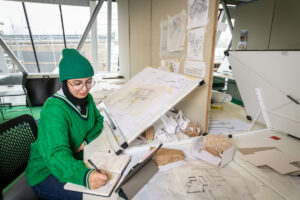
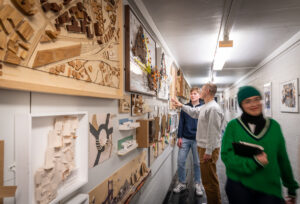
Student work on display
Watch on Panopto: Meet our Architecture students

Meet our Architecture students

Virtual tour

Supporting your learning

From arrival to alumni, we’re with you all the way:

Why study Architecture at Liverpool?

  • Established in 1894, the Liverpool School of Architecture was the first university in the UK to award a RIBA-validated degree in Architecture
  • As one of the UK’s premier centres for architectural research and education, the Liverpool School of Architecture is the ideal place to pursue your architecture studies
  • We are ranked 10th in the UK for Architecture (The Guardian University Guide 2026) and within the world top 150 for Architecture (QS World University Subject Rankings 2026)
  • In the latest Research Excellence Framework assessment (REF 2021), we were rated 5th in the sector for overall research classified as world leading (4*) or internationally excellent (3*)
  • We are strongly focused on research, and have many leading architectural experts based amongst our teaching staff
  • Our membership of the School of the Arts and wider University presents intriguing specialist opportunities, in fields such as autonomous building systems, arts and building design, and climate change risk mitigation
  • Work is underway on a major refurbishment of our premises, which will comprise a new-build addition of more than 2,000M. The £23 million scheme has been designed by Dublin-based architects O’Donnell + Tuomey, and is expected to be completed by 2026.
Two students chatting while walking through campus.

Chat with our students

Want to find out more about student life?
Chat with our student ambassadors and ask any questions you have.

Back to top

Careers and employability

The four-year integrated programme leads to ARB master’s-level accreditation and RIBA Parts 1 and 2 (decisions pending), and is designed to prepare you for architectural practice.

Employability is embedded within the programme, with the three strands (Design Studio, Contextual Studies and Technical Studies) equipping you with the skills, knowledge and understanding required for architectural practice and beyond, using authentic and inclusive assessment types.

Career opportunities are fostered by adhering to ARB and RIBA professional and regulatory body requirements to ensure that graduates are competent in contextual and architectural knowledge, architectural design, research and evaluation skills, management, practice and leadership, professionalism and ethics, with specific knowledge of history and theory, environmental design and sustainability, fire and life safety, equality, diversity and inclusion, as well as building technologies.

Graduates of the three-year BA Architecture have gone on to establish successful careers as architects across the globe, but have also found employment in the following areas:

  • The construction industry
  • Multidisciplinary think tanks
  • Games design
  • The fashion industry
  • Property development.
Back to top

My qualifications are from United Kingdom.

Fees and funding

Your tuition fees, funding your studies, and other costs to consider.

Tuition fees

UK fees (applies to Channel Islands, Isle of Man and Republic of Ireland)

Full-time place, per year - £9,790
Year abroad fee - £1,465 (applies to year in China)

International fees

Full-time place, per year - £32,000
Year abroad fee - £16,000 (applies to year in China)

Fees stated are for the 2027-28 academic year.

Tuition fees cover the cost of your teaching and assessment, operating facilities such as libraries, IT equipment, and access to academic and personal support. Learn more about paying for your studies.


Additional costs

We understand that budgeting for your time at university is important, and we want to make sure you understand any course-related costs that are not covered by your tuition fee. You can find information on the general and subject-specific costs you could expect to incur on our study costs webpage.


We’re showing the scholarships available to students from United Kingdom.

Scholarships and bursaries

We offer a range of scholarships and bursaries that could help pay your tuition and living expenses.

Ruth Cannell Scholarship Fund

This scholarship will support undergraduate students from widening participation backgrounds in the Department of Languages, Cultures and Film with their year abroad.

Whiteley Award

This award offers £3,000 per year for a UK undergraduate student from an under-represented background who has successfully completed the Liverpool Scholars or Pathways to Medicine programme.

The Liverpool Bursary

If you’re a UK student joining an undergraduate degree and have a household income below £35,000, you could be eligible for a Liverpool Bursary worth up to £2,000 for each year of undergraduate study.

Asylum Seekers Scholarship

Apply for an Asylum Seekers Scholarship and you could have your tuition fees paid in full and receive help with study costs. You’ll need to have applied for asylum in the UK, or be the dependant of an asylum seeker, and be joining an eligible undergraduate degree.

Care Leavers’ Opportunity Bursary

If you’ve spent 13 or more weeks in Local Authority care since age 14, you could be eligible for a bursary of £3,000 per year of study. You’ll need to be a UK student joining an eligible undergraduate degree and be aged 28 or above on 1 September in the year you start.

Cowrie Foundation Scholarship

Are you a UK student with a Black African or Caribbean heritage and a household income of £25,000 or less? You could be eligible to apply for a Cowrie Foundation Scholarship worth up to £8,000 for each year of undergraduate study.

Estranged Students Bursary

If you’re a UK student identified as estranged by Student Finance England (or the equivalent UK funding body), you could be eligible for a bursary of £1,000 for each year of undergraduate study.

Genesys Life Sciences Scholarship

Joining a School of Biosciences degree and have a household income of less than £25,000? If you’re a UK student, you could apply to receive £4,500 per year for three years of your undergraduate course.

Nolan Scholarships

Do you live in the Liverpool City Region with a household income of £25,000 or less? Did neither of your parents attend University? You could be eligible to apply for a Nolan Scholarship worth £5,000 per year for three years of undergraduate study.

Rigby Enterprise Award

Are you a UK student with a household income of £25,000 or less? If you’ve participated in an eligible outreach programme, you could be eligible to apply for a Rigby Enterprise Award worth £5,000 per year for three years of your undergraduate degree.

ROLABOTIC Scholarship

Are you a UK student with a household income of £26,500 or less? Did neither of your parents attend University? You could be eligible to apply for a ROLABOTIC Scholarship worth £4,500 for each year of your undergraduate degree.

Sport Liverpool Performance Programme

Apply to receive tailored training support to enhance your sporting performance. Our athlete support package includes a range of benefits, from bespoke strength and conditioning training to physiotherapy sessions and one-to-one nutritional advice.

Technetix Broadhurst Engineering Scholarship

Joining a degree in the School of Electrical Engineering, Electronics and Computer Science? If you’re a UK student with household income below £25,000, you could be eligible to apply for £5,000 a year for three years of study. Two awards will be available per academic year.

Young Adult Carer’s (YAC) Bursary

If you’re a young adult and a registered carer in the UK, you might be eligible for a £1,000 bursary for each year of study. You’ll need to be aged 18-25 on 1 September in the year you start your undergraduate degree.

Back to top

My qualifications are from United Kingdom.

Entry requirements

The qualifications and exam results you'll need to apply for this course.

Qualification Details
A levels

AAA

Applicants with the Extended Project Qualification (EPQ) are eligible for a reduction in grade requirements. For this course, the offer is AAB from A levels, with A in the EPQ.

T levels

Design, Surveying and Planning for Construction is accepted with an overall grade of Distinction to include A in the core.

Applicants should contact us by completing the enquiry form on our website to discuss specific requirements in the core components and the occupational specialism.

GCSE

4/C in English and 4/C in Mathematics

Subject requirements

There are no specific subject requirements but you will be required to submit an art-based portfolio or attend a Selection Day. We will consider applicants with lower grades, subject to a strong portfolio submission or Selection Day attendance.

BTEC Level 3 National Extended Certificate

DDD

BTEC Level 3 Diploma

D and Grade AA at A-Level

Irish Leaving Certificate H1, H1, H2, H2, H2, H2, H2
Scottish Higher/Advanced Higher

AAA in Advanced Highers, combinations of Advanced Highers and Scottish Highers are welcome

Welsh Baccalaureate Advanced A in the Welsh Baccalaureate, plus AA at A level.
Graduate application

Considered if taking Art and Design Access to HE Diploma with 45 Level 3 credits with 39 at Distinction and 6 at Merit.

International qualifications

If you hold a bachelor’s degree or equivalent, but don’t meet our entry requirements, you could be eligible for a Pre-Master’s course. This is offered on campus at the University of Liverpool International College, in partnership with Kaplan International Pathways. It’s a specialist preparation course for postgraduate study, and when you pass the Pre-Master’s at the required level with good attendance, you’re guaranteed entry to a University of Liverpool master’s degree.


Alternative entry requirements

  • If your qualification isn't listed here, or you're taking a combination of qualifications, contact us for advice
  • If you are returning to learning, have had a disrupted education or are switching career pathways, the one-year Go Higher diploma qualifies you to apply for University of Liverpool arts, humanities and social sciences programmes
  • Applications from mature students are welcome.

English language requirements

You'll need to demonstrate competence in the use of English language, unless you’re from a majority English speaking country.

We accept a variety of international language tests and country-specific qualifications.

International applicants who do not meet the minimum required standard of English language can complete one of our Pre-Sessional English courses to achieve the required level.

Pre-sessional English

Do you need to complete a Pre-sessional English course to meet the English language requirements for this course?

The length of Pre-sessional English course you’ll need to take depends on your current level of English language ability.

Back to top
Entry requirements: which qualifications do you need?

Contact us

Have a question about this course or studying with us? Our dedicated enquiries team can help.

Back to top

Last updated 28 May 2026 / Programme terms and conditions

Changes to Master of Architecture (Integrated) MArch

See what updates we've made to this course since it was published. We document changes to information such as course content, entry requirements and how you'll be taught.