My research is addressing the following questions:
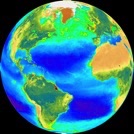
How the Gulf Stream affects the carbon cycle?
How the ocean takes up heat and anthropogenic carbon?
What happen to the climate system when net zero is reached?
Major projects
Leading a study of The Gulf Stream control of the North Atlantic carbon sink, referred to as C-Streams.
A combined observational field and modelling programme involving researchers at University of Liverpool, National Oceanography Centre, Southampton, Scottish Association of Marine Sciences and British Antarctic Survey, and University of Maimi supported by a £3.7M NERC-NSF large grant. Project partners include MIT, NORCE Norway, University of Rhode Island and NASA.
Outreach and press releases:
Story board on our Perspective about the Gulf Stream and the carbon cycle, April 2026.
Exploring how the Gulf Stream affects the climate system and the carbon cycle, University of Liverpool, 12 February 2026
Update for the fieldwork:
Poscard: Retrieving ocean data from the Florida Straits University of Liverpoo, 11 August 2025
Postcard from Florida Current, University of Liverpool, 23 August 2023.
YouTube video on the Gulf Stream and the carbon cycle
Examples of recent important papers include:
• Williams, R.G., P.J. Brown, Y. Takano, G. Forget, D. Jones, A. Katavouta, E. McDonagh and V. Roussenov, 2026. The biogeochemical transport by the Gulf Stream. Communications Earth & Environment, 7, 149, doi: 1038/s43247-025-03118-y. Link
Provides a perspective of how the Gulf Stream affects the carbon uptake over the North Atlantic
• Williams, R.G., P. Goodwin, P. Ceppi, C.D. Jones and A.H. MacDougall, 2025. A normalized framework for the Zero Emissions Commitment. Biogeosciences, 22, 7167-7186. doi=10.5194/bg-22-7167-2025. Link
Provides a way of understanding the relative importance of physical and carbon processes affecting the future climate response at net zero.
• Williams, R.G., A.J.S. Meijers, V. Roussenov, A. Katavouta, P. Ceppi, J. Rosser and P. Salvi, 2024. Asymmetries in the Southern Ocean contribution to the global heat and carbon uptake. Nature Climate Change, 14, 823-831, doi: 10.1038/s41558-024-02066-3. Link
Demonstrates the differences between how anthropogenic heat and carbon are taken up by the Southern Ocean in historical and future climate projections.
• Williams, R.G., P. Ceppi, V. Roussenov, A. Katavouta and A. Meijers, 2023. The role of the Southern Ocean in the global climate response to carbon emissions. Philisophical Transactions A, Royal Society, 10.1098/rsta.2022.0062. Link
Demonstrates the similarities and differences between how anthropogenic heat and carbon are taken up by the Southern Ocean in idealised future climate projections.
• Williams, R.G., A. Katavouta and V. M. Roussenov, 2021. Regional asymmetries in ocean heat and carbon storage due to dynamic redistribution in climate model projections. J. Climate, doi: 10.1175/JCLI-D-20-0519.1. PDF
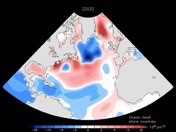
Demonstrates how anthropogenic heat and carbon anomalies can have opposing signs due to the effect of changing circulation.
Research group and collaborations:
My research group includes research fellows, postdoctoral research associates and PhD students:
• Dr Vassil Roussenov, a Research Fellow, an expert of numerical modelling, addressing heat content and sea level change, as well as nutrient cycling and transport;
• Hope Cheney, exploring how the equatorial undercurrent is controlled in data and ocean models.
Previous 21 PhD students include:
• Prof. Dr Guatliero Badin (previously Lecturer at Hamburg)
.• Dr Clare Bellingham (researcher at National Oceanography Centre)
• Dr Kate Day
.• Dr Phil Goodwin (Associate Professor at Southampton, previously NERC fellow at Cambridge),
.• Dr Rob Hall (UEA lecturer, previously Hawaii),
• Dr Simon Holgate (previously National Oceanography Centre),
• Dr Laura Jackson (Hadley Centre, previously Princeton),
• Dr Katarzyna Kenitz (Scripps, previously Copenhagen)
• Dr Susan Leadbetter (UK Met Office, previously Duke),
• Prof. Claire Mahaffey (Chair at Liverpool, previously Hawaii)
• Dr Liping Ma
• Dr Rhiannon Mather (Pipkin) Marine Environment Consultant
• Dr Alison McLaren (previously UK Met Office)
• Dr Jane O'Dwyer (previously Polar institute, Norway)
• Dr Matthew Pennington
• Dr Ciara Pimm (postdoc at Woods Hole)
• Dr Sarah Reynolds (Lecturer at Portsmouth)
• Dr Shaun Rigby (Hydrographic Office)
• Dr Nick Rogan (previously postdoc at GEOMAR)
• Dr Carl Spingys (National Oceanography Centre, Southampton)
• Dr Kat Turner (postdoc at GFDL, Princeton)
Previous research associates include:
• Prof. Dr Guatliero Badin (fixed-term Lecturer at Hamburg, previously Princeton and Boston)
• Dr Anna Hickman (Lecturer at Southampton),
• Dr Anna Katavouta (National Oceanography Centre)
• Dr Hemant Khatri (UK Met Office)
• Dr Jonathan Lauderdale (Research scientist, MIT),
• Dr Kevin Stratford
• Dr Chris Wilson (National Oceanography Centre).
Previous fellows and visitors:
•Dr Andrew Barton, a US NSF fellow working on phytoplankton community structure (Scripps)
Collaborators, I work with a wide range of scientists:
• Colleagues in Ocean Sciences at Liverpool University, including Vassil Roussenov, Claire Mahaffey, Jonathan Sharples, Alessandro Tagliabue and Chris Hughes;
• Researchers in the National Oceanography Laboratory , including Anna Katavouta at Liverpool, and Pete Brown, Louis Clement, Carl Spingys and Darren Rayner at Southampton;
• Researchers within the UK, including Phil Goodwin, Alberto Naveira Garabato, Bieito Ferndadez-Castro and Espe Broullon at University of Southampton; Doug Smith and Chris Jones at the Hadley Centre; Tim Woollings at Oxford University; Paulo Ceppi at Imperial College; Robyn Tuerena at SAMS; and Dr Andrew Meijers and Yohei Takona at British Antarctic Survey;
• Formers members of my research group, including Anna Katavouta (NOC Liverpool), Phil Goodwin (Associate professor, Southampton), and Jonathan Lauderdale (Research fellow, MIT);
•International colleagues at MIT, Professor Mick Follows on the modeling of the carbon cycle, at Georgia Tech, Professor Susan Lozier on ocean heat storage and overturning, at University of Alberta, Professor Paul Myers exploring ultra-high resolution models of the North Atlantic and at Bern University, Professor Thomas Froelicher, on longterm climate responses to carbon emissions.