Teaching
My teaching provides introductory learning on Bronze Age and Iron Age Europe at Year 1; Year 2 (Age of Stonehenge) sees critical analysis of Neolithic and Bronze Age studies in Britain and Ireland; Year 3 (Beyond the Celts) provides advanced learning on Iron Age Europe that is suitable for both archaeologists and ancient historians; and I provide specialist supervision at Masters level on Bronze Age and Iron Age Britain. I am currently taking a break from field training and critical research skills teaching at undergraduate level, training in research skills at Masters level instead.
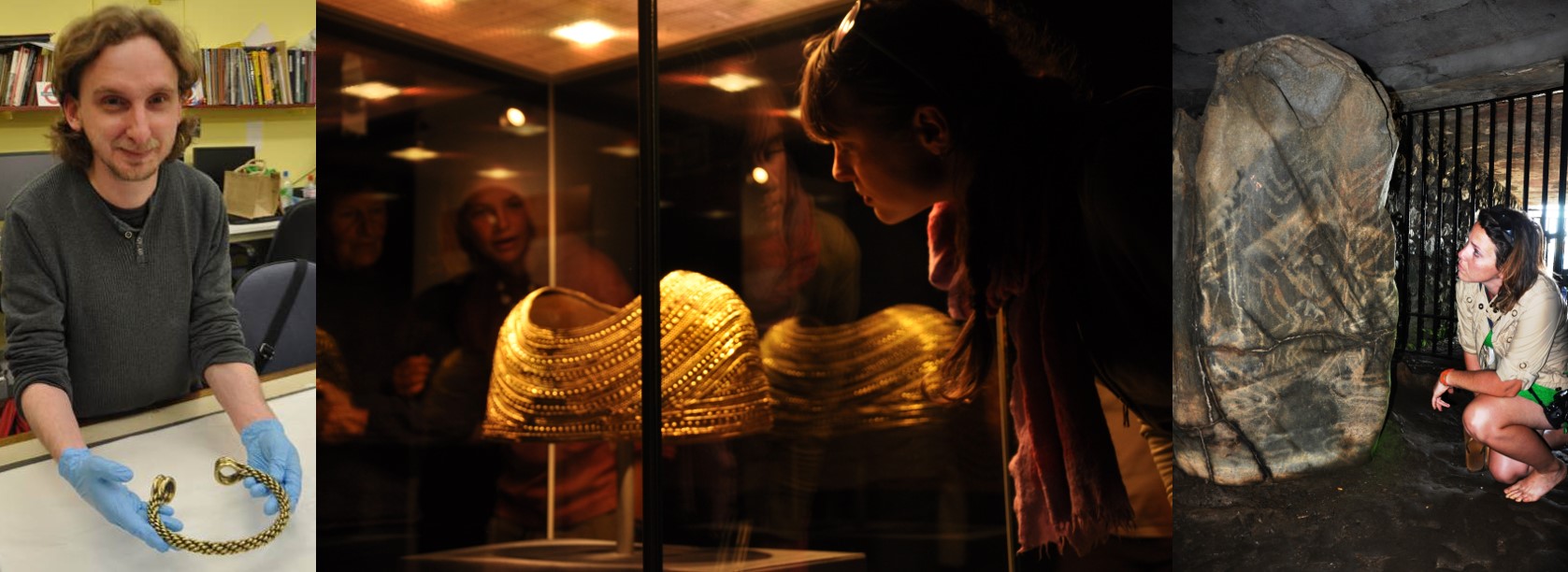 Prehistory fieldtrips (copyright Richard Mason and Rachel Pope)
 Undergraduate: European Prehistory
My Year 1 teaching reveals how traditions in Bronze Age and Iron Age Europe contrast with the development of civilisations in the Near East and Mediterranean world. My degree-level teaching focuses on Neolithic-Bronze Age Atlantic Europe; and the Iron Age in western European (800 BC-AD 70): teaching regional cultural traditions in their wider European context.
Undergraduate courses:
Introductory lectures on Bronze Age Europe and Iron Age Europe (Year 1)
Rethinking Stonehenge: British and Irish Prehistory (Year 2)
The Celts: Iron Age Europe and the Mediterranean (Year 3)
Bronze Age and Iron Age Britain (MA/MSc)
Undergraduate dissertations:
I am happy to supervise undergraduate dissertations in the following areas:
Neolithic Britain/Atlantic Europe
Bronze Age Britain/Atlantic Europe
Iron Age Britain/Europe (archaeology, texts)
Romano-British settlement
Gender archaeology
My greatest contributions to the undergraduate experience are an active commitment to research-led fieldwork training, to early research skills training, and to critical thinking through practice - currently on hiatus from this teaching at Liverpool.
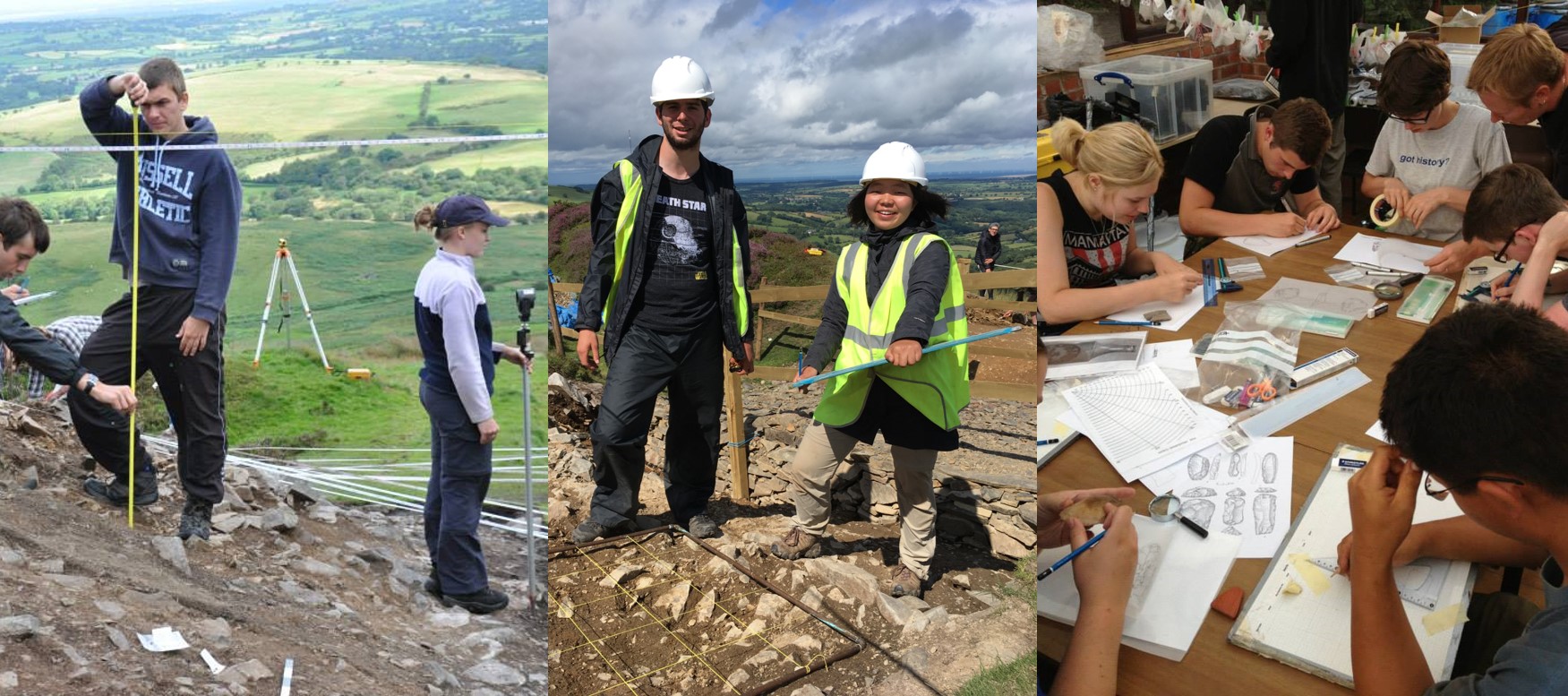 Skills training at Penycloddiau (copyright Rachel Pope)
 Postgraduate: Bronze Age and Iron Age studies
At Masters level, I offer teaching on Bronze Age and Iron Age Britain: working through core debates in the field and teaching advanced study skills, whilst providing a developed understanding of cultural traditions in later British prehistory.
Standout MA/MSc students:
Tabitha Craig: Society and identity in Beaker period SW Scotland (80): aDNA & archaeology [publication in prep.]
Jess Hornby: Developing method on Iron Age identity (84) [publication in prep.]
Sally Longworth: Bronze Age settlement in Mersey Basin (80) [Best in Year, went on to UoL PhD]
Catherine Jones: Crannogs (78) [awarded Departmental funding for Bradford MSc, now BM/Manchester Swords PhD]
Ashley Brogan: Prehistoric Cairns in north-west England (77) [joined Salford Archaeology; now PhD at York]
Jake Morley-Stone: Late Iron Age pellet moulds (75) [awarded University PhD funding]
Morgan Murphy: Hillforts and settlement temporality (76) [joined Cotswold Archaeological Trust]
Diana Nikolova: Field Techniques in Egyptology (80) [awarded Departmental PhD funding]
Lorrae Campbell: Late Bronze Age hillforts (75) [Best in Year, went on to UoL PhD]
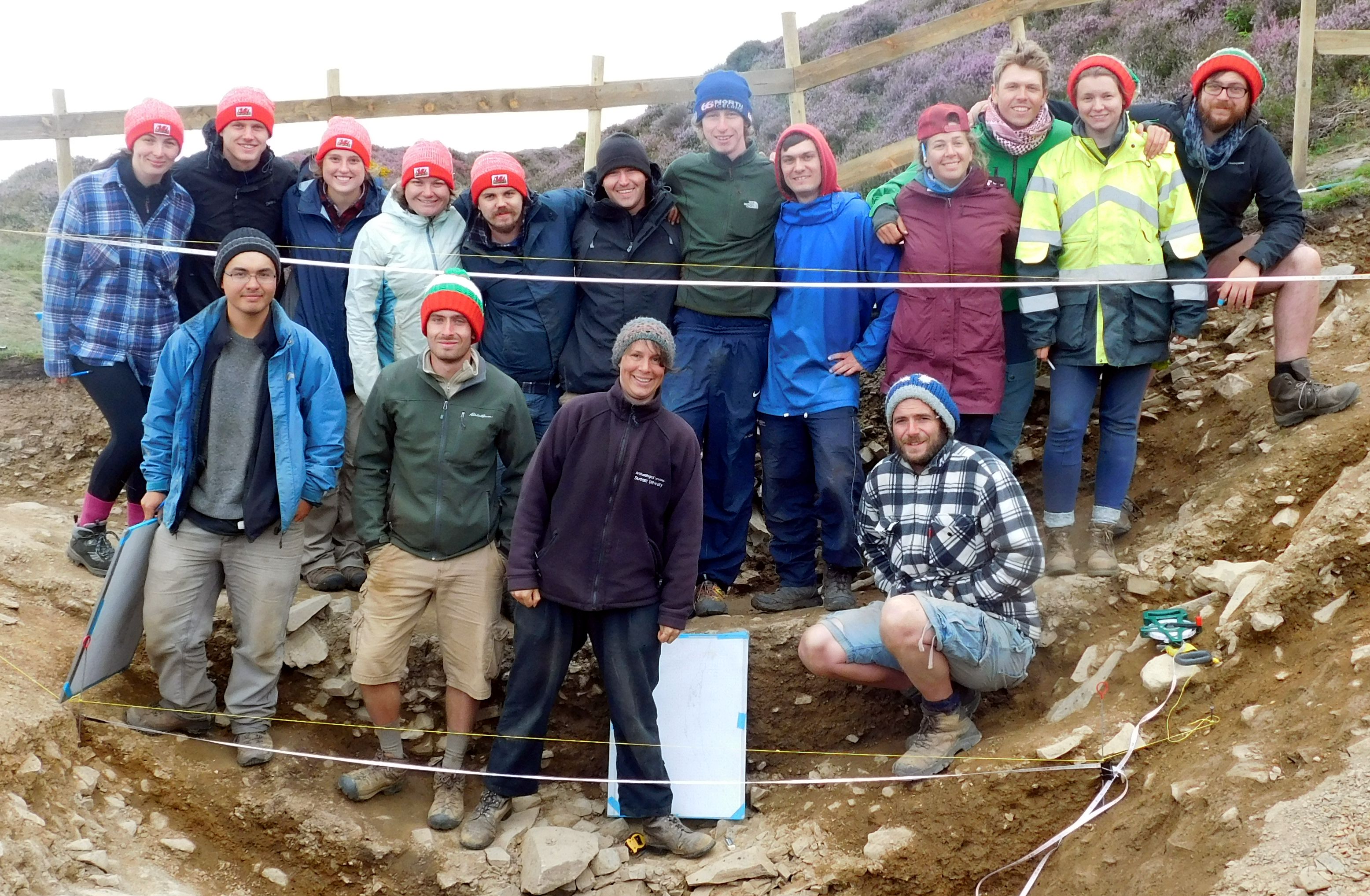 Supervisors and second years at Penycloddiau: three generations of hats (copyright Rachel Pope)
 Postgraduate research students
Elena Lastra Alonso (2025) PhD. Visiting scholar (University of Oviedo). Daily life and gender roles in the Late Prehistory of northern Iberia.
Jess Hornby (2024- AHRC funded, Duncan Norman scholar). PhD. Sequencing Iron Age cemeteries towards identity.
Tabitha Craig (2024-) PhD. Scottish Chalcolithic: An interdisciplinary study.
Viv Woerdenweber (2024-) MPhil. Prehistoric metalworking in the landscape.
Charlotte Bell (Dec. 2023-2025). PhD. Understanding Late Iron Age-Roman women (secondary supervisor).
Sally Longworth (2019-2025) PhD. Bronze Age farmers and landscapes in NW Britain.
Dr Jake Morley-Stone (2018-2023, Joseph Rotblat scholar). PhD. Late Iron Age pellet moulds: metallurgical and contextual analysis.
Dr Eleanor de Spretter Yates (2016-2023, AHRC funded, John Lennon scholar). PhD. Bronze Age razors in Prehistoric Britain. Publication in prep.
Dr Lorrae Campbell (2013-2020) PhD. Late Bronze Age hillfort origins in western Britain Published here
Emily Prtak (Best in Year; Best Poster award, IARSS 2019). MRes. Molly Cotton and British hillfort studies. Publication in prep.
Dr Alan Williams (2011-2018) PhD. Geochemical and isotopic characterization of the Great Orme BA copper mine Published here
Dr Eddie Rule (2011-2018). PhD. Iron Age material culture and meaning in central western Britain
Modules for 2025-26
ACE MA AND MSC DISSERTATION
Module code: ALGY600
Role: Teaching
BRONZE AGE AND IRON AGE BRITAIN
Module code: ALGY786
Role: Module Co-ordinator
BRONZE AGE CIVILIZATIONS: MESOPOTAMIA AND THE MEDITERRANEAN
Module code: ALGY106
Role: Teaching
DESIGNING AND COMMUNICATING RESEARCH
Module code: ALGY731
Role: Module Co-ordinator
EMPIRES AND CITIZENS: THE CLASSICAL MEDITERRANEAN AND THE NEAR EAST
Module code: ALGY131
Role: Teaching
PRINCIPLES OF ARCHAEOLOGY
Module code: ALGY101
Role: Teaching
RETHINKING STONEHENGE (BRITISH AND IRISH PREHISTORY)
Module code: ALGY283
Role: Module Co-ordinator
THE CELTS (IRON AGE EUROPE AND THE MEDITERRANEAN)
Module code: ALGY358
Role: Module Co-ordinator
Supervised Theses
- Characterising Bronze Age copper from the Great Orme mine in North Wales to determine and interpret its distribution
- Here Be Dragons: A Contextual Analysis of the Evidence for Society and Culture in Iron Age Central Western Britain
- Razors and Identity in Later Prehistory in Britain
- Re-Examining Late Iron Age Pellet Mould Technology
- The Origins of British Hillforts: A comparative study of Late Bronze Age hillfort origins in the Atlantic West